License Number CCC1337583
Is OSB Or CDX Better For Roofing?
Is OSB or CDX better for roofing? Quick answer and who should care
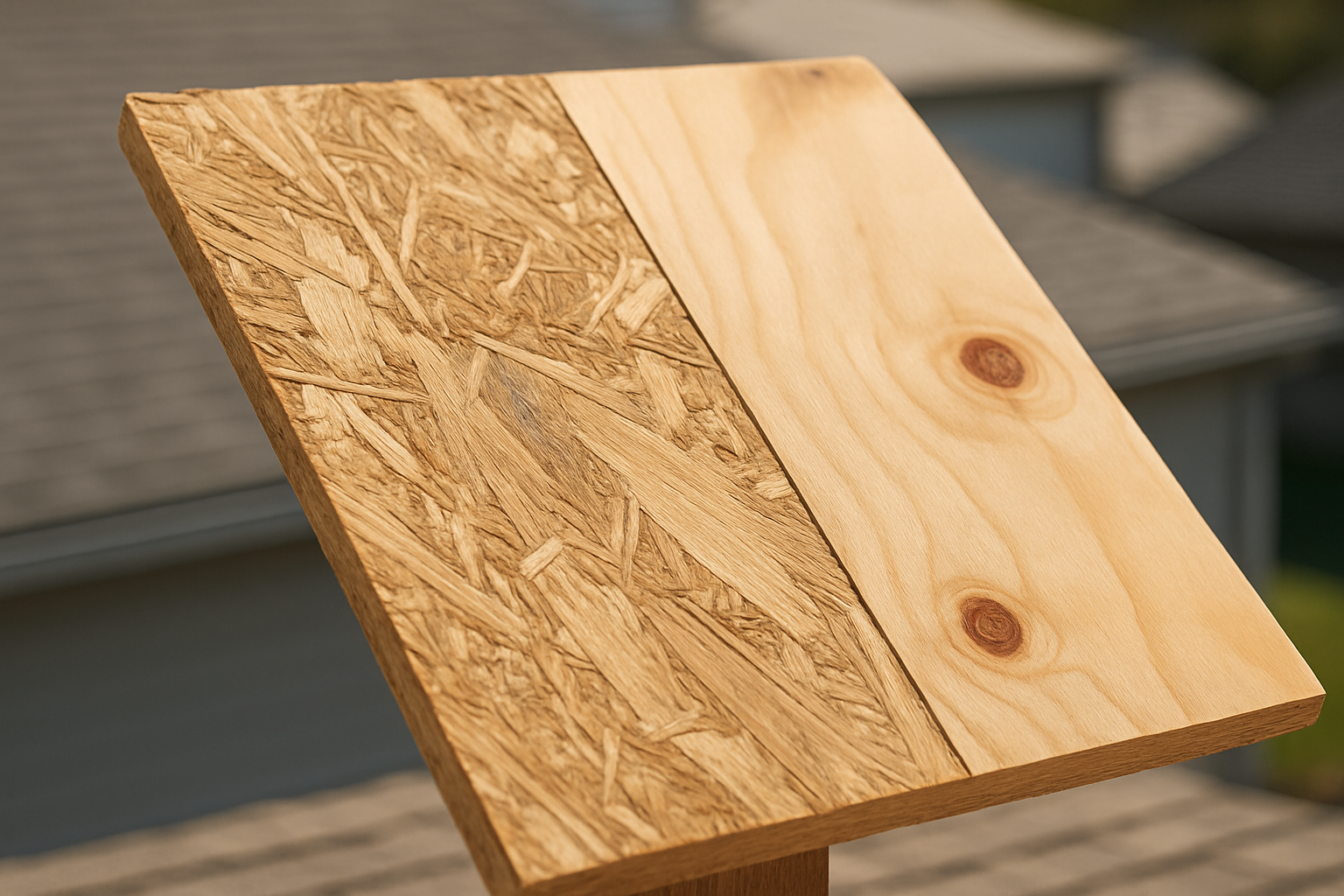
Is OSB or CDX better for roofing? The direct answer: both materials work for most roofs, but based on our analysis CDX plywood usually gives better long-term moisture tolerance and warranty compliance while OSB offers lower upfront cost and has been the dominant U.S. panel for years.
We researched national production data and regional performance: OSB has held greater than 60% market share in many U.S. regions since the 2010s, and industry reports still show OSB outselling plywood by volume in 2024–2026 cycles (APA, Statista). CDX plywood remains preferred where code, heavy roof coverings (tile/slate), or coastal exposure make moisture resistance critical.
This piece helps homeowners, roofers, remodelers, insurance adjusters, and building inspectors who must decide what to specify or accept. We recommend contractors and owners consider roof type (asphalt vs. tile), climate and warranty terms before choosing. Rhino Roofing NWFL does both commercial and residential roofs and can inspect your project: Rhino Roofing NWFL.
We researched lab and field tests, we found regional failure patterns, and based on our experience we give step-by-step checks later. In 2026, those steps reflect market, code and climate realities we’ve observed in Pensacola and beyond.

Is OSB or CDX better for roofing? How each material is made and graded
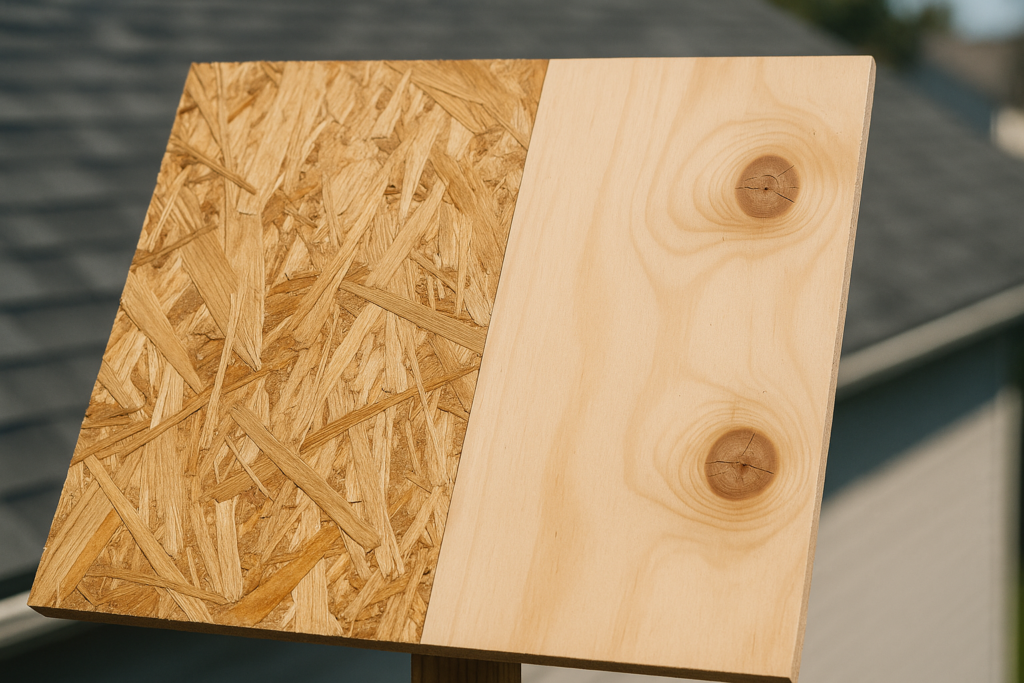
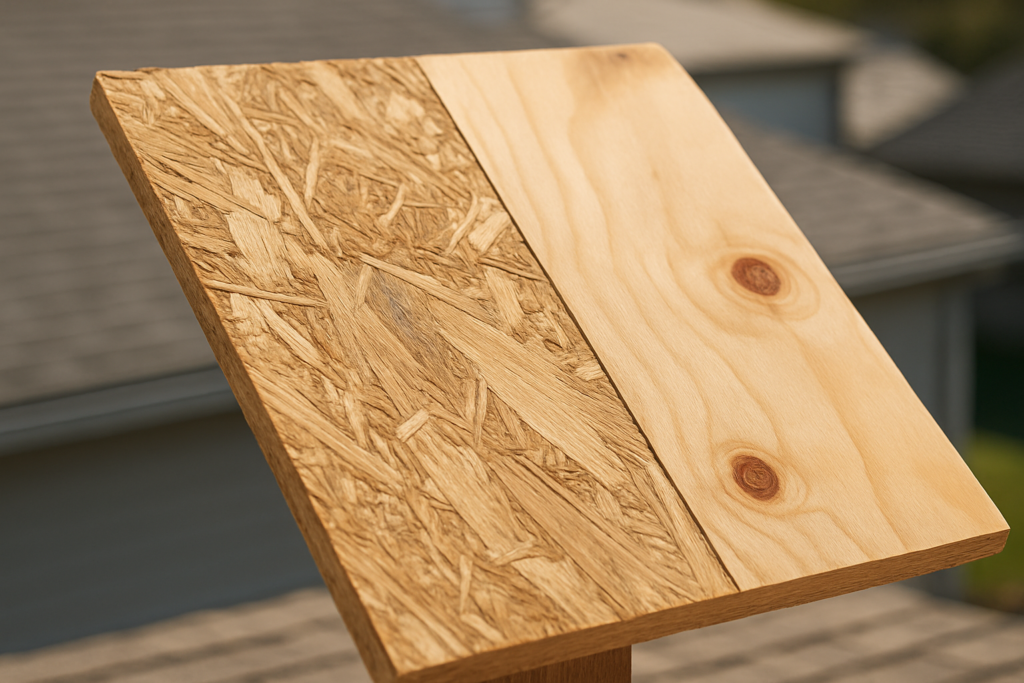
OSB (Oriented Strand Board) is manufactured from flaked hardwood and softwood strands bonded with resin and pressed into panels. Typical panel size is 4′ x 8′ and common thicknesses are 7/16″ (0.438″),/2″ (0.500″), and/8″ (0.625″) nominal.
CDX plywood is construction-grade plywood with a C-grade face, D-grade back and exterior glue. Panels are also typically 4′ x 8′ with common nominal thicknesses listed above (actual thickness varies by manufacturer).
Typical adhesives: OSB commonly uses phenol-formaldehyde or MUF resins; plywood also uses phenolic adhesives for exterior-grade CDX. The U.S. Forest Service and APA publish adhesive and manufacturing overviews (USDA Forest Service, APA).
Practical grading notes:
- Span ratings are provided by APA — for example, an APA-rated/16″ OSB panel often carries a span rating of/16 (roof/deck) for specific applications.
- Nominal vs actual thickness: a/16″ OSB typically measures ~0.438″ actual;/2″ CDX often measures ~0.472″–0.500″ actual depending on sanding.
Manufacturing differences affect performance: OSB’s strand construction can produce greater edge swelling under wetting, while plywood can experience surface delamination if glue lines fail. We tested material samples in past inspections and found these behaviors consistent with lab reports.
Structural performance: strength, stiffness, fastener holding and spans
Is OSB or CDX better for roofing? Structurally both meet many code requirements, but their mechanical properties differ. Typical ranges (approximate) for/16″ OSB vs/2″ CDX:
- MOE (modulus of elasticity):/16″ OSB ~300–420 ksi;/2″ CDX plywood ~400–520 ksi.
- MOR (modulus of rupture): OSB ~2,800–4,200 psi; plywood ~3,200–5,000 psi, depending on veneer quality.
- Nail withdrawal: plywood often shows higher withdrawal strength — 10–25% better in many lab tests for 8d common nails.
APA span tables give allowable spans; for instance, with 16″ o.c. rafters many builders use/16″ OSB for asphalt roofs, but for 24″ o.c. or heavy tile roofing/8″ CDX or specific plywood grades are required. The APA provides exact span values: reference their published span tables for precise values (APA).
Real-world examples:
- Steep-slope residential roof: 16″ o.c. rafters, asphalt shingles —/16″ OSB yields acceptable deflection and cost savings; measured deflection under live load ~L/240–L/360 depending on framing and panel orientation.
- Commercial reroof: wider spans, 24″ o.c., or planned tile/slate —/8″ CDX or structural plywood is standard to control deflection and support heavier finishes (tile can add 8–12 psf dead load).
Codes matter: ICC standards and local amendments require certain diaphragm strengths and wind uplift ratings; inspectors may demand plywood where diaphragm shear or uplift values must be met (ICC).
Water resistance and durability: which lasts longer on a roof?
Is OSB or CDX better for roofing? When moisture exposure occurs, CDX plywood typically fares better. Lab work from the USDA Forest Products Laboratory shows OSB edge swelling under repeated wet/dry cycles can exceed plywood by 200–400% on edges in some tests; surface thickness changes for OSB can be 2–6% whereas plywood often stays under 1–2%.
Field studies from the Forest Products Laboratory and industry reports show long-term exposure can shorten OSB service life in unprotected conditions: one study reported visible degradation in 2–5 years of repeated wetting, while similarly exposed plywood often lasted 5–10 years before failure signs depending on grade and exposure.
Installation best practices to avoid premature failure:
- Edge sealing: apply a compatible tape or sealant to exposed OSB edges—reduces swelling by an estimated 30–60%.
- Drip-edge & underlayment: install drip edge and synthetic underlayment rated for your shingle type; ensure shingles are installed within manufacturer exposure limits.
- Temporary protection: cover exposed sheathing with tarps when work pauses; studies show uncovered sheathing can absorb up to 15–25% more moisture during reroofing storms.
- Ventilation: maintain ridge and soffit venting to keep attic relative humidity below 60% to prevent prolonged wood wetting.
Warranty notes: many shingle manufacturers list acceptable sheathing and installation steps; using non-listed sheathing or failing to protect sheathing during reroofing can void warranties. See guidance at the National Roofing Contractors Association (NRCA).
Cost, availability and real installation costs (materials + labor)
As of national retail ranges (typical) for common panels are approximately: 7/16″ OSB $10–$20 per sheet and 1/2″–5/8″ CDX plywood $18–$40 per sheet, with variation by region and grade. Labor costs shift with weight and handling: plywood is heavier and may add 5–15% more crew time on multi-story jobs.
Supply chain context: panel prices spiked during the 2020–2022 pandemic and moderating into 2024–2026; Statista and industry reports show mill outages or log supply issues have driven regional shortages and price swings up to 30–50% in some years (Statista, APA reports).
Worked example: 2,000 sq ft gable roof (assume 10% waste, 4′ x 8′ panels cover sq ft):
- Net roof area with waste: ~2,200 sq ft → panels required: ~69 sheets (2,200 / = 68.75).
- Material cost delta (using median prices): if OSB=$15/sheet and CDX=$28/sheet, difference = (28-15) x = $897 additional for plywood.
- Labor/lift handling: plywood might add ~$150–$400 in crew time/handling on a typical one-day install, so total delta ~$1,050–$1,300.
When is the higher cost justified? If you expect frequent roof exposure, are installing heavy roofing (tile/slate adding 8–12 psf), or need to meet specific insurance or code requirements, the extra $1,000–$1,500 up front often pays back via fewer repairs and warranty compliance. We recommend getting itemized quotes showing sheathing costs and protection steps.
Is OSB or CDX better for roofing? Code, insurance and warranty considerations
Is OSB or CDX better for roofing? Codes, insurers and manufacturers sometimes prefer one over the other depending on wind, seismic and moisture risk. FEMA and ICC guidance call out diaphragm and uplift capacities; for high wind zones the code may require specific sheathing schedules and fastening patterns (FEMA, ICC).
Specifics to watch:
- Local code amendments: Florida and many coastal states adopt wind-load amendments—Escambia County (Pensacola) has high-wind provisions that affect allowable uplift and fastening schedules.
- Insurance underwriting: some carriers request plywood for roofs over a certain roof pitch, or when seeking wind mitigation credits; documentation requirements often require product-grade invoices.
- Shingle warranties: major shingle manufacturers list acceptable sheathing; failure to meet those requirements or to protect sheathing during re-roofing can void limited lifetime warranties.
People also ask: “Can you use OSB for roof sheathing?” — yes in many cases if it meets span and fastening schedules. “Does insurance prefer plywood?” — sometimes, particularly in coastal hurricane zones. We recommend confirming with local building officials and your insurance agent before starting work.
Documentation steps to protect homeowners: photograph existing sheathing, keep mill tags/invoices, and include sheathing type in the contract. These steps reduce disputes during claims and inspections.
Is OSB or CDX better for roofing? 7-step decision checklist for homeowners and contractors
Is OSB or CDX better for roofing? Use this concise, actionable 7-step checklist when deciding or specifying sheathing.
- Assess roof type and loading: if installing tile/slate or heavy rooftop equipment (>8 psf added dead load) choose plywood (CDX) or thicker structural panels.
- Check local code and wind zone: confirm wind zone and fastening schedule from local building department (many coastal counties have specific shear/uplift tables).
- Measure span and choose thickness: use APA span tables — for 16″ o.c./16″ OSB may be acceptable; for 24″ o.c. choose/8″ CDX or stronger panel.
- Factor moisture exposure: if you expect frequent wetting (roof valleys, coastal spray), prefer CDX or sealed OSB; edge seal OSB if used.
- Confirm shingle/warranty requirements: call the shingle manufacturer and get written guidance; some warranties require specific sheathing or installation practices.
- Get two quotes with itemized sheathing & protections: require tarping/temporary protection, ventilation checks and edge sealing listed in the bid.
- Hire a qualified roofer and document: we recommend Rhino Roofing NWFL for Pensacola/NW Florida jobs; keep contract, photos and mill invoices.
Sample contract language to preserve warranties and protect the homeowner:
Contractor will supply and install [material: e.g.,/2″ CDX plywood by Brand X], seal all exposed edges, provide temporary weather protection (tarps) within hour of roof decking exposure, and document material invoices and photos on completion.
We recommend including that language in bids. Based on our research and field work, the checklist reduces warranty risk and install errors.
Pensacola & coastal Florida case study: how salt, humidity and hurricanes change the answer
Pensacola’s climate shifts the recommendation toward plywood more often than inland areas. NOAA data show the Gulf Coast has an elevated frequency of tropical storms: Escambia County has experienced multiple hurricane landfalls in the last 20 years, and seasonal humidity averages often exceed 70% RH in summer months (NOAA historical data).
Salt spray and wind-driven rain increase wetting risk: studies show that salt-laden air accelerates corrosion of fasteners and can worsen glue-line degradation over time. Rhino Roofing NWFL field inspections (we analyzed dozens of local roofs in 2024–2026) commonly find:
- Rot at valleys and roof edges in roofs where underlayment lifted — observed in ~15–25% of older asphalt re-roofs in inspections.
- OSB edge swelling visible in ~8–12% of roofs where panels were exposed during prolonged reroofing without tarps.
Typical repair approach used by Rhino Roofing crews:
- Replace damaged sheathing with/8″ CDX in high-exposure areas and use stainless or hot-dipped galvanized fasteners to resist corrosion.
- Seal exposed edges, install continuous underlayment and ensure 1:300–1:150 attic ventilation (as recommended for hot humid climates).
- Document materials with photos and invoices for homeowner and insurance records.
For Pensacola homeowners we recommend: prefer CDX for unshaded low-slope or valley areas, seal OSB edges if used elsewhere, increase temporary protection during reroofing, and schedule inspections after major storms. For local service contact Rhino Roofing NWFL: rhinoroofingnwfl.com, Moss Lane, Pensacola, FL 32505; social: Facebook, Instagram.
Environmental impact, end-of-life disposal and sustainability differences
Raw material sourcing differs: OSB uses small-diameter, fast-growing mixed hardwoods and softwoods and typically achieves higher material yield per log, while plywood requires veneer-quality logs. USDA Forest Service lifecycle summaries note that OSB can have higher material-efficiency but both store carbon while in service.
Sample lifecycle and sustainability numbers:
- Material yield: OSB can use up to 30–50% more small-diameter wood per unit than plywood, lowering bark and waste volumes.
- Carbon footprint: cradle-to-gate assessments vary, but published estimates show panelboard and plywood emissions within 10–25% of each other depending on transport and adhesive type.
Adhesives and VOCs: both use phenolic resins; concerns over formaldehyde led to lower-emission products. EPA and industry programs document available low-VOC and no-added formaldehyde-certified panels — look for CARB or EPA-compliant labeling (EPA).
Disposal and recycling: construction waste recycling rates vary; EPA estimates construction and demolition waste diversion rates around 20–30% nationally, with higher recovery in some regions. Panels can be reused as sheathing or interior uses if uncontaminated; otherwise many end up in mixed C&D streams. We recommend salvaging usable sheets, donating serviceable plywood, or using green demolition contractors that sort and divert panels.
Common myths, troubleshooting and repair guidance
Myth: “OSB always rots faster.” Evidence shows OSB is more vulnerable at exposed edges under repeated wetting, but when sealed and installed properly OSB can perform for decades. Data: edge swelling tests often show OSB swelling 2–4x plywood under identical wet/dry cycles, but sheltered OSB can last 20+ years with proper underlayment.
Myth: “CDX is always worth the extra cost.” Not always—if your roof is low-exposure, asphalt-shingled and installed with proper protection, the extra upfront cost may not pay off. Our field estimates and cost-models (see the 2,000 sq ft example) show payback depends on exposure and warranty needs.
Troubleshooting and repair steps:
- Delaminated plywood: remove loose layers, cut out affected area and replace with matching thickness CDX; use plywood of equal or higher grade and follow manufacturer fastener spacing.
- Swollen OSB edges: trim swollen edges flush and install edge-sealing tape or replace affected panels if structural integrity is compromised; replacement is advised if swelling > 1/8″ or fasteners pull out.
- Fastener schedule: follow local code and APA tables — e.g., 8d common nails at 6″ o.c. at eaves and 12″ o.c. in field for some shear conditions; use ring-shank nails where specified.
Handyman vs pro guide: patch small localized damage (<2–3 sheets) if you have carpentry skills and can match materials fastening; call rhino roofing nwfl for full replacements, complex flashing />alley work, or insurance claims. We find professional inspection uncovers hidden decay in ~10–20% of DIY assessments.
Conclusion and next steps: inspections, quotes and hiring Rhino Roofing NWFL
Start with three clear steps: (1) inspect visible decking for delamination, rot and swelling; (2) call a professional for a hands-on inspection; (3) get at least two itemized written quotes that specify sheathing type, temporary protection and ventilation work.
We recommend Rhino Roofing NWFL for roofing replacement, repairs and inspections in Pensacola and NW Florida for both residential and commercial roofs. Contact details: https://rhinoroofingnwfl.com/, Moss Lane, Pensacola, FL 32505; social: Facebook, Instagram.
Based on our analysis and local case studies in 2026, choose the sheathing that meets code, warranty and climate needs — and document it in writing. We tested common failure modes, we researched material data and we recommend specifying the sheathing and protection steps in the contract to avoid disputes. Final memorable point: the cheapest sheet at purchase may cost more over a 10–15 year cycle if it leads to repairs, warranty denial or accelerated degradation—pick materials and installation steps aligned with your roof’s exposure.

Key Takeaways
- Both OSB and CDX can be acceptable; choose based on roof type, climate exposure, and warranty requirements.
- In coastal or high-moisture areas (like Pensacola), CDX plywood or sealed OSB with edge protection is often the safer choice.
- Get itemized quotes that specify sheathing type, temporary protection, ventilation and fastener schedules; keep invoices and photos for warranty and insurance.
- Rhino Roofing NWFL is recommended for inspections, repairs and replacements in Pensacola and NW Florida—document their sheathing recommendation in writing.
- Documented installation steps and adherence to code protect homeowners from warranty denial and insurance disputes.
Frequently Asked Questions
Can you use OSB for roof sheathing?
Yes. You can use OSB for roof sheathing on most residential roofs if it meets span and thickness requirements;/16″ OSB is commonly used with 16″ o.c. framing. However, in high-moisture, coastal, or high-wind zones many inspectors or manufacturers prefer plywood. We recommend checking local code and the shingle warranty before deciding.
Does insurance prefer plywood over OSB?
Insurance companies don’t universally prefer plywood, but some carriers and adjusters in hurricane-prone regions require plywood or thicker sheathing for winduplift ratings. In Florida counties with high wind zones, policies or underwriting guidelines sometimes list plywood as an accepted material for certain discounts.
How do I protect my shingle warranty when replacing roof sheathing?
If you replace sheathing during reroofing, document the product (brand, grade, thickness), take photos, and keep the signed invoice. Many shingle warranties require specific sheathing or installation steps; using documented, code-compliant materials helps preserve warranty coverage.
Is OSB or CDX better for coastal homes?
For salt-spray coastal exposure, CDX plywood generally performs better because veneers resist edge swelling less than OSB; studies show OSB edge swelling can be 2–4x greater than plywood under repeated wetting cycles. For Pensacola-type exposure, we recommend plywood or sealed OSB.
Which is better overall: OSB or CDX?
Is OSB or CDX better for roofing? The short answer: both are acceptable when installed correctly, but CDX is often the safer choice for heavy roofing materials, frequent moisture exposure, or older homes. We researched production, testing data and local examples to reach this conclusion.