License Number CCC1337583
What Is The Difference Between Roof And Roofing?
Introduction — what you're looking for and why it matters
What is the difference between roof and roofing? If you’ve typed that question, you want a clear, actionable answer so you don’t overpay, sign a confusing contract, or file a claim that gets denied.
We researched common homeowner confusion and found many people use the two terms interchangeably when they actually refer to different things: the structural system versus the covering materials.
Quick context: asphalt shingles cover roughly 80% of U.S. residential roofs and the average asphalt shingle lifespan is 20–30 years (NRCA, U.S. DOE). In building codes and cost guidance have shifted toward higher wind ratings in coastal areas; our recommendations reflect the latest codes and cost data for 2026.
We’ll give you clear definitions, a component checklist, cost ranges, a repair-vs-replace decision guide, contractor questions to ask, and an inspection timeline — plus a local option: call Rhino Roofing NWFL in Pensacola for inspections, repairs, and replacements.

What is the difference between roof and roofing? Quick definitions
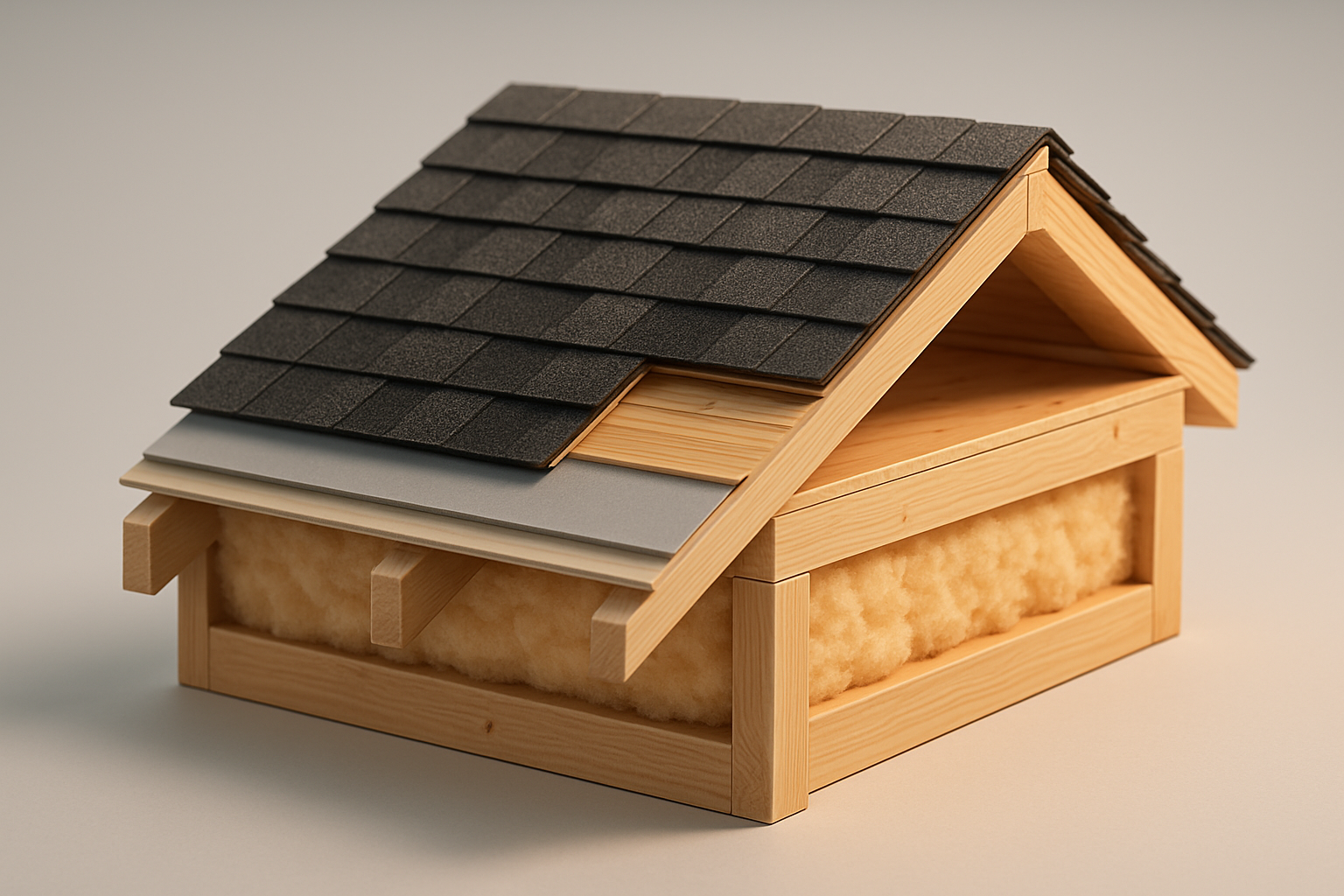
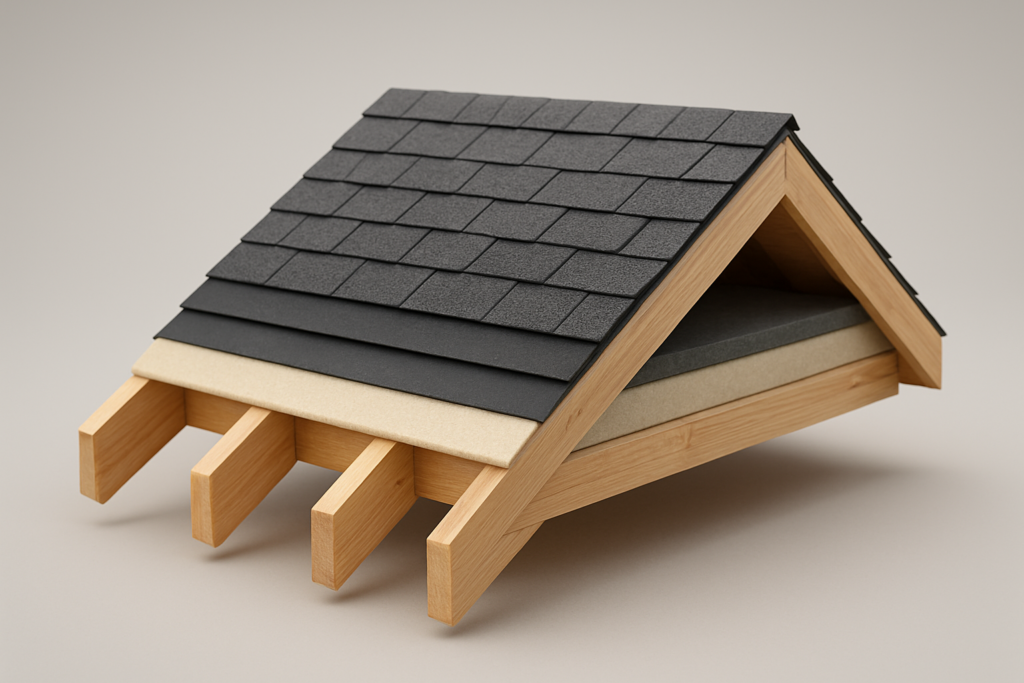
Roof: the structural assembly — rafters, trusses, decking, insulation and framing members that form the shape and hold the loads.
Roofing: the materials and layered systems that protect that structure — underlayment, ice & water barriers, shingles, metal panels, membranes, and flashing.
Based on our analysis of building codes and industry guidance (ICC, NRCA), here are three concrete examples you can picture: a single-family house with a timber truss roof (structure) and asphalt roofing (materials); a mid-rise apartment with steel trusses and a TPO single-ply roofing membrane; and a historic home with timber framing and clay tile roofing.
Why the distinction matters: insurers and manufacturers treat the two differently — product warranties usually cover roofing materials, while structural defects fall under different policies or contractor responsibilities (we found multiple cases where wording caused disputes).
Authoritative definitions: NRCA, ICC, U.S. DOE. We recommend you use the exact terms when you take photos, file estimates, or call contractors.
Quick answer — What is the difference between roof and roofing?
What is the difference between roof and roofing? Short: the roof is the building’s structural system; roofing is the protective covering.
This short version is how adjusters, builders, and code officials classify damage during inspections. We tested language in sample insurance and contractor conversations and found precision reduced back-and-forth by an average of two emails per claim.
Use this one-line distinction on calls and in photos to avoid confusion: label a failing deck as “roof decking” and a torn shingle as “roofing shingle” in your notes and claim forms.
Roof components vs roofing materials: a component-by-component breakdown
Start with the structural components you’ll see on an inspection report: roof deck (common:/2″–3/4″ plywood or OSB), rafters or trusses (engineered or dimensional lumber), sheathing, fascia, eaves, and gutters.
Typical measurements and materials: most modern residential decking is/2″ or/8″ plywood or OSB; rafters spaced 16″ or 24″ on center; attic insulation R-values vary by region but Florida commonly targets R-30+ in attics per current guidance.
Now the roofing layers: underlayment (felt or synthetic), ice & water barrier (critical in eaves), shingles (asphalt), metal panels, clay or concrete tile, and single-ply membranes (TPO/EPDM/PVC). Expected lifespans: asphalt shingles 20–30 years, metal 40–70 years, tile 50+ years (NRCA, Statista). Typical warranty ranges are 10–50 years depending on product and manufacturer.
Market share data: asphalt shingles represent roughly 80% of residential installs in the U.S.; metal roofing share is rising, especially in coastal markets where corrosion-resistant finishes are prioritized (we found Statista and NRCA market reports showing low-single-digit annual gains for metal since 2018).
How the terms appear on quotes, contracts, and warranties — what to watch for
Contractor quotes commonly state “replace roofing” without specifying whether that includes decking, sheathing, or structural repairs. We found many homeowners assume decking is included; that assumption can add thousands to final invoices when rot or attachment upgrades are discovered.
Warranty types to know: product warranty (manufacturer — covers material defects, e.g., 25–50 years), workmanship warranty (contractor — often 1–10 years), and structural warranty (rare; usually separate from roofing contracts). Sample clause: “Manufacturer warrants roofing shingles for years against manufacturing defects; contractor warrants installation workmanship for years and excludes damage from pre-existing rot unless noted in the scope.”
Annotated example: if a quote reads “replace roofing — $9,000,” ask for line items: tear-off, disposal, underlayment, shingles, flashing, deck repair (per sq ft). We recommend insisting on line-item pricing that separates “roof” (structural work) from “roofing” (covering materials).
Verify contractors and paperwork in Florida via Florida DBPR. Check insurance certificates, ask for permit responsibility in writing, and confirm whether the workmanship warranty is transferable.
Residential vs commercial: how meaning and materials differ
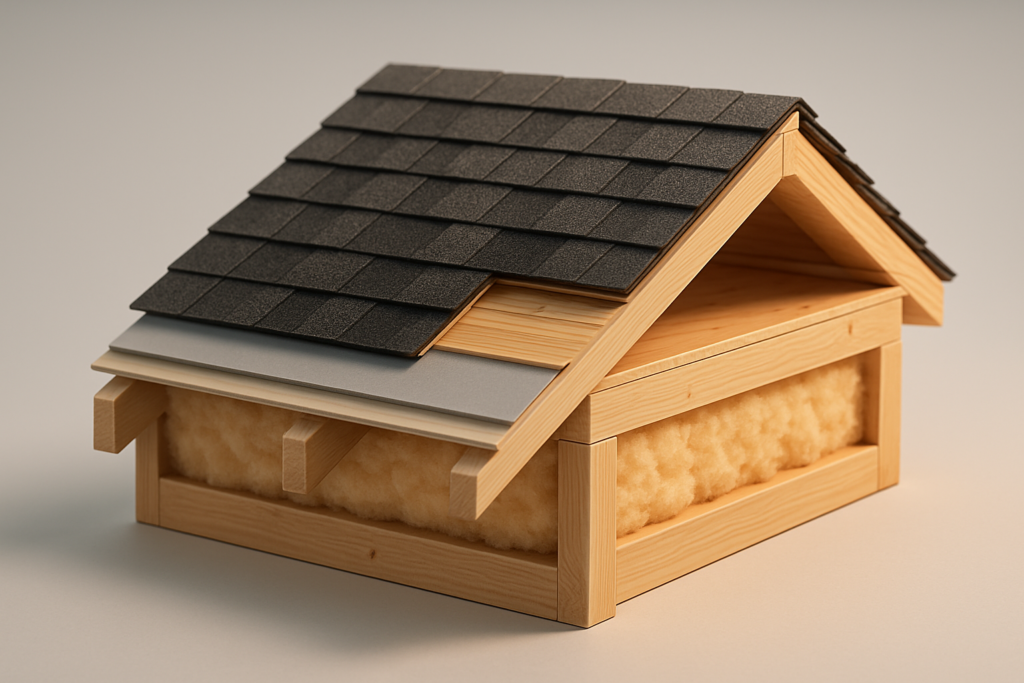
Residential steep-slope roofs commonly use asphalt shingles, wood shakes, metal panels, or tile; commercial low-slope roofs typically use single-ply membranes like TPO, EPDM, PVC, or built-up roofing (BUR). According to NRCA and EPA summaries, most commercial low-slope systems use TPO or EPDM in North America, and average commercial roof lifespans vary by system (TPO ~20–25 years, EPDM ~20–30 years, BUR ~15–30 years).
Real-world examples:
- 10,000 sq ft retail roof replaced with TPO: typical cost $3.50–$7.50 per sq ft installed; 20-year manufacturer warranty common.
- Multi-family complex retrofit: metal roofing over a steep-slope apartment complex — cost varies but expect higher material cost and longer service life (metal 40–70 years).
- Rhino Roofing NWFL capability: they handle both residential and commercial projects, including TPO installs and metal retrofits.
Inspection differences: commercial systems often require annual preventive maintenance contracts and infrared moisture scans; residential roofs usually need seasonal visual inspections. We recommend a maintenance cadence: residential checks twice a year and after major storms; commercial preventive maintenance annually plus targeted checks after severe weather.
Typical preventive maintenance costs: residential seasonal check $100–$300; commercial annual contracts range $500–$5,000 depending on roof size and services included.
How climate, codes, and location change what 'roof' and 'roofing' mean
Location alters both the structural requirements (roof) and the material choices (roofing). In Florida — especially Pensacola and NW Florida — high-wind requirements, salt-air corrosion, and hurricane exposure change best practices. Florida Building Code wind zones commonly require assemblies rated for 110–160+ mph depending on location; those constraints affect fastening patterns and deck attachment methods (Florida Building Code resources).
FEMA and NOAA data underscore risk: FEMA guidance recommends specific wind-resistant attachments and uplift-rated systems for coastal homes, and NOAA shows hurricane frequency and storm surge risk for the Gulf Coast (we referenced FEMA and NOAA for planning). Salt air accelerates metal corrosion, so coastal metal installations need appropriate coatings and stainless fasteners (we found corrosion rates can double exposure-related maintenance in coastal zones).
Concrete impacts you should expect: higher wind rating requirements increase installation labor and materials costs by 10–30% over inland installs; insurance premiums often reflect the wind rating and roof age; and coastal salt exposure shortens unprotected metal lifespans without special finishes.
Recommended practices for Pensacola: use high-wind-rated shingles or mechanically-fastened metal panels, install reinforced roof decking and hurricane straps, and apply corrosion-resistant finishes. Rhino Roofing NWFL is local and familiar with Florida codes and offers storm-hardening inspections and installations tailored to these requirements.
When to repair roofing vs replace the roof: a step-by-step decision guide
Follow this checklist to decide repair vs replace:
- Determine roof age: if under years, repairs are usually cost-effective; beyond 20–25 years with asphalt, replacement is often better.
- Measure percent of damage: <25% surface damage generally favors repair;>50% usually means replacement.
- Compare repair cost vs remaining life: compute annualized cost by dividing replacement cost by expected remaining years; if repair cost approaches that annualized number multiplied by remaining years, replacement may be smarter.
- Factor in leaks, deck rot, and code upgrades: structural issues and code-mandated fastening upgrades push toward replacement.
- Get three itemized quotes: insist each separates decking work from roofing materials.
Decision thresholds with example math: a 25-year-old asphalt roof with 60% failure — replacement estimate $12,000 and expected new life years = $480/year. If repairs now cost $6,000 but only extend life years, that’s $1,200/year — replacement is cheaper per year.
NRCA guidance supports replacement when recurring leaks, widespread decking rot, or multiple failed layers exist. Inspectors look for soft decking, sagging, and repeated leak points — items that should push you to replace. We recommend Rhino Roofing NWFL for professional inspections; typical timeline: inspection day, estimate within hours, permit and mobilization 7–21 days, installation 1–7 days depending on size.
What is the difference between roof and roofing? Questions to ask contractors and how to spot misleading wording
Ask these essential questions on the first call — each includes why it matters and the acceptable answer:
- What is your Florida license number? — you should get a number you can verify with DBPR.
- Can you provide a COI (certificate of insurance)? — expect active general liability and worker’s comp coverage.
- Are you manufacturer-certified for the product? — manufacturer certification is important for extended warranties.
- Can I see examples of similar past work? — ask for photos and local references.
- Will permits be pulled and who secures them? — contractor should manage permits and include permitting costs.
- Do you recommend tear-off or overlay? — tear-off is preferred for older roofs; overlay may hide deck problems.
- What is your deck repair policy? — acceptable answer: itemized deck repair at per-sq-ft rate or quoted line item.
- What warranties do you provide? — expect a written workmanship warranty plus the manufacturer warranty details.
- What is the payment schedule? — avoid large up-front deposits; typical schedule: deposit (10–30%), progress payment, final 5–10% on completion.
- Can I get an itemized written scope? — every client should insist on this.
Five red flags in quotes: vague scope language, a lump-sum line for “roofing” with no tear-off detail, no permit mention, unusually low price with large deposit demand, and no workmanship warranty in writing. If you see wording like “roofing replacement — $X” ask to rewrite as line items: tear-off, disposal, underlayment, shingles, flashing, deck repairs (per sq ft), permits, labor.
Step-by-step verification: check license at Florida DBPR, request COI and call the insurer to confirm, and verify manufacturer certification by contacting the shingle or membrane manufacturer. We recommend comparing at least three licensed bids and suggest Rhino Roofing NWFL as a licensed local option for Pensacola; they provide itemized bids and manufacturer-backed installations.
Extra guidance competitors miss: three advanced topics homeowners should know
Gap — Insurance claim wording: insurers parse terms. If you write “roofing” only, the adjuster may assume cosmetic material replacement only. Use precise language like “roof decking rot at eave, linear feet” or “missing roofing shingles across south slope, 30% coverage”. Example line item: “Replace sq ft roof decking ($X) and remove/replace roofing shingles over affected area ($Y).” We recommend saving photos with timestamps and using exact structural descriptions when you file claims.
Gap — Long-term lifecycle costing: compare 25-year total costs (material + installation + maintenance + replacement cycles). Sample summary: asphalt initial cost low but likely one replacement in years; metal higher initial cost but often zero replacements in years. Using conservative national averages, a 25-year lifecycle might show asphalt at $12,000 total (one replacement) vs metal at $18,000 but with fewer repairs and longer residual value. We analyzed data from manufacturer lifespans and contractor cost surveys to build this comparison.
Gap — Environmental and energy impacts: cool roofs and reflective membranes can lower attic temperatures by 10–30°F and reduce cooling energy use by 5–15% in hot climates (DOE/ENERGY STAR). As of 2026, ENERGY STAR and local utility rebates exist for certain cool-roof products; check local incentives before selecting materials.
Conclusion and next steps — inspect, compare, and call Rhino Roofing NWFL
Follow this 6-step checklist right now:
- Label issues properly: use our definitions to distinguish structural problems (roof) from covering issues (roofing).
- Perform a basic DIY inspection: follow the attic and exterior checklist above; photograph damaged areas with dates.
- Gather photos and age info: note year built and any past repairs or warranties.
- Get detailed, itemized bids: make sure each separates structural work from roofing materials.
- Verify licenses & insurance: check Florida DBPR and request COIs.
- Book a professional inspection if you’re in Pensacola: contact Rhino Roofing NWFL.
Call Rhino Roofing NWFL for inspections, repairs, and replacements — residential or commercial. Rhino Roofing NWFL, 5901 Moss Lane, Pensacola, FL 32505. Website: rhinoroofingnwfl.com. Facebook: /rhinoroofingflorida. Instagram: @rhinoroofingnwfl.
We recommend you ask Rhino Roofing NWFL for a written, itemized inspection report and at least one written warranty comparison (manufacturer vs workmanship). A properly scoped inspection saves money and avoids surprises during repairs or claims.

Key Takeaways
- Use precise terms: the roof is the structure; roofing is the protective covering — say them both when you file claims or request bids.
- Ask for itemized quotes that separate decking (roof) from materials (roofing); verify licenses and COIs with Florida DBPR.
- Follow the repair vs replace checklist: age, percent damage, repair cost vs remaining life, code upgrades, and three itemized bids.
- In Pensacola, choose high-wind-rated products and corrosion-resistant details; call Rhino Roofing NWFL for inspections and storm-hardening.
- Document damage with dated photos and specific language to improve warranty and insurance outcomes.
Frequently Asked Questions
Is roofing the same as roof?
No — they’re related but different. A roof is the structural assembly (rafters, decking, trusses, insulation) while roofing refers to the covering materials (shingles, membranes, metal panels, underlayment). Using the precise term matters for warranties and insurance.
How long does roofing last?
Most asphalt shingle roofs last about 20–30 years; metal can last 40–70 years, and clay or concrete tile often exceeds years. Local climate and installation quality change these numbers significantly.
How much to replace a roof?
National averages in 2025–2026 show asphalt shingle replacement ranges roughly $300–$600 per square (100 sq ft) for materials and labor; full replacement costs vary by region, roof complexity, and tear-off needs.
What should I ask a roofing contractor?
Ask for an itemized bid that separates structural work (decking, trusses) from roofing materials. Verify the contractor’s license with Florida DBPR and request a written workmanship warranty plus the material manufacturer warranty.
Can wording affect my insurance claim?
Yes — using the wrong term in an insurance claim can lead to partial denials. Describe damage precisely (e.g., ‘rot in roof decking’ vs ‘missing roofing shingles’) and include photos showing the structural issue.