
License Number CCC1337583
How Long Does a Roof Last?
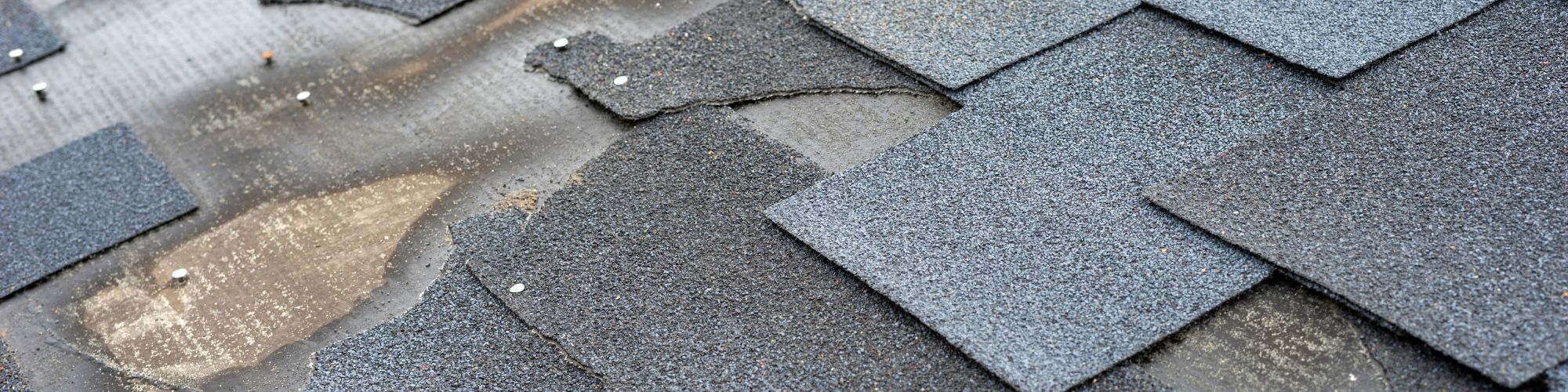
How long do roofs last? Federal housing guidance estimates 15 to 30 years for composition (asphalt) shingles and 20 to 50-plus years for standing seam metal, then adds that service life estimates “must be taken with a grain of salt.” Nobody can honestly give you one number for your roof, and a warranty term isn’t that number either.
This guide shows what published sources say for each material, what each figure actually measures, what wears roofs out faster in Northwest Florida, and what an inspection looks at. It is general information as of October 2026.
How long should a roof last?
No source we found gives one Florida-wide answer, because “should” depends on the material, the climate, the installation and the upkeep. Be wary of any page that does.
Separate two things before you read any number. A service life estimate is an educated guess about how long a roof covering keeps doing its job. A warranty is a legal promise about what the manufacturer or installer will do if something fails under stated conditions. They are different documents with different purposes.
The U.S. Department of Housing and Urban Development (HUD) puts it bluntly in its Durability by Design guide: “warranties and service life estimates must be taken with a grain of salt because of all the uncertainties which may affect actual installed performance.” The National Roofing Contractors Association (NRCA) said something similar in a 2007 column: “to the best of NRCA’s knowledge, there is no reliable, unbiased accumulation of data that establishes the service lives of various low- or steep-slope roof systems.” That column is old, so read it as a reminder that these are estimates, not a current survey.
Roofing material lifespan: what the published sources give
Here is every lifespan figure we could trace to a primary source, with what it measures. Where a material isn’t listed, we found no source that gives a range, so we don’t give one.
| Material | Figure | What it measures | Source |
|---|---|---|---|
| Composition shingle | 15 to 30 years | Estimated service life, based on industry data and a 2007 NAHB and Bank of America study | HUD, 2015 |
| Standing seam metal | 20 to 50+ years | Same HUD table, no Florida adjustment | HUD, 2015 |
| Unpainted 55% aluminum-zinc coated steel, standing seam, low slope | In excess of 60 years | Expected life of a similar roof built today with best practices, from 14 inspected roofs up to 35 years old | Metal Construction Association, 2014 |
Notice what’s missing: a Florida-specific range, and any range for exposed-fastener metal, stone-coated steel, tile or flat roofs. A contractor’s blog isn’t a source, so we left them out.
How long does a shingle roof last?
The HUD estimate for composition shingles is 15 to 30 years, and HUD adds that the estimate “varies significantly even within a given roof covering type.” Product grade, installation, attic conditions and weather make the difference.
Heat is the Florida variable. A 2005 literature review by the Florida Solar Energy Center (FSEC) for the state’s Department of Community Affairs summarized a CertainTeed-sponsored modeling study. It reported that the high temperature history in a hot climate showed accelerated aging of composition shingles, with Miami as one of the places compared. That is a model summarized in a review from 2005, not a count of how many Pensacola roofs fail at year 18. It does explain why a number from a cooler state shouldn’t be copied over.
Ventilation matters too. HUD says ventilating the attic “helps reduce the temperature of the roof deck and roofing material during hot periods, improving the durability” of materials like asphalt shingles. In plain terms, a hot, stagnant attic cooks the shingles from underneath.
Granule loss is the sign most owners can see. Granules are the mineral grit that shields the asphalt from sunlight. When they shed, the shingle ages faster. If you see grit collecting on the driveway or walkway below the roof edge, mention it at an inspection.
How long does a metal roof last?
HUD’s estimate for standing seam metal is 20 to 50-plus years. The Metal Construction Association (MCA) study goes higher, but it covers one system. MCA’s researchers inspected 14 low-slope, unpainted 55% aluminum-zinc coated steel standing seam roofs with up to 35 years of service, and concluded that a similar roof built today “can be expected to be in excess of 60 years.”
Read the fine print before you apply that to a house. The roofs were low-slope commercial systems, and they were unpainted, so painted metal isn’t covered. The study’s hot-humid sites were in Georgia and South Carolina, not on the Gulf Coast. And one author works for MCA, so the work comes from the metal industry.
The paper also names the parts that fail first. Butyl sealant life “will be the deciding factor in establishing end-of-life” for those systems, and some fasteners and other small parts aged worse than the panels. The authors found 400-series stainless steel fasteners “showing varying degrees of corrosion, depending upon site location (atmospheric corrosivity).” A metal roof is a system of panels, sealant, fasteners and flashing, and the panel is usually not the weak link.
Exposed-fastener panels, stone-coated steel and standing seam differ in cost, upkeep and look. We found no primary source with a separate year range for each, so treat any flat number for “a metal roof” as a rough guess.
What shortens a roof’s life along the Gulf Coast
- Heat and sun. Covered above. It is the main reason a Florida shingle roof can age faster than the national estimates assume.
- Salt air. IBHS’s FORTIFIED re-roofing checklist asks whether a home is “within 3,000 ft of saltwater shoreline water,” and if so requires hot-dip galvanized or stainless steel fasteners. FORTIFIED is a voluntary standard, not the building code, but it shows how seriously salt is taken for fasteners.
- Wind. Storms loosen shingles and bend metal long before the roof is “old.” If a storm has already tested your roof, see our guide to wind damage to your roof and our guide to hail damage to your roof.
- Installation. HUD’s guide puts it this way: “Building codes don’t address many of the details required for a complete and proper installation of the many available roofing products.” Nailing, starter strips, flashing and edge details come from the manufacturer’s instructions.
- Maintenance. The MCA authors say “a roof inspection program should be conducted on a regular basis to detect and eliminate problems before they lead to localized, premature corrosion.” That is about metal, but the logic holds for any roof: small problems found early stay small.
Roof age and your homeowners insurance
Insurers care about roof age, and the rules vary by company. Ask your insurer what it requires, or ask a licensed insurance professional.
Florida law does set some limits for homeowners policies. Under section 627.7011, “an insurer may not refuse to issue or refuse to renew a homeowner’s policy insuring a residential structure with a roof that is less than 15 years old solely because of the age of the roof.” For an older roof, the statute says an insurer must allow a roof inspection by an authorized inspector at the homeowner’s expense, and may not refuse or nonrenew solely because of roof age “if an inspection of the roof … indicates that the roof has 5 years or more of useful life remaining.”
Two cautions. This is the 2026 edition of the statute, checked in October 2026, and laws change. And the statute limits refusing coverage over roof age alone, so an insurer can still rely on other lawful underwriting reasons. No roofer can promise what your insurer will decide.
What a roof inspection checks
An inspection answers “how much life is left?” for your roof, not the average roof. You stay on the ground, and a professional does the climbing.
- Flashing and penetrations: pipe boots, vents, chimney and wall flashing, valleys. Most leaks start here, not in the middle of a shingle field.
- The covering: granule loss, cracked or curling shingles, loose or backed-out fasteners, sealant condition on metal, and any damage left by past storms.
- Ventilation: whether the attic has intake and exhaust, and whether it looks like it traps heat and moisture.
- Decking and underlayment: soft spots, stains and signs of past leaks, where they can be seen from the attic or at a repair.
The useful output is a written, dated report with photos that says what’s worn, what’s fine and what’s likely next.
Questions homeowners ask about roof lifespan
How long does a roof last in Florida?
We found no primary source that gives a single Florida-wide range. HUD estimates 15 to 30 years for composition shingles and 20 to 50-plus for standing seam metal, with no Florida adjustment. Florida heat, salt, storms and attic conditions can pull a roof toward the lower end, so an inspection tells you more than an average does.
Is a roof’s warranty the same as its lifespan?
No. A warranty is a promise about what the manufacturer or installer will do if the product fails under certain conditions. HUD cautions that warranties and service life estimates both need “a grain of salt,” because installed performance depends on so many uncertain factors. Read the warranty to see what is covered and for how long.
Can I extend my roof’s life?
Sometimes. Fixing flashing, replacing damaged shingles and keeping the attic ventilated all help. On a roof with widespread granule loss or brittle shingles, though, repairs can fail next to the repair, so an honest roofer will tell you which case you’re in.
Will my insurance drop me because of my roof’s age?
Florida limits refusing or nonrenewing a homeowners policy over roof age alone for roofs under 15 years, and gives older roofs a path through an inspection showing 5 years or more of useful life. Specific rules vary by insurer, so ask yours.
Want to know where your roof stands in Northwest Florida?
If your roof is getting older and you want a straight read on the condition, Rhino Roofing NWFL offers residential roofing and roof inspections in Pensacola, Gulf Breeze, Navarre, Milton, Pace, Crestview, Fort Walton Beach, Destin, Panama City and nearby communities. A good inspection ends with photos and a written report, not a sales pitch. Call (850) 999-7663 or use the button below.