
License Number CCC1337583
Hail Damage to Your Roof
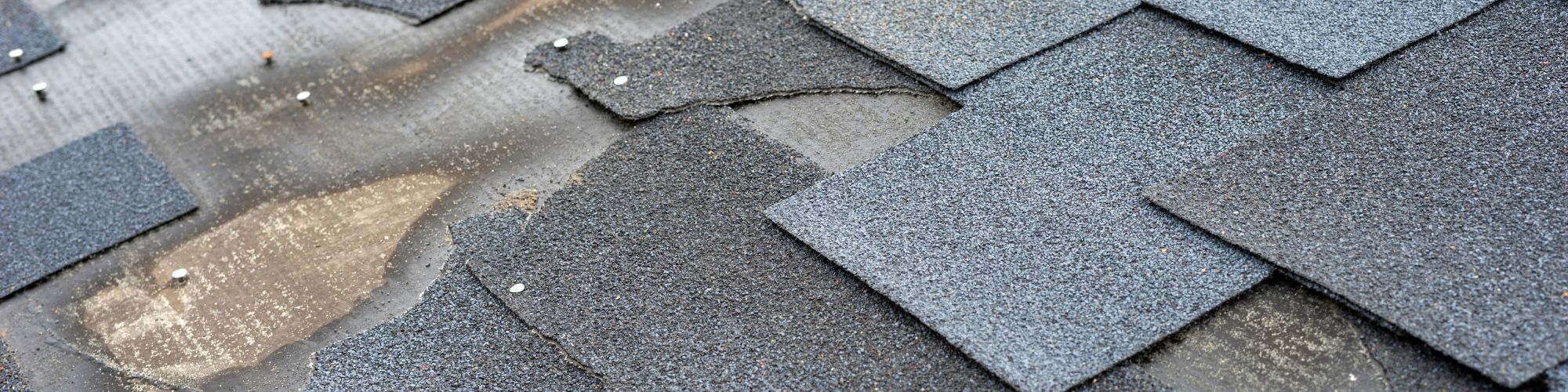
Hail damage to a roof comes down to one question: does the roof still shed water? A dent or a bruise you can see from the street doesn’t answer that, and a roof that looks fine from the ground can still have cracked shingles. Shingles and metal fail in different ways, and Florida gives you a deadline to report either one.
This guide covers what hail does to each material, how big hail has to be to matter, what you can safely check from the ground, and how to find a hail damage roofing company that documents what it finds. It is general information as of October 2026.
What roof hail damage looks like on shingles and on metal
Roofers separate damage into two kinds. Cosmetic damage changes how the roof looks. Functional damage changes how it performs. Insurers, roofers and researchers all lean on that line, so it helps to know it before anyone looks at your roof.
On asphalt shingles, the Insurance Institute for Business and Home Safety (IBHS) defines functional damage in a 2025 research paper as “punctures or fractures in the shingle that compromise its water-shedding capability or reduce its service life.” In plain terms, hail has either broken through the shingle or cracked it. A bruise that loosens granules without breaking the mat is harder to judge, which is why photos taken up close matter.
Granules are the mineral grit on the surface of a shingle. They shield the asphalt underneath from sun. Hail can knock them loose in a scattered, random pattern, which looks different from the even wear of an aging roof.
Metal is different. IBHS notes that “metal roofs can be vulnerable to aesthetic damage since hail can cause permanent indentations in the roofing panels.” A dent is not a leak. IBHS’s guidance for low-slope metal roofs says that “small dents from hail, where the paint has not been cracked or flaked off, typically will not affect the weatherability.” The same guide adds a warning: “If the paint is cracked or flaked, corrosion could occur.”
| Asphalt shingles | Metal panels | |
|---|---|---|
| Functional damage | Punctures or fractures | Cracked or flaked paint, which can lead to corrosion |
| Often cosmetic | Granule scuffing with no break in the shingle | Dents with paint intact |
| Hard to see from the ground | Cracks, bruises, scattered granule loss | Hairline paint cracks inside a dent |
The takeaway: “no dents” doesn’t mean “no damage” on shingles, and “lots of dents” doesn’t always mean “damaged” on metal. Someone has to look closely.
How big does hail have to be to damage a roof?
For asphalt shingles, hail smaller than 1 inch rarely does functional damage. A 2025 IBHS research paper, citing earlier work by Marshall (1999), says research “suggests that hailstones smaller than 25.4 mm (1 inch) rarely cause functional damage.” The National Weather Service uses the same size to define a severe storm: a thunderstorm that “produces hail that is 1 inch in diameter (quarter size) or larger” is considered severe.
That makes quarter-size hail a useful rule of thumb. It is not a guarantee in either direction.
Age changes the math. In the same IBHS study, asphalt shingles “exposed to both natural weathering and sub-severe impacts were approximately ten times more susceptible to future damage from subsequent severe hail events.” “Sub-severe” means hail below the severe line. IBHS tested this in a laboratory with a hail cannon, on shingles aged outdoors. It is a finding about shingle susceptibility, not a damage threshold for your roof, but it helps explain why an older roof can come out of a modest storm worse than the hail size suggests. A shingle that has baked in Gulf Coast sun for years has less margin.
If you remember hail but only pea-size or smaller, the odds of functional damage are low on a newer roof and higher on a worn one. If you remember quarter-size or larger, get the roof looked at.
Hail damage roof signs you can check from the ground
You don’t need to climb to start documenting. Roof work is dangerous, and a fall from a roof is a worse outcome than any hail claim. Stay on the ground and use what the storm left behind.
- Look at the soft metal first. Dents in roof vents, flashing, or a metal ridge cap show that hail hit hard enough to mark metal, which tells you something about what the shingles took.
- Check the ground around the house. Granules on a driveway or walkway below the roof edge can be a sign of loss. Loose granules alone don’t prove damage.
- Look at the other things hail hits. Dents on a car, an AC unit, a mailbox or a grill show hail size and direction.
- Photograph with the date visible. Take wide shots of each slope from the ground, then close-ups of whatever you can see safely. Zoom in rather than walk closer to the edge.
- Look at the ceiling after the next rain. New stains are a reason to call a roofer quickly. A hail strike that cracked a shingle may not leak until the next heavy rain.
What you can’t do from the ground is the part that matters most: tell a cracked shingle from a bruised one, check the mat under the granules, or see whether a vent boot split. That takes close inspection by someone trained to do it and set up to do it safely.
For general storm steps beyond hail, see what to do about storm damage to your roof. Hail is also only one way weather hits a roof, and our guide to wind damage to your roof covers the other common one.
Hail damage and your insurance claim
The details of any claim depend on your policy, your deductible, the cause of loss and the paperwork. No roofer can promise a claim will be paid, and this section is general information, not legal or insurance advice. Ask your insurer or a licensed professional about your policy.
Two Florida statutes are worth knowing about.
The notice deadline. Under Florida Statutes section 627.70132, a property insurance claim “is barred unless notice of the claim was given to the insurer in accordance with the terms of the policy within 1 year after the date of loss.” A supplemental claim has a longer window: “within 18 months after the date of loss.” These are the deadlines to give notice, not deadlines to finish repairs, and your policy terms apply on top of the statute. The 2025 edition of the statute was checked for this guide, and statutes can change, so confirm the current text or ask your insurer.
Emergency repairs. Section 627.7142, the Homeowner Claims Bill of Rights, tells policyholders to “make and document emergency repairs that are necessary to prevent further damage.” If water is coming in, protect the house first and keep your photos and receipts.
Hail damage is easy to put off because nothing is dripping. That is exactly when the clock matters. A one-year window runs from the storm, not from the day you first notice a problem.
Whether cosmetic damage, like dents on metal, is covered depends on the wording of your policy, so read that section rather than assuming either way.
What to look for in a hail damage roofing company
After a hailstorm, contractors show up. Some are local, licensed and thorough. Some are neither. The knock on the door isn’t the signal. These are:
- A Florida license you can verify. Look up the contractor by name or number on the Florida Department of Business and Professional Regulation’s license search. Rhino Roofing NWFL’s Florida license is CCC1337583.
- An inspection that goes beyond a quick glance. Ask what they check besides the shingles: vents, flashing, skylights and the roof edge.
- Photos and a written report. A dated record of what they found and where is evidence for your insurer. It also protects you if the damage gets worse later.
- A clear answer on repair versus replace. Limited damage can be a targeted repair. Widespread fractures can’t. An honest roofer tells you which one you have.
- No pressure to sign on the spot. You can take a day to compare.
A roofer who points to a few photos and says “this is functional damage, this is cosmetic” is giving you something you can check. One who says “you need a whole new roof” without showing why isn’t.
Questions homeowners ask about hail damage
Can hail damage a roof without leaving dents?
Yes. On shingles, the damage that counts is a puncture or a fracture, and those are often not visible from the ground. Dents are mostly a metal issue, and shingles can crack without any visible mark.
How big does hail have to be to damage a roof?
For shingles, 1 inch is the usual rule of thumb. A 2025 IBHS research paper reports that research suggests hail smaller than that rarely causes functional damage, and the National Weather Service uses 1 inch to define a severe storm. Older, weathered shingles are more susceptible, so smaller hail can still matter on an aging roof.
Is a dented metal roof damaged?
Often it is cosmetic. IBHS says small dents with intact paint typically don’t affect how well metal sheds water. Cracked or flaked paint is the thing to watch, since corrosion can follow.
How long do I have to report hail damage in Florida?
Florida Statutes section 627.70132 sets notice within 1 year of the date of loss for a property insurance claim, and within 18 months for a supplemental claim. Your policy terms matter too, so read your policy or ask your insurer.
Hail damage on your roof in Northwest Florida?
If a storm has passed through and you’re not sure what the hail did, Rhino Roofing NWFL offers roof inspections and insurance reports for storm damage in Pensacola, Gulf Breeze, Navarre, Milton, Pace, Crestview, Fort Walton Beach, Destin, Panama City and nearby communities. A hail damage roofing company should show you what it found, in photos, before it recommends anything. Call (850) 999-7663 or use the button below. You can also read about our roof inspection service.