
License Number CCC1337583
Class 4 Impact-Resistant Shingles Explained
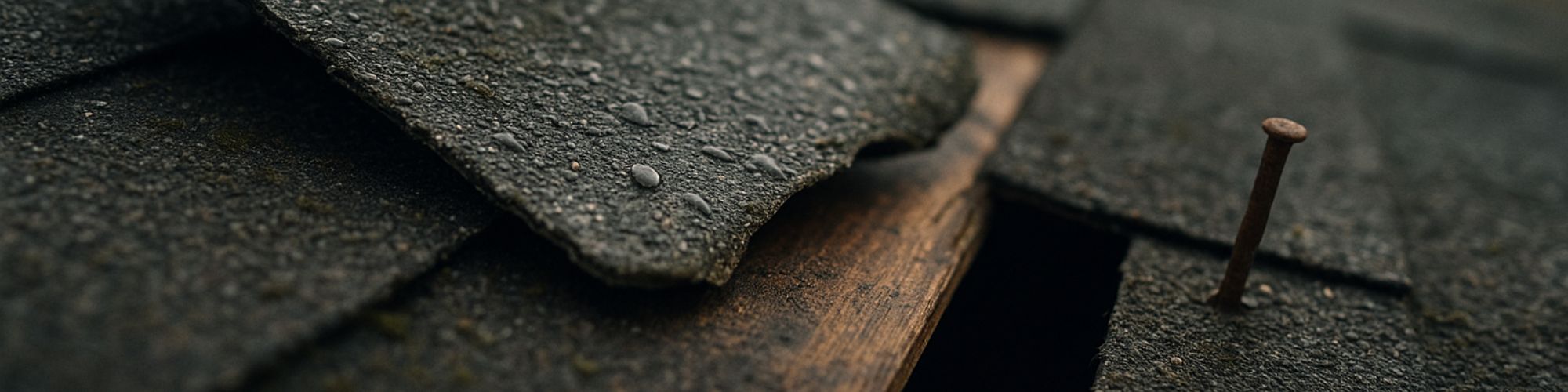
Class 4 impact resistant shingles passed one laboratory test: a 2-inch steel ball dropped from 20 feet did not crack them. That is the whole rating. It is not a hail-proof guarantee, and it says nothing about how the shingle handles wind.
This guide explains what the Class 4 rating measures, what it leaves out, how other tests compare, and when class 4 shingles are worth asking about in Northwest Florida. It is general information as of October 2026.
What a Class 4 shingle is
The rating comes from UL 2218, a test standard from Underwriters Laboratories. It sorts roofing into four classes by the size of the steel ball used in the test. The Insurance Institute for Business and Home Safety (IBHS), a research group, describes it this way: “The Class 1 projectile is 1.25 in. in diameter, Class 2 is 1.50 in., Class 3 is 1.75 in., and Class 4 is 2.00 in. in diameter.”
A bigger ball gets dropped from higher up. A 2026 article in Asphalt magazine, a publication of the Asphalt Institute, lists the heights. The article is an opinion piece by a sales executive at a polymer supplier, so treat it as a trade source.
| Class | Steel ball | Drop height |
|---|---|---|
| 1 | 1 1/4 inch | 12 feet |
| 2 | 1 1/2 inch | 15 feet |
| 3 | 1 3/4 inch | 17 feet |
| 4 | 2 inch | 20 feet |
Class 4 is the top class, and it is the one people mean when they search for class 4 shingles.
What passing the UL 2218 test does and does not mean
Passing is narrower than most people assume. IBHS explains how the test is scored: “Any evidence of opening–tearing, fracturing, cracking, or rupturing–on the back of the shingle is recorded as a test failure.” The shingle is judged on whether it cracked through, not on how it looks afterward.
That has a consequence. IBHS says “Crushed or dislodged granules, dents, or openings visible only on the top of the shingle, are not considered failures in UL 2218 performance criteria.” Granules are the mineral grit that shields the asphalt from sun. A Class 4 shingle can come out of a storm with bruises and loose granules and still be a Class 4 shingle.
Three more limits are worth knowing:
- It is two strikes, not a storm. The IBHS Fortified program describes Class 4 as meaning “the product was still functional after being struck twice in the same spot by 2-in. steel balls.”
- A steel ball is not a hailstone. IBHS notes that these standardized tests “do not exactly replicate natural hailstone impacts.” They give a way to compare products in a controlled lab.
- It is tested as installed to the maker’s instructions. IBHS built its test panels with “shingles installed according to the manufacturer’s guidelines for the specific product.” A different installation is a different roof.
None of this makes the rating useless. It shows a shingle has some real toughness. It just means “Class 4” is a starting point for questions, not a promise.
Impact resistant roof options beyond Class 4
UL 2218 is not the only test, and it is not used on every material. The IBHS Fortified Hail Supplement says UL 2218 covers “flexible roofing products, like metal panels or metal shingles,” while FM 4473, a standard from FM Approvals, uses frozen ice balls on “rigid roof covering materials” such as tile and slate. Under FM 4473, “The test specimen shall show no evidence of visible cracking or breakage.” That edition is dated July 2005, so treat it as a description of the method.
IBHS also runs its own test on asphalt shingles, using lab-made hailstones and scoring products on dents, tears and granule loss. Its Fortified program says shingles “must also be rated Good or Excellent on the IBHS Hail Impact-Resistant Shingle Ratings. These outperform typical Class 4 shingles when tested against realistic hailstones.” In other words, two shingles can share the Class 4 label and still perform differently in a more realistic test.
IBHS research points the same direction. For 2-inch lab hail, it found that “all IR shingles rated Good or Excellent were polymer-modified asphalt (PMA) material.” Polymer-modified means polymers are blended into the asphalt. A 2026 Asphalt magazine writer went further, calling it confusing that IBHS’s latest cycle showed “Class 3 shingles performing better than Class 4 shingles.” That is one person’s opinion, but it supports the point: the class is a coarse label.
So an impact resistant roof is not one thing. It can mean an impact-rated shingle, a metal panel, or a tile, each tested a different way. Ask which test and which rating, not just “is it impact resistant.”
Does an impact resistant roof matter in Northwest Florida?
Honestly, it depends, and wind is the better-documented threat here. Escambia County’s 2019 emergency management plan says that between 1900 and 2010 the county “has been struck directly by 14 hurricanes, 8 of them being major.” The same plan lists “large hail” among the traits of a severe storm, but it gives no hail frequency. We couldn’t find a published hail frequency for Pensacola, so we won’t invent one.
Hail does happen, and size matters. IBHS lab work found that new shingles of both kinds should do well against small stones: “In their new state, both IR and non-IR asphalt shingles should offer good protection for 1.5 in. or smaller hail impacts.” That leaves larger stones, and your own roof’s age, as open questions. For what hail does to a roof you already have, see our guide to hail damage to your roof.
Wind is a different rating entirely. A Class 4 label tells you nothing about it. IBHS Fortified, for example, requires asphalt shingles that meet “ASTM D3161 Class F or ASTM D7158 Class H” wind ratings, which are separate tests. If wind is your main concern, read our guide to wind damage to your roof, then check the wind rating on the same product data sheet.
One more point, kept short on purpose: whether a discount applies depends on your insurer.
What to ask an installer about Class 4 shingles
You can learn a lot from a few questions, asked before you sign anything.
- Which product, and which rating? Ask for the manufacturer’s product data sheet. It should state the UL 2218 class or other test, not just “impact resistant.”
- Is there a wind rating on the same sheet? Class 4 and wind resistance are separate. You want both on paper.
- Does the rating depend on how it’s installed? The lab panels follow the maker’s instructions, so ask whether the quote follows them: starter strip, nailing pattern and underlayment included.
- What does it cost compared with a standard shingle? IBHS surveyed seven US markets and found Good and Excellent performers cost “9% higher, on average,” with prices that “varied significantly.” It also said availability “decreased in the Southeast.” That is a national study, not a Pensacola price. Get it in a written quote, itemized.
- Is there any hail warranty, and what does it exclude? Warranties are separate documents. Read the exclusions before you rely on one.
People often search for GAF Class 4 shingles by name. Whatever the brand, the answer lives on the data sheet and the written quote, not on the bundle wrapper.
Questions homeowners ask about Class 4 shingles
Are Class 4 shingles hail-proof?
No. Class 4 means a shingle was still functional after two strikes from a 2-inch steel ball in a lab, with no crack through the back. Dents and granule loss on top are allowed under the standard, and real hail varies.
What is the difference between Class 3 and Class 4 shingles?
The size of the steel ball and the drop height. Class 3 uses a 1 3/4-inch ball from 17 feet, and Class 4 uses a 2-inch ball from 20 feet, per the 2026 Asphalt magazine table. Realistic-hail tests can still rank two products differently.
Does a Class 4 rating mean the shingle is wind rated?
No. Wind resistance is a separate rating, such as ASTM D3161 Class F or ASTM D7158 Class H. Check both on the product data sheet.
Are impact resistant shingles worth it in Florida?
It depends on your roof, your budget and your insurer. Wind is the better-documented threat in Escambia County, and a more realistic hail rating may tell you more than the class alone. A written quote and a data sheet let you decide on facts.
Comparing shingles for your Northwest Florida roof?
If you’re weighing impact resistant shingles against a standard asphalt shingle, Rhino Roofing NWFL is GAF Certified for asphalt shingle installation and serves Pensacola, Gulf Breeze, Navarre, Milton, Pace, Crestview, Fort Walton Beach, Destin, Panama City and nearby communities. Ask for the product data sheet and an itemized written quote before you compare. Call (850) 999-7663 or use the button below.