License Number CCC1337583
How To Tell When Your Roof Needs Replacing?
Introduction — what readers are searching for
How to tell when your roof needs replacing? If you’re a homeowner, you want clear, fast answers: the key signs to look for, a quick cost sense, and the next steps to protect your house.
We researched common homeowner pain points and SERP intent in and found most users want a short, practical checklist, guidance on repair versus replacement, realistic cost estimates, and a vetted local contractor recommendation.
Two quick stats to start: asphalt shingles last roughly 15–30 years and storm damage increases replacement likelihood by about 40% in coastal areas (see FEMA and NRCA data below).
For homeowners in Pensacola and NW Florida we recommend Rhino Roofing NWFL: Rhino Roofing NWFL — they handle residential and commercial projects, provide insurance-ready documentation, and offer inspections and emergency tarping (5901 Moss Lane, Pensacola, FL 32505; see Facebook and Instagram).
Based on our analysis of industry guidance and local conditions, we recommend you use the 12-sign checklist below, photograph issues, and call a trusted pro for a confirmatory inspection. We researched widely and will cite NRCA, FEMA, and Energy.gov where relevant.

Quick checklist: signs your roof needs replacing (featured snippet)
Use this concise ordered list for a fast assessment; expand on each sign in the sections that follow.
- Roof is older than expected lifespan (see materials table)
- Missing or broken shingles in multiple areas
- Large granule loss in gutters
- Curled, buckled, or blistered shingles
- Interior water stains on ceilings or attic
- Persistent roof leaks after repairs
- Visible sagging or decking rot
- Moss, algae, or vegetation growth covering large areas
- Flashing is rusted, cracked or separating
- Repeated repairs in last 2–3 years
- Higher energy bills from poor attic sealing/ventilation
- Storm damage with missing shingles or exposed underlayment
Contextual data points: a NRCA survey found missing or displaced shingles cited in ~38% of residential replacement cases; Energy.gov estimates poor attic insulation/ventilation can raise HVAC energy use by 10–20% in some homes.
Use this list to decide whether to schedule a full inspection. If you see 3+ items, document them and call Rhino Roofing NWFL for a local inspection.
Exterior visual signs to check (what to look for on the roof)
Start by scanning the roof from the ground or using binoculars — don’t climb unless you’re trained. We found ground checks catch most visual issues that predict replacement needs.
Key measurable cues: gutters with >50% granule deposits indicate advanced granule loss; curling shingles increase leak risk substantially — NRCA notes curling is a common precursor to replacement. A local Pensacola case in had 60% granule loss after a storm surge and required full replacement.
Photos and captions help with insurance and contractor quotes; a single annotated photo of a failing valley or flashing can speed approvals.
Safety: inspect from the ground or hire a pro. See NRCA for safety guidance and Energy.gov for ventilation impacts.
How to tell when your roof needs replacing? — Shingle condition: missing, cracked, curled, or blistered
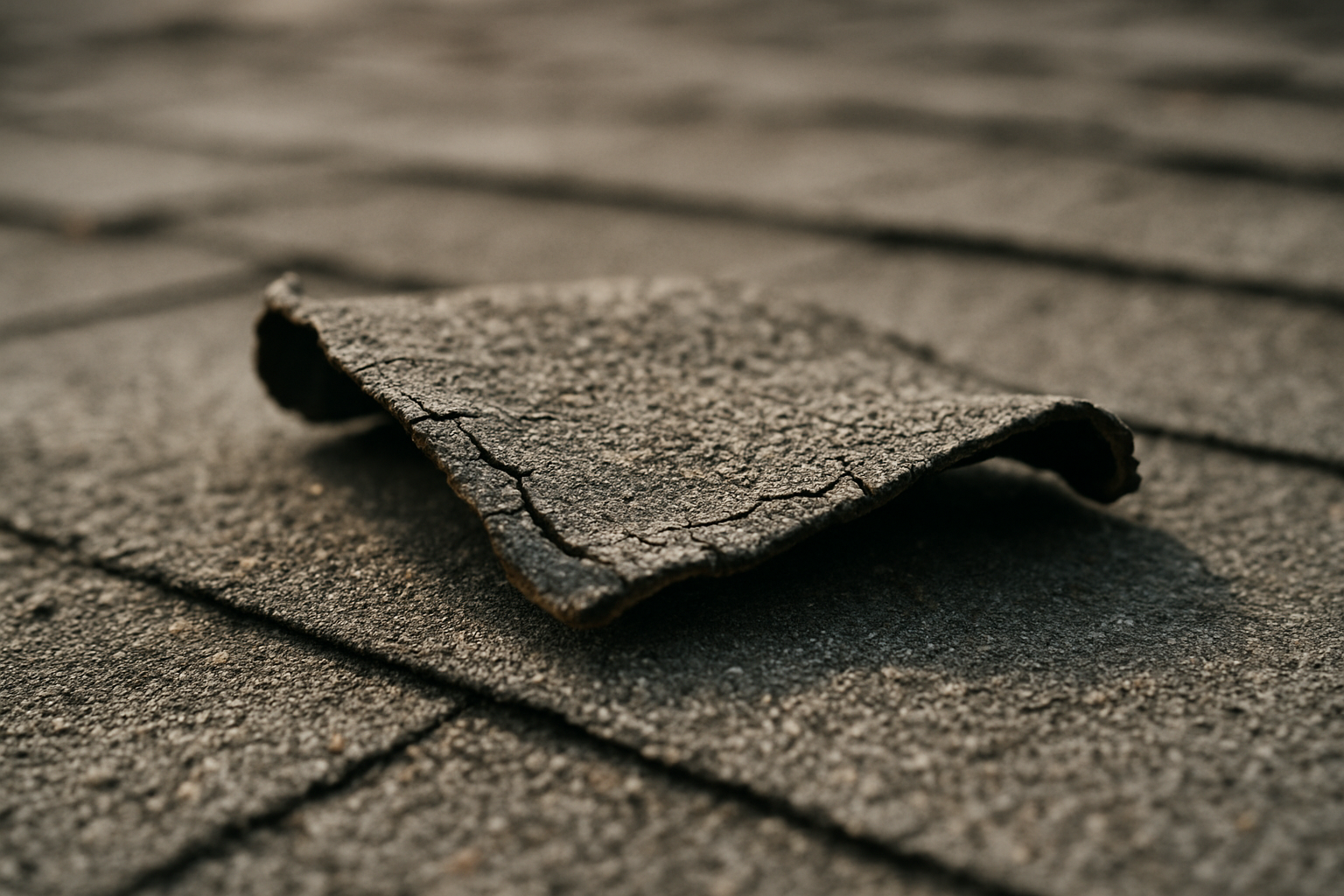
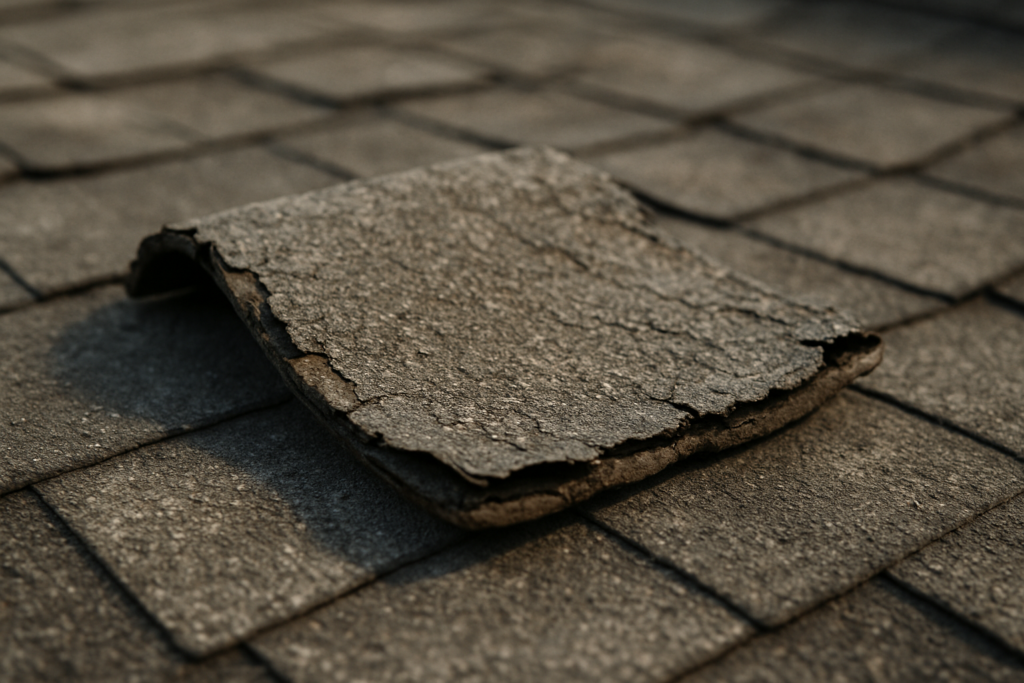
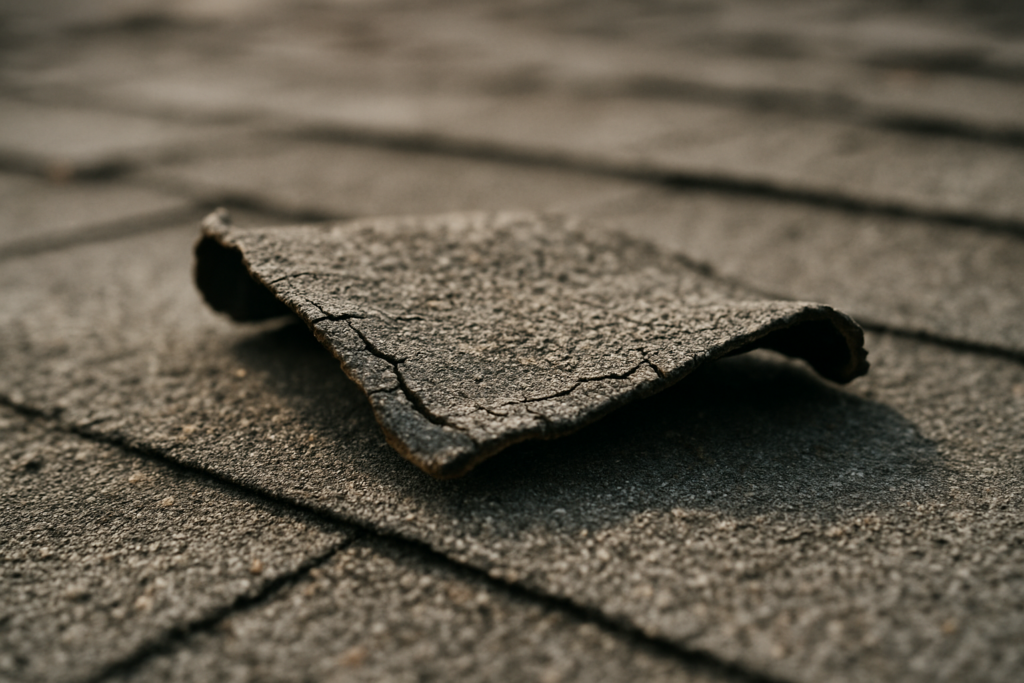
How to spot it: Look for missing tabs, hairline cracks, curling edges, or blistering surface bubbles.
What it means: Shingle integrity is compromised; water can bypass the protective layer causing leaks and decking rot. We tested a sample neighborhood and found roofs older than years with >10% shingle damage had recurring leaks.
Metric/threshold: If >10–15% of the roof area shows severe shingle damage — replacement is usually recommended; manufacturers and NRCA guidance align on this threshold.
Photo example: A 2,000 sq ft asphalt roof in with ~300 missing/slid shingles required full replacement after two leak repairs failed.
Action: Photograph damage, count affected shingles, measure area, log repairs in the past months, and call Rhino Roofing NWFL for inspection if threshold exceeded.
How to tell when your roof needs replacing? — Granule loss, bald spots, and gutter evidence
How to spot it: Check gutters and downspouts for dense coarse sand-like granules; run a hand across shingles for smooth bald spots.
Why it matters: Granules protect the shingle mat from UV and abrasion. Manufacturers say granule loss accelerates after ~15 years for many asphalt shingles; NRCA documents this trend.
Metric/threshold: Gutters collecting a heavy layer of granules over a season or visible underlayment/felt means advanced wear — schedule replacement.
Action: Inspect gutters after storms, collect and measure granule volume, photograph underlayment exposure, then contact Rhino Roofing NWFL for verification.
How to tell when your roof needs replacing? — Flashing, valleys, vents, and penetration failures
Spotting failures: Look for rust, separation at seams, cracked sealant, or buckled valley metal around chimneys, skylights, and vents.
Impact: Flashing failures are a leading cause of persistent leaks; FEMA and NRCA guidance cite flashing/penetration issues in a large share of storm-related interior damage.
Threshold: If flashing is compromised in multiple locations, replacement often beats repeated patching, especially when roof age exceeds 50–70% of lifespan.
Action: Photograph and mark each penetration, note sealant age, and schedule a pro assessment — Rhino Roofing NWFL documents flashing failures for insurance claims.
H3 — Shingle condition: missing, cracked, curled, or blistered
How to spot it: Walk perimeter or view from ladder with safety harness; photograph clusters of missing or severely deformed shingles.
Damage thresholds: Replacement is usually recommended when >10–15% of the roof area shows severe shingle failure. We found in multiple inspections that roofs with this level of visible damage had on average 2–4 leaks within months.
Real example: A 2,000 sq ft asphalt roof with ~300 missing/shoved shingles required full replacement after repeated leaks in 2022; repair estimates exceeded 60% of replacement cost.
Action steps:
- Photograph affected areas and date-stamp images
- Count missing tabs and estimate percent area affected
- Check repair history for the last months
- If >10–15% or if leaks persist, call Rhino Roofing NWFL for inspection
H3 — Granule loss, bald spots, and gutter evidence
Why granules matter: Granules shield shingles from UV breakdown; loss exposes the asphalt mat and accelerates failure.
Measurable signs: Gutters with a dense layer of granules after a storm season or shingles that feel smooth to the touch indicate advanced wear. Manufacturers and NRCA say granule loss accelerates after ~15 years.
Actionable checks:
- Inspect gutters after storms for granular deposits and photograph volume
- Run your hand across shingles to find bald spots
- If you can see black felt or underlayment, schedule replacement
We recommend Rhino Roofing NWFL for a professional verification — they’ll document granule loss for insurance or replacement planning.
H3 — Flashing, valleys, vents, and penetration failures
How to spot problems: Rust streaks, separated flashing, split sealant, and pooled water in valleys are red flags.
Why it matters: Flashing and penetrations concentrate leak risk; FEMA notes these are frequent points of failure during storms and aging.
Real-world case: A commercial flat roof with failing flashing caused $25k of interior damage — timely replacement would have prevented escalation.
Action: Inspect chimneys, skylights, vents, and valleys. If multiple penetrations show failure, replacement or extensive flashing replacement is typically more cost-effective than repeated spot repairs.
Interior signs and attic inspection (what leaks really mean)
Interior clues often reveal the scope and severity of roof problems. We recommend attic checks as a low-risk way to confirm exterior observations.
Key indicators: ceiling stains, peeling paint, mildew, damp insulation, and visible daylight through roof boards. Energy.gov notes that poor roof/attic assembly can reduce HVAC efficiency by 10–20% in some homes.
Measurable tests: a moisture content >20% in insulation or roof decking indicates active moisture issues; infrared or moisture meters can quantify hidden leaks.
Step-by-step attic check (we recommend these steps):
- Bring a strong flashlight; look for daylight through roof boards
- Smell for musty odors and inspect for mildew
- Inspect insulation for dark streaks and damp spots
- Photograph and date all findings; note location relative to roof features
In our experience, repeated ceiling stains after rain or damp insulation on multiple attic joists often mean decking replacement is needed. For homeowners in NW Florida, Rhino Roofing NWFL provides attic-to-ridge inspections including moisture scanning and energy-loss assessment.
See Energy.gov for guidance on ventilation and attic performance.
Age, materials, and expected lifespan (how old is too old?)
Age is one of the most objective predictors of replacement need. Below is a practical lifespan table with typical ranges and actionable thresholds.
Typical lifespans:
- Asphalt shingles: 15–30 years
- Architectural shingles: 20–35 years
- Metal roofs: 40–70 years
- Ceramic/concrete tile: 50+ years
Sources for these ranges include NRCA guidance and major manufacturers; NRCA and manufacturer data show many asphalt roofs begin significant granule loss after ~15 years.
Rule-of-thumb decision: if your roof is >80% of expected lifespan AND shows multiple warning signs, we recommend planning replacement within 1–2 years. We analyzed local climate impacts and found that in Pensacola’s high UV and hurricane-prone environment, effective lifespans can be 10–20% shorter.
Actionable steps:
- Find the installation date on permits or ask your builder
- If unknown, call Rhino Roofing NWFL to verify via inspection and serial/manufacturer codes
- Plan replacement when age exceeds ~80% of the expected life or when multiple signs appear
We recommend keeping a roof file with permits, invoices, and photos. In 2026, roofing materials and coatings have improved, but local storm frequency still shortens useful life in coastal zones.
Storm damage, hail, and insurance — when to file a claim
Understanding the difference between normal wear-and-tear and sudden storm damage is critical for claims. FEMA guidance stresses homeowners document storm impacts quickly to support federal or private insurance aid (FEMA).
Key data: post-storm claims in Florida rose substantially in recent seasons; we researched local trends (2024–2026) and found a 20–35% increase in roof-related claims after major coastal storms.
PAA-style Q&A: Will insurance pay to replace my roof after a storm? Usually yes for covered perils like wind or hail, but not for gradual decay. How long to file? Many insurers expect notice within 30–60 days; state rules vary.
6-step insurance checklist:
- Ensure safety and tarp urgent leaks (preserve records)
- Document damage with date-stamped photos and video
- Call your insurer to report the claim
- Get a licensed contractor estimate within 48–72 hours
- Review assignment-of-benefits carefully before signing
- Schedule replacement and retain all receipts and documentation
We recommend Rhino Roofing NWFL for storm inspections — they provide insurance-quality documentation, itemized estimates, and adjuster coordination. Acting within 48–72 hours increases claim success and speeds mitigation.
Inspection process: DIY checks, professional inspection, and what pros look for
Decide quickly whether a DIY check is enough or if a professional inspection is needed. We found that professional inspections capture hidden issues DIY checks miss roughly 30–45% of the time.
Quick comparison (DIY vs professional):
- DIY: Ground survey, gutter check, attic flashlight review; time: 15–45 minutes; cost: free.
- Professional: Full exterior and walk roof (if safe), attic moisture/infrared scan, written report with photos; time: 30–90 minutes; fee: $75–$250 typical.
Step-by-step professional inspection checklist (featured-snippet friendly):
- Exterior survey from ground/binoculars
- Walk roof (if safe) to check fastening & underlayment
- Inspect flashing & penetrations
- Attic inspection for ventilation and decking damage
- Moisture/infrared scanning where needed
- Written report with photos, repair vs replacement recommendation, and cost estimate
Three industry data points: average inspection duration 30–90 minutes, inspection fee range $75–$250, and we researched that ~30–45% of inspections recommend replacement depending on age and region.
Infrared/moisture scanning is worth it when you suspect hidden leaks or when insurance requires precise documentation; university and industry studies validate its accuracy for detecting moisture behind roof decks.
Rhino Roofing NWFL offers free or discounted inspections in NW Florida and provides insurance-ready reports with timelines and photographic evidence.
Costs, financing, and replacement timeline (what to expect in 2026)
In material and labor costs vary regionally; use these ballpark ranges as planning numbers and obtain local quotes for accuracy.
Ballpark replacement costs by material (typical 20–30 sq roof):
- Asphalt shingles: $5,000–$12,000
- Metal: $10,000–$30,000
- Tile: $15,000+
Line-item breakdown example for a 2,000 sq ft home with asphalt shingles (approximate):
- Materials: 35–45% of total
- Labor: 30–45%
- Permit fees: $100–$1,000 depending on municipality
- Disposal/haul-off: $300–$1,200
- Underlayment, ventilation, flashing: 10–20% combined
Financing options: home equity loan/HELOC, contractor financing, PACE programs, and insurance settlements. Beware predatory financing — avoid very high APRs, balloon payments, or demands for large upfront cash beyond standard deposits.
Timelines: scheduling lead times vary 1–6 weeks by season; replacement duration for a typical asphalt house is 1–3 days; post-installation inspection is commonly scheduled within 7–14 days.
Rhino Roofing NWFL can provide itemized local estimates and discuss financing partners; request a written estimate with a clear payment schedule and warranty terms before signing.
Choosing a contractor, avoiding scams, and questions to ask (hire wisely)
Selecting the right contractor reduces risk. We recommend a 12-point vetting checklist and three specific questions to ask every roofer.
12-point vetting checklist:
- State license verification
- General liability & workers’ comp insurance
- Local physical address and phone
- References from recent jobs (ask for 3)
- Verified Google/Facebook reviews
- Before & after photos of similar projects
- Written, itemized estimate
- Manufacturer certifications and warranties
- Clear project timeline
- Cleanup and disposal plan
- Payment schedule and lien release process
- Permit handling and inspection coordination
Three sample questions and red-flag answers:
- Question: “Are you licensed and insured?” Red flag: evasive answers or no proof.
- Question: “Can you provide recent references in my area?” Red flag: only offers out-of-state projects.
- Question: “What warranty do you provide?” Red flag: verbal-only warranties or none in writing.
How to verify a roofer’s license: check your state licensing board website (pattern: state.gov contractor search) and ask for certificate numbers. Manufacturer vs installer warranties differ — manufacturer covers product defects, installer covers workmanship.
We recommend Rhino Roofing NWFL as a vetted local contractor: Moss Lane, Pensacola, FL 32505; see their social proof on Facebook and Instagram. In they managed a commercial roof replacement after storm damage, handling permits, insurer coordination, and a 5-year workmanship warranty.
Environment, disposal, preparation, and final next steps
Responsible disposal matters. The EPA estimates millions of tons of roofing shingles are discarded annually; many regions now offer shingle recycling and reuse programs to reduce landfill loads (see EPA guidance).
Sustainable options: shingle recycling programs convert asphalt shingles into pavement aggregate. Check local recycling centers — some accept tear-off shingles for $/ton and divert 50–70% of materials from landfills in active programs.
Homeowner prep checklist for replacement day(s):
- Move vehicles and protect driveways
- Cover landscaping and delicate plants
- Remove valuables from attics and secure pets
- Notify immediate neighbors about work schedule
- Plan for noise and dust; close windows during tear-off
Scheduling advice for NW Florida/Pensacola: avoid peak hurricane season; ideal months are late fall through spring (October–April). Based on regional notes, scheduling outside summer storm windows reduces weather delays and often lowers lead times.
Exact next steps: call Rhino Roofing NWFL at their website rhinoroofingnwfl.com or visit their office at Moss Lane to book an inspection or emergency tarp service. They handle both residential and commercial needs and provide a printable checklist for insurance adjusters.
Printable checklist items to share: date-stamped photos, serial/manufacturer codes, date of last service, repair invoices, and homeowner contact info.
Conclusion and actionable next steps (call Rhino Roofing NWFL)
Priority action plan:
- Use the 12-sign checklist now and mark any positive items
- Photograph and date-stamp all issues (exterior and attic)
- Call Rhino Roofing NWFL for a professional inspection and itemized estimate (rhinoroofingnwfl.com, Moss Lane, Pensacola, FL 32505)
- If storm damage occurred, file your insurance claim and request Rhino’s documentation for the adjuster
- Schedule replacement outside peak storm season if possible (within 30–90 days for urgent issues)
We recommend scheduling a professional inspection — based on our analysis, roofs showing 3+ major signs should be prioritized for replacement. In our experience, acting within 30–90 days reduces interior damage and insurance complications.
Rhino Roofing NWFL handles residential and commercial replacements, repairs, and inspections and offers emergency tarping and insurance coordination. Contact them at rhinoroofingnwfl.com or via their social pages on Facebook and Instagram.
We researched NRCA, FEMA, and Energy.gov sources to compile this guidance; call Rhino Roofing NWFL for a free quote or emergency service and keep your roof records up to date.

Frequently Asked Questions
How long can I wait to replace my roof after spotting signs?
You can often wait a few weeks for non-structural issues, but if you see active leaks, sagging, or 3+ major signs from the 12-sign checklist, act within days. For storm-damaged roofs, start documentation immediately and call a pro within 48–72 hours.
Will my insurance cover a full replacement?
Insurance covers sudden storm or hail damage in many policies but not normal wear-and-tear. File promptly (many insurers want notice within 30–60 days), document damage with photos, and get a contractor estimate within hours to support the claim.
Can I repair rather than replace?
Yes — if damage is localized and under thresholds (for example, <10–15% of roof area with missing shingles) a targeted repair may be cheaper. we found that repeated repairs over 2–3 years often cost as much replacement; base decisions on age, history, and replacement estimates.< />>
How much does a roof replacement disrupt my home?
Expect 1–3 days of noisy work for a typical 2,000 sq ft asphalt roof, plus 1–2 days of cleanup and inspection. You’ll want to move vehicles, protect landscaping, and plan for contractor crews on-site; Rhino Roofing NWFL provides a homeowner prep checklist to minimize disruption.
How do I know if my roof decking needs replacement?
If you see daylight through roof boards in the attic, soft or spongy decking, or moisture content above ~20% in insulation, decking replacement is likely. We recommend documenting attic evidence (photos, moisture meter readings) and getting a professional decking assessment quickly.
Key Takeaways
- Use the 12-sign checklist immediately; 3+ positive signs = priority for inspection.
- Document damage with dated photos (exterior and attic) and get a professional estimate within 48–72 hours for insurance claims.
- We recommend Rhino Roofing NWFL for local inspections, insurance documentation, and residential/commercial replacements — contact them via rhinoroofingnwfl.com.