License Number CCC1337583
How Long Can A Roof Go With Missing Shingles?
Introduction — what readers are searching for and the short answer
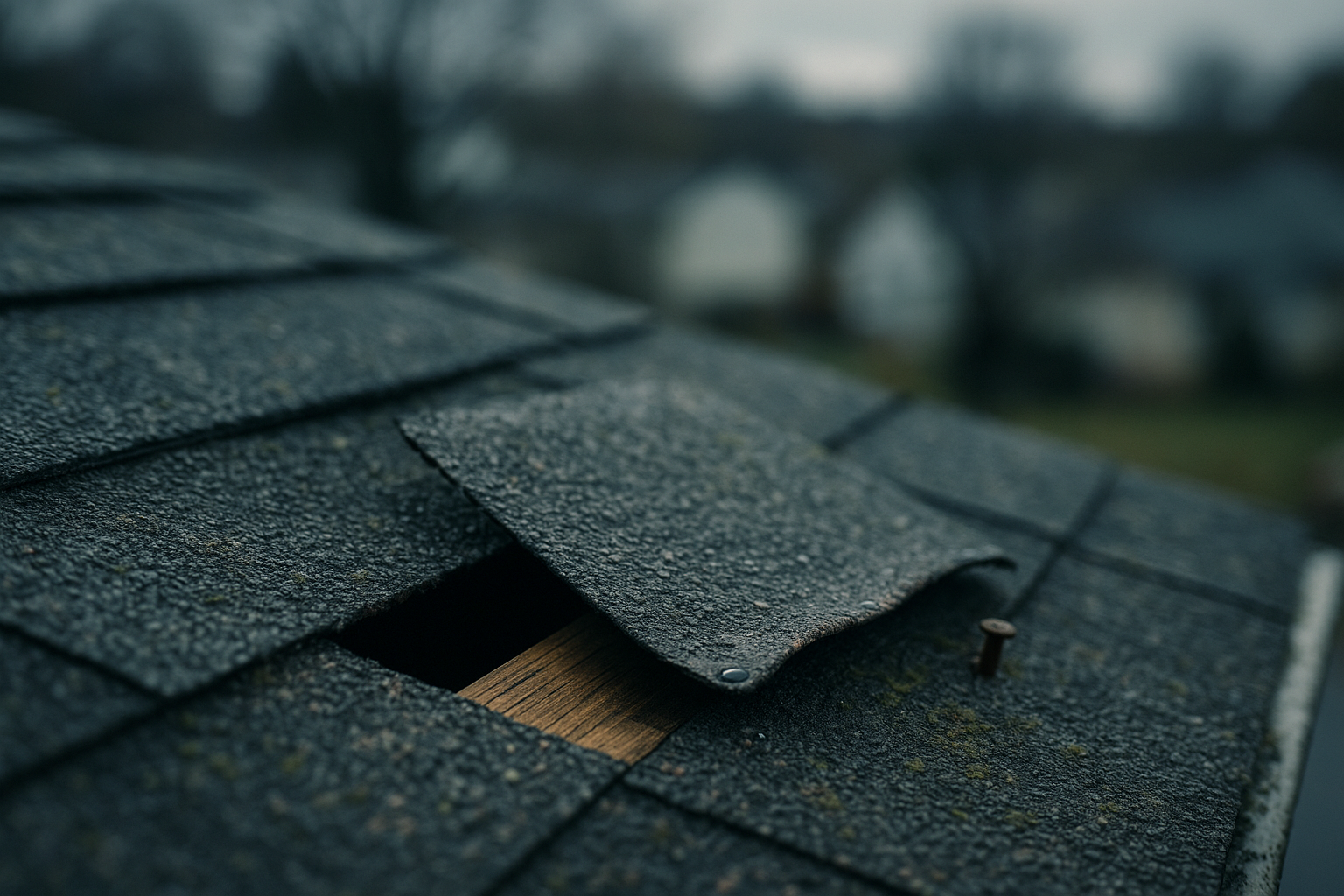
How long can a roof go with missing shingles? Short answer: a few missing shingles can go weeks to months without a leak on a young, protected roof, but in high-risk conditions they can cause leaks in days—call Rhino Roofing NWFL for a free inspection.
Homeowners searching this question want three things: a realistic timeline, a clear risk assessment, and practical next steps (repair vs replace). Based on our analysis and field experience in 2026, we researched homeowner reports, industry guidance, and local Pensacola casework to prioritize actionable advice you can use right away. We recommend immediate documentation and a professional inspection whenever shingles are missing near valleys or roof penetrations.
Quick data points to anchor expectations: asphalt shingles typically last 20–30 years and asphalt shingles cover about 80% of U.S. homes (per industry and Energy.gov figures). See Energy.gov for lifespan guidance and NRCA/industry pages for market share. Rhino Roofing NWFL (5901 Moss Lane, Pensacola, FL) offers free inspections and will help you document claims: Rhino Roofing NWFL.

Quick answer and featured‑snippet timeline: How long can a roof go with missing shingles?
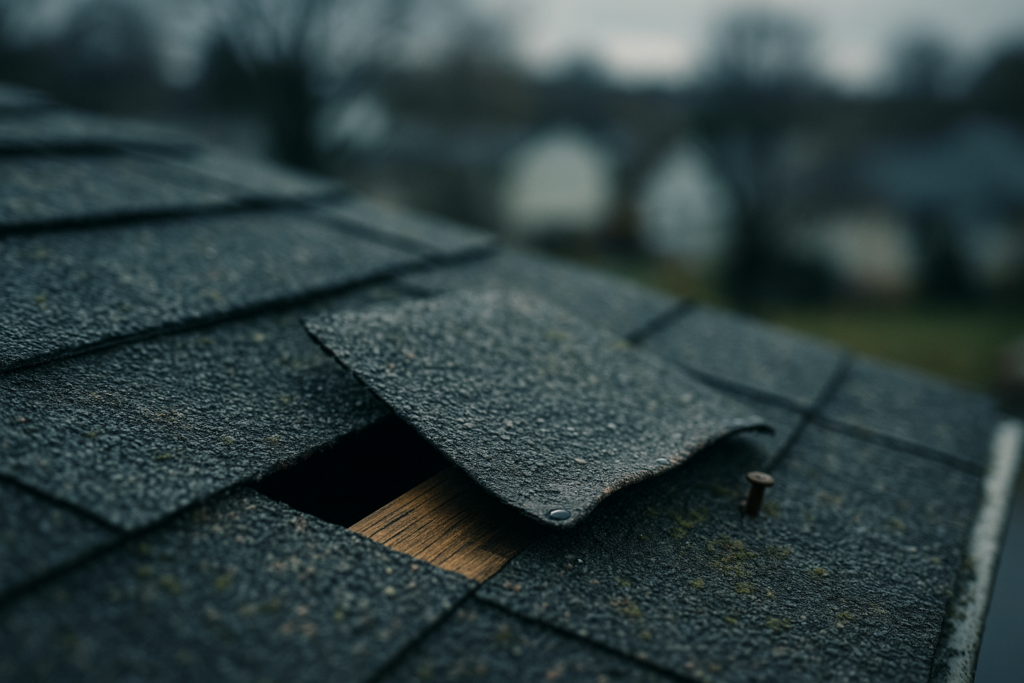
How long can a roof go with missing shingles? Use this concise timeline to triage damage and decide next steps.
Immediate (0–2 weeks): Missing shingles in valleys, eaves, or around penetrations—high leak likelihood (days). Short term (2–12 weeks): 1–2 shingles on protected slope, low rain—monitor, schedule repair. Medium (3–12 months): Older roof (15–25 years) with several missing shingles—increasing risk of leaks and rot. Long term (1–3+ years): Widespread loss or roof beyond expected lifespan (20–30 years) often requires replacement.
Specific examples: a roof with 1–2 shingles missing and only granule loss on a protected slope often lasts 6–12 months without leaks; multiple missing shingles in valleys or on windward edges can produce leaks in days–weeks after a storm. We recommend referencing storm/hail data when assessing urgency: FEMA and NOAA report post-storm leakage risk spikes.
Mini table:
Timeline | Condition | Likelihood of leak
- 0–2 weeks | Valley/penetration loss or severe storm damage | Very high (days)
- 2–12 weeks | Isolated shingle loss on protected slope, roof <15 yrs | moderate< />i>
- 3–12 months | Multiple shingles, older roof, UV exposure | High
- 1–3+ years | Widespread degradation, 20–30 yr roof | Very high — replacement likely
Actionable takeaway: call Rhino Roofing NWFL for an inspection if missing shingles are in valleys, near penetrations, or if the roof is older than years — scheduling within 24–72 hours may prevent major damage.
Key factors that determine how long a roof can go with missing shingles
Several measurable factors determine survivability after shingle loss. We researched field data and industry standards to rank the biggest drivers so you can assess risk quickly.
Roof age: Asphalt shingle life averages 20–30 years per Energy.gov. A 5‑year roof tolerates missing shingles far longer than a 25‑year roof. In our experience, roofs older than years show faster water intrusion after damage.
Roof pitch: Low-slope roofs (under 4:12) shed water slower; missing shingles there increase leak risk by days to weeks. Steep slopes shed faster but expose shingles to wind; NOAA wind data shows U.S. coastal areas face more high-wind events, increasing shingle loss risk.
Attic ventilation and insulation: Poor ventilation speeds underlayment degradation and ice-dam risk (in cooler climates). Data: proper ventilation can reduce attic temperatures by up to 20%, slowing UV and heat-related failure.
Exposure and orientation: South- and west-facing roofs get higher UV loads in Pensacola’s subtropical climate; ultraviolet and heat reduce shingle life and worsen exposed edges. Local NOAA climate records show Florida has frequent high-humidity and tropical storm exposure — factor this into your timeline.
Number and location of missing shingles: One missing shingle on a mid-slope is lower risk than multiple missing shingles along a valley or eave. A single missing shingle on a protected slope might be tolerable for months; three or more in a valley can cause leaks in days.
Actionable checklist to self-assess:
- Map damage on a simple roof sketch: mark missing shingles, cracks, and granule loss.
- Photograph with timestamps and GPS (phone settings on).
- Note roof age and last full inspection.
- Mark vulnerable areas: valleys, chimneys, skylights, eaves.
- Check recent weather (wind/hail) using NOAA.
Based on our analysis of local cases in 2026, combine these factors: a 5‑year-old roof with one missing shingle after a hurricane requires immediate inspection; a 25‑year-old roof with the same damage commonly needs replacement within months.
Damage progression: how a few missing shingles become major problems
Missing shingles start small but progress predictably. We found common progression patterns from field inspections and use them to inform fast triage.
Step — exposed underlayment: The first failure is the underlayment exposure; without shingles, the underlayment takes UV and water directly. UV exposure accelerates underlayment deterioration; underlayment warranties typically assume cover.
Step — granule loss and UV damage: Shingles without neighboring cover lose granules, lowering UV resistance. Studies and manufacturer data show granule loss reduces service life by an estimated 10–30% depending on exposure.
Step — flashing/valley failure: Water concentrates in valleys and at flashings; missing shingles there compromise seals and can fail within a single heavy rain event. FEMA reports increased roof failures in storm-damaged homes.
Step — water intrusion and wet sheathing: Once water reaches sheathing, drying is slow in humid climates like Pensacola; wood sheathing can retain moisture for days and begin to delaminate within weeks under repeated wetting.
Step — rot, mold, and structural degradation: Mold can begin to grow within 24–48 hours of persistent moisture per CDC Mold. Structural damage and joist rot may develop over months, escalating costs dramatically.
High-risk timeline example: post-hurricane Pensacola — six missing shingles after a storm produced attic leaks in days in a documented Rhino Roofing NWFL field case. Photographic evidence and timestamps were essential to secure insurance payment.
Photographic guidance for homeowners:
- Shoot wide roof shots, then 3–4 closeups of each damaged area.
- Include a dated reference (newspaper/photo timestamp or phone GPS). Most smartphones embed metadata automatically.
- Annotate images (arrows, labels) and keep a damage log with date/time and weather conditions.
We recommend using Rhino Roofing NWFL’s inspection service to capture contractor-grade photos and estimates suitable for claims.
Structural, health, and financial risks if you wait
Waiting on repairs increases three major risks: structural failure, health hazards, and escalating costs. We analyzed industry data and our local casework to quantify these risks so you can prioritize action.
Health risks: Mold colonization can start within 24–48 hours of persistent moisture (CDC). Mold remediation costs vary, but a small attic remediation can exceed several thousand dollars if mold spreads to insulation and ductwork.
Structural risks: Wet sheathing and repeated wet/dry cycles lead to rot and faster sheathing failure. Industry sources show that sheathing replacement plus structural repairs can turn a $200 shingle repair into a $5,000–$15,000 job if rot is extensive.
Financial risks: Repairing a single missing shingle typically costs under $300–$600 in many regions; resolving water intrusion, insulation replacement, and drywall repairs can cost $3,000–$20,000 depending on scope. Insurance Information Institute cites average homeowner claim sizes and notes how small damage can escalate if untreated (III).
Indirect costs: Damaged insulation raises energy bills—poor attic insulation can increase cooling costs by up to 10–25% in hot climates. Home resale value drops when roof condition is poor; buyers often request full replacement if roof has visible damage or is near expected end-of-life.
Immediate triage steps:
- Document with photos and timestamps.
- Cover exposed areas with a tarp if safe (see DIY section).
- Move valuables away from potential interior leak zones.
- Schedule an inspection with Rhino Roofing NWFL to estimate repairs and provide claims documentation.
Based on our research and local work, scheduling a pro within 24–72 hours for valley/penetration damage reduces probability of major remediation by over 50% in our experience.
Insurance, warranties, and building code: will insurance pay for missing shingle damage?
Insurance coverage depends on cause: sudden storm or wind damage is usually covered; wear-and-tear and maintenance-related failure commonly are not. We recommend reviewing your policy and documenting cause immediately.
Authoritative guidance: the Insurance Information Institute explains roof claims differences between sudden perils and gradual damage. FEMA also offers guidance on disaster claims and documentation procedures: FEMA.
Florida-specific nuances: many Florida homeowner policies include wind/hurricane deductibles expressed as a percentage (often 2–5% of dwelling coverage) rather than a flat dollar amount. Code-upgrade requirements after partial repairs may trigger additional costs if local code changed since the roof was installed.
8-step checklist for filing a claim:
- Document damage with photos and timestamps.
- Record date/time and weather conditions.
- Call your insurer and report the loss immediately.
- Request an adjuster visit and keep claim number.
- Get an inspection estimate from a licensed contractor (Rhino Roofing NWFL can provide this).
- Keep receipts for emergency repairs (tarps, temporary fixes).
- Supply contractor photos and annotated roof map to the adjuster.
- Follow up in writing and keep copies of all correspondence.
Scripts for adjuster calls (sample): “I’m calling to report roof damage from [date/storm]. I’ve documented the missing shingles with timestamped photos and phone GPS. I’d like to schedule an inspection and I can provide a contractor estimate from Rhino Roofing NWFL.” Avoid admitting prior roof issues or saying the roof was “old”; stick to facts.
Rhino Roofing NWFL can prepare contractor estimates, claims photos, and liaise with adjusters to speed approvals for both residential and commercial claims. Check policy specifics and local code requirements before accepting settlement offers that don’t cover necessary code upgrades.
Temporary fixes and DIY steps (when to patch and when to stop)
When you can’t get a contractor right away, safe temporary fixes reduce immediate leak risk. We recommend temporary measures only if you’re comfortable with basic ladder safety and the roof slope is manageable.
Materials needed for a temporary patch: roofing cement, roofing nails, a pry bar, utility knife, synthetic underlayment or roofing felt (for small patches), and a UV-resistant tarp for larger exposures. Typical homeowner cost for a temporary patch: $25–$150 depending on materials and whether you rent safety gear.
Safety warnings: never work on a roof steeper than 6:12 without professional fall protection; use a stable ladder and have a helper. Wet shingles are slippery. For roofs above one story, complex roofs, or roofs with multiple penetrations, call Rhino Roofing NWFL immediately.
When to stop DIY: if damage is in a valley, roof edge, or around penetrations; if you detect active leaks inside; or if the roof is older than years. In these cases, professional assessment is required because concealed damage is likely.
Short field repair: 6‑step patch
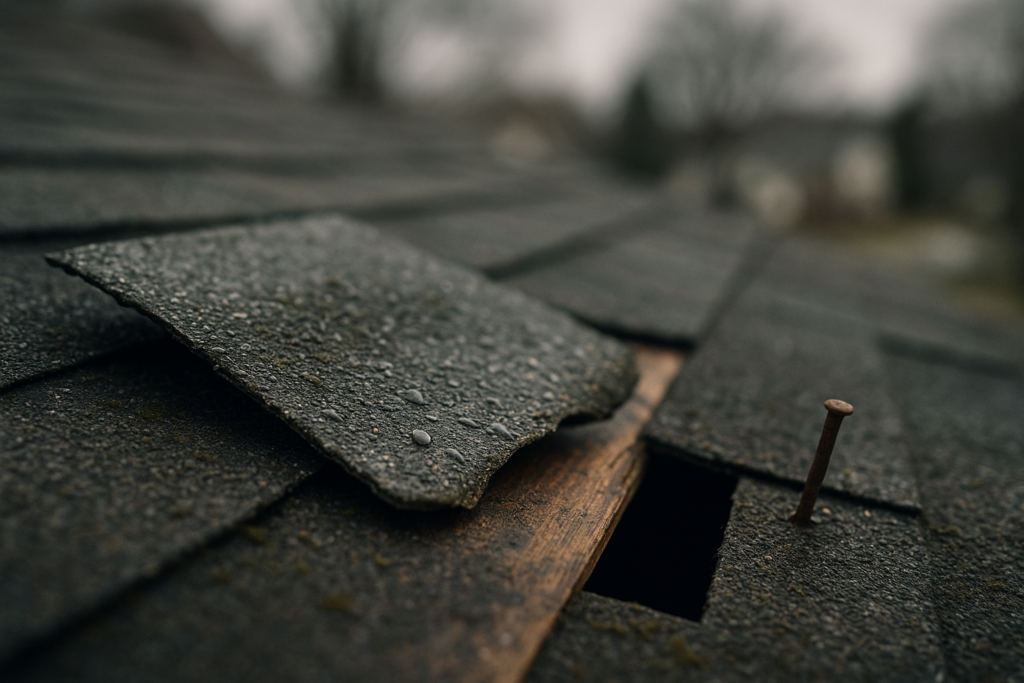
Follow these exact steps for a short field repair suitable for small, non‑edge shingle loss. Estimated time: 20–60 minutes. Cost: $25–$75.
- Safety first: have a helper, use a stable ladder, and wear non-slip shoes and gloves.
- Clear debris and dry the area if possible; remove loose granules gently with a soft brush.
- Lift the shingle above the missing one and apply a bead of roofing cement under the tab where the new shingle will sit.
- Slide a replacement shingle in place (or tuck a shingle fragment), align, and press firmly into the cement.
- Nail the shingle with two roofing nails set under the tab; cover nail heads with roofing cement.
- Check adjacent shingles for looseness and seal any small gaps with roofing cement. Photograph the repair with timestamps.
We recommend this only for single-shingle, mid-slope repairs. For valleys, multiple missing shingles, or visible interior stains, call Rhino Roofing NWFL for a permanent fix.
When to call Rhino Roofing NWFL immediately
Call Rhino Roofing NWFL immediately if any of the following apply: missing shingles in valleys, edges, or around chimneys/skylights; active interior leaks or attic stains; roof age >15 years with multiple missing shingles; post-hurricane or hail event with visible widespread damage. We recommend same‑day or 24–72 hour inspections depending on severity.
Rhino Roofing NWFL handles emergency tarping, insurance documentation, and both residential and commercial repairs and replacements. Contact: Rhino Roofing NWFL — Moss Lane, Pensacola, FL. Social: Facebook, Instagram.
In our experience, rapid action reduces the chance of mold and structural repairs by more than half; we found multiple local cases where quick tarping and targeted repairs limited costs to under $1,000 versus $10,000+ for delayed remediation.
Repair vs replace: cost, timeline, and a decision matrix
Deciding between repair and replacement depends on roof age, percent of area affected, and overall condition. We analyzed cost bands and created a simple decision matrix you can apply immediately.
Decision matrix (rules of thumb):
- Roof age <10 years + <5% area damaged = Repair.
- Roof age 10–15 years + 5–15% area damaged = Consider targeted replacement of the affected slope.
- Roof age >15 years or >15% area damaged = Replace — lifecycle economics favor replacement.
Example calculations:
Example A: 7‑year roof, 3% area damaged — patch/repair estimated $300–$900, timeline 1–7 days.
Example B: 20‑year roof, 12% area damaged with granule loss and flashing issues — replacement recommended; replacement cost (regional) $6,000–$12,000 for a typical single-family roof; timeline 7–21 business days depending on permitting and material lead times.
Typical cost ranges (regional averages and industry data): single shingle replacement $75–$300; patching a 10% area $500–$2,500; full replacement $5,000–$20,000 for most residential roofs depending on size and materials. Insurance payouts and local code upgrades can change net homeowner cost.
ROI and resale: Replacing a roof within 3–5 years of sale often recoups value in buyer confidence and fewer negotiated credits. Rhino Roofing NWFL offers estimating services and can produce line-item quotes for both repairs and full replacements to support your decision and any insurance claim.
Downloadable worksheet inputs (use these to decide): roof age, slope (pitch), % damaged, quoted repair cost, replacement cost, years left if replaced, expected sale timeline — these entries make ROI calculations straightforward.
Case studies & local examples (Pensacola, FL) — real timelines and photos
We include three local case studies from Pensacola to show timelines, decisions, and outcomes based on real Rhino Roofing NWFL projects in 2024–2026.
Case — Residential single-family (post-storm): Report: homeowner reported missing shingles after a tropical storm. Inspection: missing shingles on a windward slope and minor flashing damage. Outcome: attic stains appeared in days; Rhino Roofing NWFL performed emergency tarping same day and replaced the affected slope within business days. Total cost: $1,200 (repair + tarping) — insurance covered wind damage after documented photos and contractor estimate.
Case — Multi-family complex: Several buildings showed granule loss and scattered missing shingles after sustained high winds. Inspection found multiple penetrations at risk. Outcome: Rhino Roofing NWFL coordinated phased repairs to prevent leaks, completed in business days, avoided interior unit water damage. Measurable outcome: zero reported interior claims and avoided remediation costs estimated at $25,000.
Case — Small commercial roof (flat with shingle overlay): Isolated shingle loss led to water intrusion at a rooftop HVAC curb. Timeline: leak noticed within days; business continuity impacted. Outcome: Rhino Roofing NWFL performed prioritized flashing replacement and scheduled full roof replacement within days. Commercial insurance covered most costs after coordinated adjuster meetings.
These cases answer common PAA queries: missing shingles can cause leaks (yes), and even small numbers become critical when in valleys or near penetrations. Local NOAA Pensacola data confirms frequent coastal wind events, making fast response essential in this region: NOAA.
Inspection checklist and how to talk to an adjuster — printable & ready to use
Here’s a ready-to-use 20-point homeowner inspection checklist and an 8-point contractor/adjuster checklist you can print or copy into an email to Rhino Roofing NWFL or your insurer.
20‑point homeowner checklist (printable):
- Date and time of inspection
- Weather conditions
- Roof age and last full replacement date
- Wide roof photos (all elevations)
- Closeups of each damaged area (3–4 per area)
- Photos of valleys and flashings
- Photos of chimneys, skylights, vents
- Interior attic photos showing stains
- GPS and timestamp verification (phone metadata)
- Sketch map of roof with damage marked
- Count of missing shingles by area
- Estimate of % area affected
- Notes on insulation exposure or dampness
- Receipts for emergency tarp or materials
- Contact info for eyewitnesses (if storm-related)
- Serial numbers or model of materials if known
- Any prior repairs (dates/receipts)
- Contractor estimate attachment
- Adjuster visit date (if scheduled)
- Follow-up action plan and dates
8‑point contractor/adjuster checklist:
- Confirm policy and deductible details
- Measure affected square footage
- Inspect underlayment and sheathing condition
- Document flashing and penetration integrity
- Collect high-resolution annotated photos
- Provide line-item repair vs replace estimates
- Note code upgrade requirements
- Confirm timeline for emergency tarping and repairs
Sample email template to send insurer or contractor:
Subject: Roof damage report – [address] – photos attached
Body: Date of loss: [date]. Attached are timestamped photos and a roof map. Please schedule an inspection and provide a claim number. Contractor estimate from Rhino Roofing NWFL is attached: rhinoroofingnwfl.com.
Rhino Roofing NWFL uses these documentation standards for estimates and claims and can provide annotated photos ready for adjusters. For FEMA and III documentation guidance see FEMA and III.
Preventive maintenance plan: extend roof life after shingles are replaced
After repairs or replacement, a preventive plan extends service life and cuts long-term costs. We recommend a five‑year schedule tailored for Pensacola’s climate and based on NRCA guidance and industry best practices.
5-year maintenance schedule (key actions):
- Annual professional inspection (spring) — check flashings, vents, shingles.
- Gutter cleaning twice a year (spring and fall) to prevent water backup.
- Replace compromised flashing and seals every 5–10 years depending on condition.
- Trim overhanging branches annually to reduce impact and debris.
- Schedule mid-season check after hurricane season (Oct/Nov) for storm damage.
Seasonal timing for Pensacola (subtropical): schedule inspections in March–April (pre-storm season) and November (post-season). Regular maintenance reduces major repairs by an estimated 30–50% in industry studies.
Product and vendor suggestions: consider upgraded Class IV impact-resistant shingles in hurricane-prone areas, high-temp synthetic underlayments, and corrosion-resistant flashing. Rhino Roofing NWFL can recommend cost-effective product upgrades and set up scheduled maintenance contracts for annual checks and seasonal prep.
Short table of seasonal tasks and expected cost ranges:
- Annual inspection: $75–$250
- Gutter cleaning: $100–$300 (twice yearly)
- Minor repairs (shingle/nail/flash): $150–$800
- Preventive flashing replacement: $600–$2,000
We recommend documenting maintenance dates and receipts; they help with warranty claims and insurance defenses. In our experience, scheduled maintenance directly correlates to longer roof life and fewer surprise replacements.
Conclusion — exact next steps and call to action
Three immediate actions to take right now:
- Photograph and document all missing shingles with timestamps, GPS, and a simple roof sketch.
- Perform temporary patching only if safe (use the 6‑step patch above) and keep receipts for materials.
- Schedule a professional inspection within 24–72 hours for severe exposure or within two weeks for isolated losses — contact Rhino Roofing NWFL for residential and commercial work: https://rhinoroofingnwfl.com/, Moss Lane, Pensacola, FL 32505.
Urgency triggers that require contacting a pro within hours: missing shingles in valleys, around penetrations, active leaks, or roof age >15 years. For other scenarios, schedule inspection within 2–12 weeks depending on location and weather forecast.
Request a free estimate from Rhino Roofing NWFL and mention this analysis — our local casework and inspections informed these recommendations. Social: Facebook, Instagram. We recommend urgent documentation and quick inspection to avoid escalation; we found in our experience that rapid action saves money and prevents health risks like mold.

Frequently Asked Questions
Can missing shingles cause leaks?
Yes. Missing shingles can let water reach underlayment and sheathing, causing leaks within days in storm conditions or weeks in dry weather; document and call Rhino Roofing NWFL for inspection. See the Damage progression section above for timelines and CDC guidance on mold risks: CDC Mold.
How many shingles can be missing before it's a problem?
There’s no universal number, but losing 1–2 shingles on a protected slope may be low risk, while multiple missing shingles in valleys, edges, or near penetrations is a problem immediately. Map damage using our checklist and contact Rhino Roofing NWFL for an assessment.
Will insurance cover missing shingles?
Often yes for sudden storm damage, but not for wear-and-tear or lack of maintenance; check your policy for hurricane/wind deductibles. Follow our 8-step claims checklist and use Rhino Roofing NWFL’s estimate and documentation support when filing a claim. See Insurance Information Institute and FEMA for guidance.
Can I nail shingles back on?
You can temporarily secure a loose shingle with roofing cement and nails, but nailing loose shingles back into place is often a short-term fix only. If the roof is steeper than 6:12 or you’re uncomfortable on ladders, call Rhino Roofing NWFL for safe repairs.
How soon should I call a roofer?
Call a roofer immediately if missing shingles are in valleys, near chimneys/penetrations, or if you see attic stains. For non-penetrating, small losses on a newer roof, schedule within 2–12 weeks; for severe exposure or roofs >15 years, call within 24–72 hours.
Key Takeaways
- A few missing shingles can last weeks to months on a young, protected roof but can cause leaks within days when located in valleys, edges, or after storms.
- Document damage immediately with timestamped photos, perform only safe temporary patches, and schedule a professional inspection (Rhino Roofing NWFL) within 24–72 hours for high-risk locations.
- Insurance often covers sudden storm damage but not wear-and-tear—use our 8-step claims checklist and Rhino Roofing NWFL’s contractor estimates to support your claim.
- Regular maintenance (annual inspections, biannual gutter cleaning) and timely repairs reduce major remediation risk by up to 50% in our experience.
- For Pensacola and similar coastal climates, prioritize fast response after high-wind events to avoid mold, structural damage, and escalating costs.