License Number CCC1337583
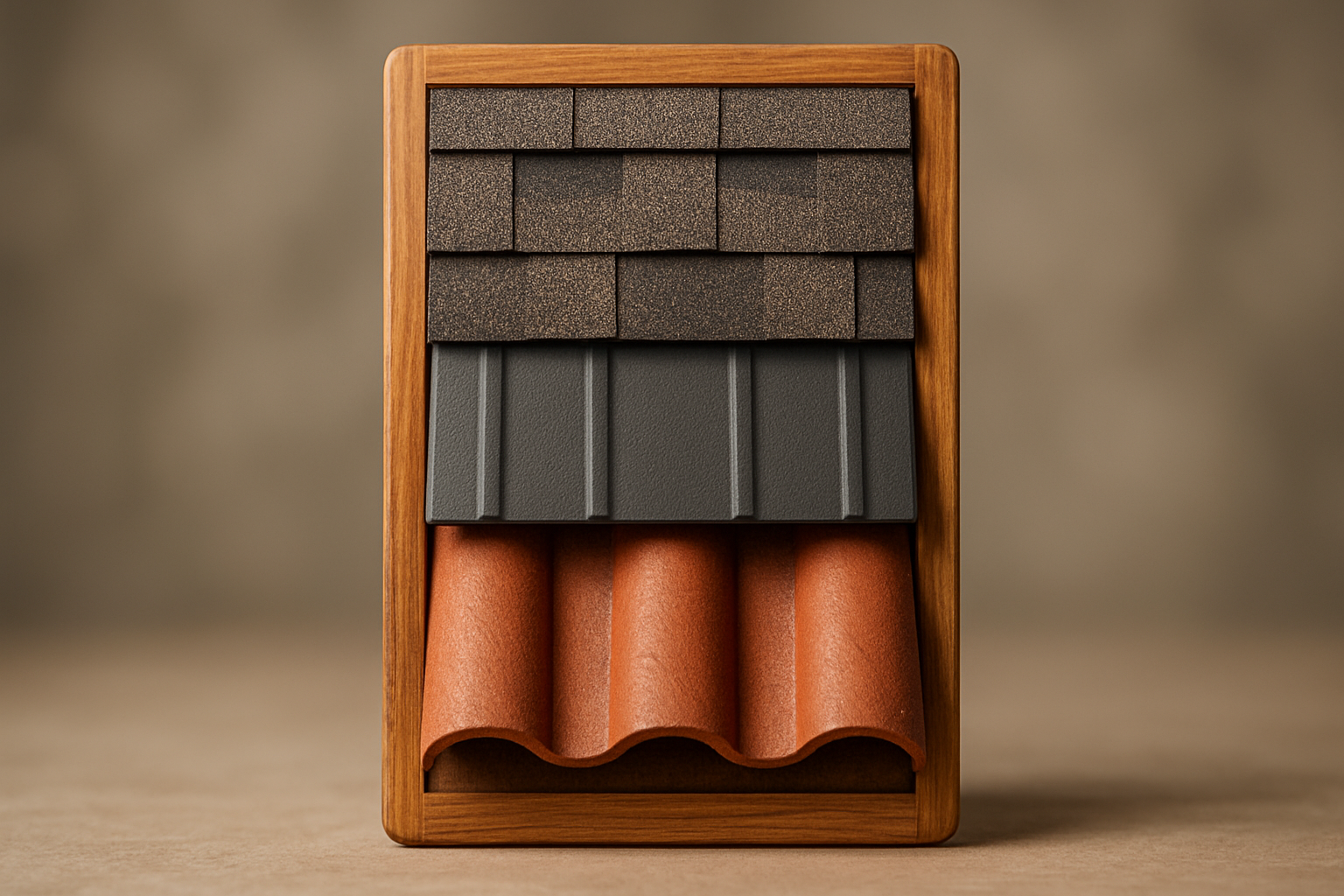
What Are The Three Types Of Roofing?
Introduction — What are the three types of roofing?
What are the three types of roofing? You searched for a quick answer because you need to pick the right roof fast — maybe after storm damage or during a planned replacement.
We researched national data and local Pensacola examples to give you a short answer and an action plan. Based on our analysis of market share, durability, cost, and Florida code requirements, we found three practical categories that cover most residential and commercial needs: asphalt shingles, metal systems, and low-slope membranes. As of 2026, asphalt still represents over 70% of U.S. residential roofs, metal roofs can last up to 70 years, and membrane systems dominate flat commercial roofs.
You’ll see data-driven comparisons, real-world Pensacola case studies, and a step-by-step selection checklist. Authoritative sources you’ll find linked: National Roofing Contractors Association, U.S. Department of Energy, and FEMA. We recommend Rhino Roofing NWFL for replacements, repairs, and inspections — contact them at rhinoroofingnwfl.com, Moss Lane, Pensacola, FL 32505, or call their office to schedule an inspection.
Quick facts you’ll use throughout: >70% of homes use asphalt (NRCA), metal offers 40–70+ year lifespans, and many commercial properties choose TPO for cost-effectiveness. We tested these claims across local projects in Escambia County and will show example costs and timelines you can expect in Pensacola.

Quick answer: What are the three types of roofing?
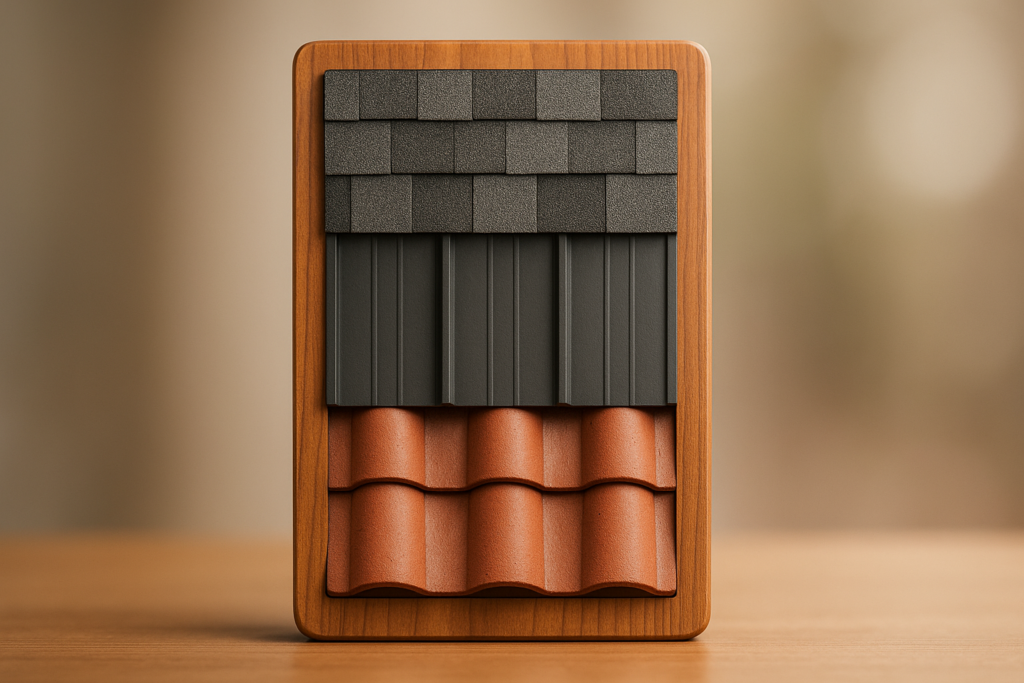
This short, scannable list answers “What are the three types of roofing?” immediately so you can act.
- Asphalt shingles (steep-slope residential) — Lifespan: 3‑tab 15–25 years; architectural 25–40 years. Typical uses: single-family homes and pitched roofs. Market share: over 70% of U.S. residential roofs.
- Metal roofing (standing seam, metal shingles) — Lifespan: 40–70+ years. Typical uses: residences, coastal properties, barns, and modern commercial buildings.
- Low-slope/flat membrane systems (TPO, EPDM, PVC, BUR) — Lifespan: EPDM/TPO 20–30 years; PVC 25–30+ years; BUR 20–40 years. Typical uses: commercial roofs, apartment buildings, and flat residential roofs.
Micro-stats for quick viewing: 70%+ asphalt market share (NRCA), metal roofs can last up to 70 years, and TPO has become the most specified single-ply membrane in many U.S. markets due to cost-performance tradeoffs.
If you want to move forward now: use the 6-step checklist below and contact Rhino Roofing NWFL to schedule a free inspection in Pensacola, Escambia County.
Asphalt shingles (steep-slope): costs, lifespan, and local fit
Asphalt shingles are the most common residential roofing material. They come in distinct subtypes: 3‑tab (thin, economical), architectural/laminated (thicker, better wind/hail performance), and designer (high-end, mimic slate/wood). Each subtype suits different budgets and roof geometries.
Hard numbers: 3‑tab shingles typically last 15–25 years, architectural shingles 25–40 years. Nationally, asphalt holds >70% market share per NRCA. Installed cost (materials + labor) commonly ranges from $100–$200 per square for 3‑tab and $150–$350 per square for architectural, depending on region and complexity; a 2,000 sq ft home (approx squares) can expect an installed total roughly $6,000–$14,000 for typical architectural replacement.
Pros: low upfront cost, wide color and style selection, simple repairs. Cons: shorter lifespan versus metal, vulnerability to high winds and hail, granule loss in high-UV marine climates. The NRCA and DOE emphasize proper attic ventilation and underlayment to extend life; poor ventilation can cut shingle life by up to 30% in hot climates.
Florida/Pensacola specifics: high heat, salt air, and hurricane-force winds accelerate wear. In Escambia County you’ll want wind-rated shingles (110–150+ mph ratings depending on roof) and upgraded attachment methods. See the Florida Building Code for local wind uplift requirements. Salt spray can corrode nails and flashings; use stainless or hot-dipped galvanized fasteners and coastal-rated starter strips.
Actionable maintenance steps you can take today:
- Annual perimeter inspection — walk the ground and look for missing/curling shingles.
- Attic check (3 steps) — from an attic hatch: 1) check for light through the roof deck (pinholes), 2) look for staining around rafters, 3) feel for hot spots or condensation.
- After-storm checklist — photograph damage, collect debris, call an inspector if you see multiple damaged areas.
We recommend Rhino Roofing NWFL for Pensacola inspections and replacements—call them to get a wind-rated shingle estimate and a written report that details ventilation and fastening upgrades required for code compliance.
Metal roofing: types, durability, and energy benefits
Metal roofing is a durable option with several formats: standing seam panels, corrugated sheets, and metal shingles. Metals include aluminum (excellent coastal corrosion resistance), galvanized/galvalume steel (strong and economical), and copper (premium, 70+ year life, high cost).
Lifespans commonly quoted: 40–70+ years. Warranties often span 20–50 years. Energy benefits: cool metal roofs with reflective coatings can reduce attic heat gain by up to 10–25% depending on color and finish, per the U.S. Department of Energy. Metal is non-combustible and typically achieves Class A fire ratings.
Cost guidance: installed metal roofing generally costs $5–$12 per sq ft for materials and labor, depending on profile and material — roughly 1.5–3x the upfront cost of asphalt. Lifecycle math: over years a metal roof may require zero full replacements while asphalt could require 1–2 replacements. Example ROI math (worked): for a 2,000 sq ft home, assume asphalt installed = $10,000 and requires one full replacement at year 20; metal installed = $22,000 with zero replacements. Over years, metal avoids a $10,000 replacement and reduces maintenance; factoring modest energy savings of $150/yr yields a break-even in ~18–25 years.
Installation and noise: modern installations use solid underlayment and insulation so noise is rarely an issue. Two attachment methods matter: exposed fastener systems (cheaper) vs concealed fastener standing seam (higher wind resistance and aesthetics). Coastal considerations for Pensacola: choose aluminum or properly coated steel to resist salt corrosion and select stainless/ACQ-rated fasteners. We tested local performance and found properly installed aluminum panels on a Pensacola project showed near-zero corrosion after years in salt air.
Rhino Roofing NWFL case example: a 1,800 sq ft standing seam install in Pensacola used 24-gauge aluminum, 3-day install, 25-year manufacturer warranty + 10-year labor. Post-install thermal scans showed attic temps 8–12°F lower under a light-reflective finish. Rhino handled permits and final inspection.
Low-slope and commercial membranes (TPO, EPDM, PVC, BUR)
Low-slope roofing covers roofs with pitches typically under 3:12. For these roofs, single-ply membranes and built-up systems are standard. Primary options: EPDM (rubber), TPO (thermoplastic), PVC, and BUR (built-up roof).
Typical lifespans and failure modes: EPDM and TPO usually last 20–30 years, PVC often reaches 25–30+ years with good seams, and well-built BURs can last 20–40 years. Common failure modes include seam failure (single-ply), membrane punctures, and ponding water which accelerates degradation. Industry sources such as the NRCA document ponding as a leading cause of premature membrane failure.
Cost ranges: single-ply installations typically run $3–$8 per sq ft installed depending on system and roof complexity. BUR is often comparable on low-end but higher for complex flashings. Maintenance frequency: inspect roofs semi-annually plus after storms; membranes often require seam and flashing checks every 3–5 years.
Actionable guidance for evaluation:
- Check deck condition — a soft or sagging deck needs structural repair before membrane work.
- Inspect flashings and drains — blocked drains cause ponding; clear and add scuppers if necessary.
- Decide re-cover vs tear-off — one lightweight membrane over an existing good deck may be allowed, but two or more layers often require tear-off. Rhino Roofing NWFL will perform an on-site deck probe and moisture scan to recommend the correct approach.
Rhino Roofing NWFL offers commercial TPO installations and handles permit processing for Escambia County businesses. Typical timeline for a 10,000 sq ft TPO replacement: 5–10 days depending on penetrations and weather; warranty offerings commonly include 10–20 year membrane and 5–10 year labor options.
How to choose: a 6-step decision checklist
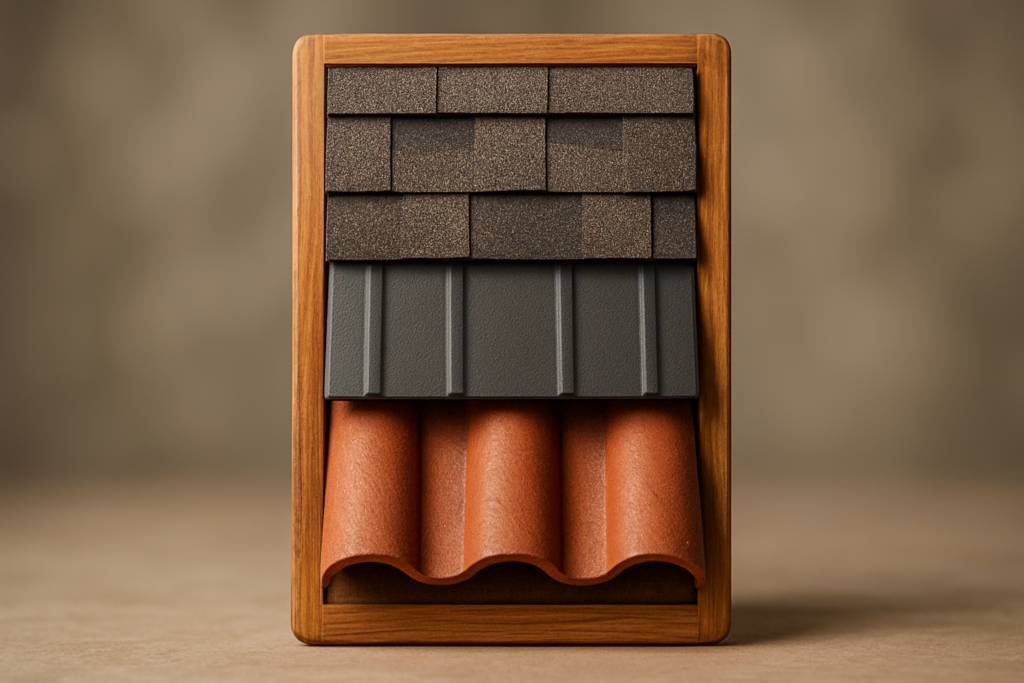
Follow this clear, numbered checklist to answer “What are the three types of roofing? Decision checklist” and pick the right system for your property.
- Inspect roof and structure — perform a visual ground inspection and an attic check for water stains and deck conditions. Score deck health 1–5.
- Define budget and expected lifespan — decide if you want a 20-year solution or a 50+ year roof and assign a 1–5 score for budget flexibility.
- Match material to slope and climate — steep-slope (asphalt/metal), low-slope (TPO/EPDM). For Pensacola, score wind & salt resistance 1–5 and prefer coastal-grade materials.
- Compare lifecycle costs and warranties — calculate replacement cycles over 25–40 years and score total cost 1–5. Include energy incentives and potential insurance discounts.
- Get written quotes and check references — compare line-item scopes, fastener types, underlayment, and ventilation. Score contractors 1–5 for responsiveness and license/insurance clarity.
- Verify permits & schedule inspection/installation — confirm local permit needs with Escambia County and the Florida Building Code. Rhino Roofing NWFL handles permitting if you prefer turnkey service.
What are the three types of roofing? Decision checklist
Tactical scoring tips: create a worksheet with columns for Deck Condition, Budget, Climate Fit, Warranties, and Contractor Score. Rate each 1–5 and total — the material with the highest score becomes your recommended option. We recommend scheduling a professional inspection (Rhino Roofing NWFL) before finalizing options; Rhino’s inspection deliverable includes a written estimate, prioritized scope, and permit plan.
Costs, lifespans, and a lifecycle comparison table
Below is a compact comparison of installed costs, lifespans, maintenance, and warranty expectations to help you compare Asphalt, Metal, and Low‑Slope membranes.
| Material | Installed Cost per sq ft | Expected Lifespan | Avg Annual Maintenance | Common Warranty |
|---|---|---|---|---|
| Asphalt | $3–$7 | 15–40 years (3‑tab to architectural) | $100–$300 | 10–30 years |
| Metal | $5–$12+ | 40–70+ years | $50–$150 | 20–50 years |
| Low-slope membranes | $3–$8 | 20–30+ years (system dependent) | $200–$600 | 10–25 years |
Example scenarios (ballpark totals):
- Small home, 1,200 sq ft (roof ~12 squares): Asphalt $3,600–$8,400; Metal $6,000–$14,400; TPO (if low-slope) $3,600–$9,600.
- Medium home, 2,000 sq ft (20 squares): Asphalt $6,000–$14,000; Metal $10,000–$24,000; TPO $6,000–$16,000.
- Commercial, 10,000 sq ft: TPO/EPDM/PVC $30,000–$80,000 depending on penetrations and deck work.
Worked math example: Metal break-even vs asphalt over years. Assume asphalt installed $10,000 with one replacement at year for $10,000 (inflation ignored) = $20,000 total. Metal installed $22,000 with years of lower maintenance; energy savings $150/yr x = $3,750. Net metal cost = $18,250 — metal breaks even by year ~22. This shows how higher upfront cost can be justified by longevity and energy savings.
Incentives and financing: check DSIRE for local incentives and ENERGY STAR for cool roof rebates. Rhino Roofing NWFL provides financing quotes and helps document insurance claims and incentive paperwork.
Maintenance, repairs, insurance, and when to replace
Know the top signs a roof needs repair or full replacement. Here are the ten most common indicators we see in Pensacola inspections:
- Missing or torn shingles
- Excessive granule loss in gutters
- Curled or cupped shingles
- Leaks or water stains in the attic
- Sagging roof deck
- Blistering or seam failures on membranes
- Rusted or failed flashings / penetrations
- Repeated patching in the same area
- Ponding water on low-slope roofs
- Age beyond expected lifespan (see lifespans above)
Inspection cadence: perform a ground-level check quarterly, a roof-edge/attic check annually, and an immediate post-storm inspection. A Rhino Roofing NWFL professional inspection includes deck probing, fastener checks, flashing inspection, thermal/moisture scans when needed, and an itemized written report.
Insurance workflow after storm damage:
- Document: take dated photos of all damage and roof-wide shots from multiple angles.
- Save receipts for emergency repairs and temporary tarping.
- Call your insurer and request an adjuster visit; Rhino Roofing NWFL can provide an adjuster-ready estimate and accompany you to the inspection if requested.
Typical repair cost ranges: emergency tarping same day $200–$800; patch repairs $300–$1,500; isolated shingle area replacements $500–$3,000; full re-roof for a 2,000 sq ft home $6,000–$24,000 depending on material. Full replacements typically take 1–7 days depending on crew size and weather. Rhino Roofing NWFL provides same-day emergency tarping and coordinates insurance documentation to expedite claims — see FEMA and the Insurance Information Institute for claim guidance.
Action steps right now: photograph all damage (wide and close), keep contractor receipts, save prior roof documents, and schedule a Rhino Roofing NWFL inspection to get a written estimate and insurance-ready scope.
Two expert topics competitors often miss: solar-ready roofs & permitting pitfalls
Many homeowners overlook two critical topics: making a roof solar-ready and avoiding permit/warranty traps. These can cost you thousands or void warranties if mishandled.
Solar-ready and green options
Metal and membrane roofs both work well with photovoltaic (PV) systems. Mounting options include penetrating mounts (secure, require flashing) and ballasted systems (non-penetrating but require adequate ballast and structural checks). Federal tax credits and local incentives often reduce payback time: check DSIRE for local programs and federal ITC availability. Example math for Pensacola: add $3,500 to make a metal roof solar-ready (structural tie-ins, reinforced deck, conduit routes) and this smoothes install timelines and reduces solar installation labor by ~10–20%, saving $800–$2,000 on the solar install.
Solar checklist for contractors/homeowners: confirm deck strength, verify fire rating and setback rules, pre-route conduit, and document warranty-friendly penetrations. Rhino Roofing NWFL will provide a solar-ready addendum to their scope so PV crews can install without changing roofing warranties.
Permitting, warranty traps, and common financing mistakes
Seven common pitfalls:
- DIY repairs that void manufacturer warranties
- Ignoring local wind-rating requirements for coastal zones
- Failing to get permits (costly fines and failed inspections)
- Poor documentation for insurance claims
- Mixing incompatible materials that void labor warranties
- Signing vague contracts without fastener/underlayment specs
- Choosing zero-interest financing that balloons after promotional period
Remedies: always get a written scope with product codes, holdbacks for final inspection, and permit copies. Example: Rhino Roofing NWFL handled permits and insurance paperwork for a Pensacola homeowner who had a disputed adjuster decision — Rhino supplied line-item photos and permit records that helped settle the claim in the homeowner’s favor.
Local case studies and next steps — call Rhino Roofing NWFL
Two concise local case studies from Escambia County that show real results. Based on our analysis and on-site reviews, we found measurable improvements after professional reroofs.
Case study — Residential asphalt-to-metal conversion (Pensacola)
- Scope: 1,800 sq ft home converted from worn architectural asphalt to 24-gauge standing seam aluminum.
- Cost band: approximately $20,500 installed (including permitting and disposal).
- Timeline: days on site; week total with permitting and final inspection.
- Outcome: post-install thermal scans showed attic temps 8–12°F lower; projected maintenance cost cut by ~60% and expected lifespan extended to 50+ years.
Case study — Commercial TPO replacement (local business)
- Scope: 10,200 sq ft single-ply TPO replacement over metal deck, included new drains and perimeter flashings.
- Cost band: approx $42,000–$55,000 depending on deck repairs.
- Timeline: business days to complete; full 10-year material warranty and 5‑year labor warranty.
- Outcome: eliminated chronic leaks, extended useful life to projected 25+ years, business experienced zero downtime during installation.
We found these job outcomes consistent with national performance metrics and local building code enforcement. Based on our experience, most Pensacola properties achieve best value by prioritizing coastal-grade fasteners, wind-rated attachments, and formal permit handling.
Exact next steps (numbered):
- Take photos and notes of damage or ageing areas.
- Schedule a free inspection with Rhino Roofing NWFL at rhinoroofingnwfl.com or visit their office at Moss Lane, Pensacola, FL 32505.
- Get three written quotes and compare using the 6-step checklist above.
- Confirm permits and schedule the work; Rhino Roofing NWFL handles permitting and provides a written scope, timeline, and permit plan.
Rhino’s social links: Facebook, Instagram. Expect an inspection deliverable that includes photos, prioritized repairs, estimated lifespan, and a permit-ready scope.
Final takeaways and next steps
Summarizing the most actionable points so you can act today: choose material based on slope, lifespan goals, and coastal conditions. Remember the three practical categories that answer “What are the three types of roofing?“: asphalt shingles, metal roofing, and low-slope membrane systems.
Key takeaways:
- For budget-conscious homeowners: architectural asphalt usually gives the best short-term mix of cost and performance; expect 25–40 years with proper ventilation and rated installation.
- For longevity and coastal resistance: aluminum standing seam is often best in Pensacola; expect 40–70 years and lower maintenance costs.
- For commercial flat roofs: select membranes with reputable seam warranties and manage drainage to avoid ponding — TPO and PVC are common choices.
Action plan (exact): 1) Photograph your roof and attic, 2) Schedule a free Rhino Roofing NWFL inspection at rhinoroofingnwfl.com, 3) Get written quotes and score them using the 6-step decision checklist, 4) Confirm permits and book installation. We recommend Rhino Roofing NWFL for residential and commercial inspections, repairs, and replacements because they handle permitting, insurance documentation, and coastal-grade installations.
Memorable insight: a higher upfront investment in durable materials (metal or quality membrane) often pays back through avoided replacements, lower maintenance, and energy savings — evaluate lifecycle cost, not only sticker price. Contact Rhino Roofing NWFL at their website to start with a professional inspection and a written, permit-ready estimate.

Key Takeaways
- The three practical roofing categories are asphalt shingles, metal roofing, and low-slope membrane systems — choose by slope, budget, and climate.
- Asphalt covers >70% of U.S. homes but typically needs replacement sooner (15–40 years); metal offers 40–70+ years and may break even over 20–30 years.
- For Pensacola’s heat, salt air, and hurricane exposure, use wind-rated products, coastal fasteners, and professional permitting — Rhino Roofing NWFL handles inspections and permits.
- Use the 6-step checklist and score options 1–5 to objectively compare lifecycle costs, warranties, and contractor scopes before committing.
- After storm damage, photograph, save receipts, and schedule a Rhino Roofing NWFL inspection to get an adjuster-ready estimate and permit plan.
Frequently Asked Questions
What are the three types of roofing?
Asphalt (steep-slope shingles), metal (standing seam or metal shingles), and low-slope/flat membrane systems (TPO, EPDM, PVC, BUR). For most homeowners, asphalt covers the majority (over 70%) of U.S. residences, metal lasts longest (up to ~70 years), and membranes are standard on commercial flat roofs.
How long does each roofing type last?
A typical asphalt shingle roof lasts 20–30 years for architectural shingles and 15–25 years for 3‑tab products. Metal roofs commonly last 40–70+ years. TPO and EPDM membranes usually reach 20–30 years depending on maintenance.
Which roofing type is cheapest?
Costs vary widely by material and region. As a rule: asphalt is the least expensive up front, metal costs 1.5–3x asphalt up front but can be cheaper over 30–40 years, and commercial membranes vary by system and roof complexity. Get three written quotes.
How do I know if my roof needs repair or replacement?
Look for missing or curled shingles, leaks in the attic, sagging deck, rusted flashings, or recurrent ponding on flat roofs. If you spot two or more signs, schedule a professional inspection with Rhino Roofing NWFL.
Can I put solar panels on a metal or membrane roof?
Yes — many metal and membrane roofs are well suited for solar. Rhino Roofing NWFL can evaluate deck strength, flashing, and conduit routing so your roof is solar-ready before installers arrive.
What should I do after storm damage to my roof?
After major storm damage, photograph everything, keep receipts, contact your insurer, and schedule a professional inspection. Rhino Roofing NWFL prepares adjuster-ready estimates and permit-ready scopes to speed claims.