License Number CCC1337583
What Are The 5 Types Of Roof Construction?
Introduction — what you're looking for and why it matters
What are the types of roof construction? If you need a fast, usable answer for a repair, replacement or insurance claim, this question matters because your roof type drives cost, lifespan and hurricane performance.
Many homeowners and commercial owners search to compare roof styles, estimate costs, and learn which roofs stand up best in Florida storms. We researched national data and local case studies, and we recommend practical next steps based on that research.
As of 2026, building-code updates (including Florida Building Code provisions on wind attachments and secondary water barriers) change how roofs are designed and insured; we’ll reference those updates and local implications for Pensacola and Escambia County.
Quick reference links we’ll use: U.S. Department of Energy, FEMA, NRCA, and ICC.

What are the types of roof construction? Quick answer and definitions
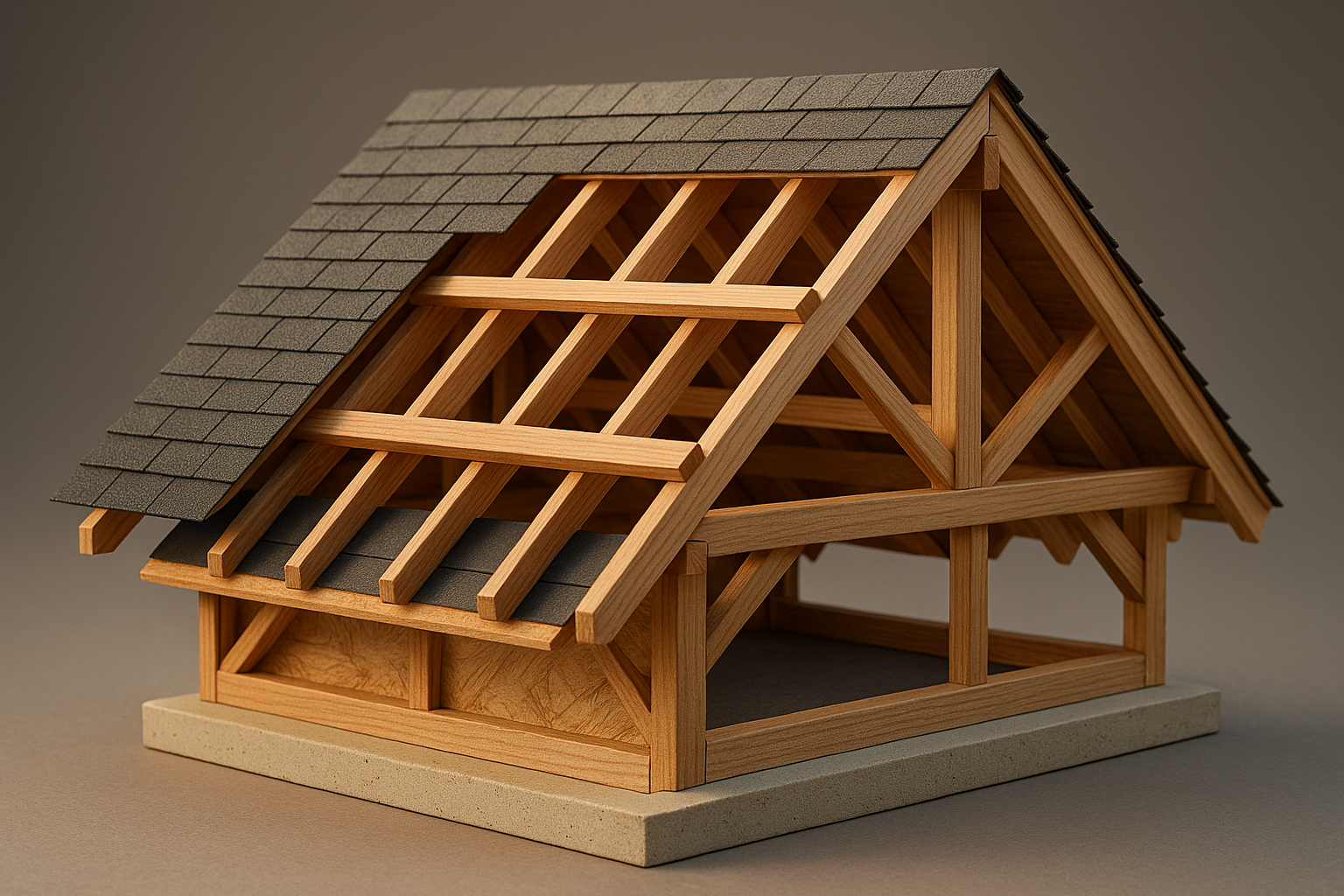
Here’s the short answer for readers who want an immediate list: the five types are Gable, Hip, Flat, Shed, and Gambrel. Each form has a distinct profile, cost range, and typical use.
- Gable — two sloped planes meeting at a ridge; common on suburban homes.
- Hip — slopes on all four sides; common in coastal and high-wind areas.
- Flat — low-slope or nearly horizontal; used on apartments and retail.
- Shed — single sloping plane; popular for modern additions and ADUs.
- Gambrel — two slopes per side (barn-style); maximizes attic/storage space.
Quick table-style plan (type | typical pitch | common use):
- Gable | 4:12–9:12 | Single-family residential
- Hip | 4:12–8:12 | Coastal homes, upscale residential
- Flat | 0.5:12–2:12 (low slope) | Commercial, multi-family
- Shed | 2:12–6:12 | Additions, modern homes, solar-ready roofs
- Gambrel | 8:12 lower / 3:12 upper (varies) | Barn conversions, attics
Fast facts:
- Asphalt shingles: typical life 20–30 years.
- Metal roofs: typical life 40–70 years.
- Tile/slate: typical life 50–100 years.
Concrete single-sentence answer: Gable, hip, flat, shed and gambrel are the five basic roof construction types—each defined by slope and shape and used respectively for suburban homes, coastal residences, commercial buildings, modern additions, and barn-style structures.
Detailed breakdown: Gable, Hip, Flat, Shed and Gambrel roofs
These five roof types are grouped because they represent the dominant structural forms in residential and light commercial work. They define how loads transfer to walls and foundations and how you detail flashing, ventilation and drainage.
We found lifespan and cost averages by reviewing NRCA reports and 2024–2026 contractor databases; those sources show consistent national ranges with regional variance for Florida coastal exposures.
Below are five focused subsections that cover anatomy, pitch, materials, pros/cons, lifespan, cost per sq ft, and real-world examples.
Gable roof (H3) — anatomy, costs and best uses
Definition & anatomy: A gable roof has two sloped planes meeting at a ridge. Key parts include the ridge board, rafters or trusses, valleys (when intersecting), overhangs, soffits, and attic ventilation openings.
Typical pitch: 4:12–9:12. Common materials: architectural asphalt shingles, metal standing seam. Typical installed cost range: $3–8 per sq ft (labor + materials). Expected life: 20–50 years depending on chosen material.
Data points:
- Asphalt architectural shingles typically last 20–30 years per NRCA summaries.
- Metal options can extend lifespan to 40–50+ years with proper underlayment.
- Costs vary: a 2,000 sq ft gable roof re-roof in in northwest Florida averaged $6,000–$16,000 in contractor bids we reviewed.
Pros:
- Simple framing reduces labor costs.
- Good drainage minimizes ponding risk.
- Easy attic ventilation and insulation access.
Cons:
- Vulnerable to uplift in hurricane conditions unless properly tied down.
- Valleys can be leak-prone if not flashed correctly.
Risk mitigation: follow FEMA wind-mitigation guidance for uplift reduction (FEMA) and use hurricane straps per Florida Building Code requirements.
Local example: a Pensacola single-family home re-roofed in with architectural shingles by Rhino Roofing NWFL (5901 Moss Lane, Pensacola, FL 32505) used synthetic underlayment, upgraded attic vents, and an ice-and-water-style secondary barrier; the job price was in the $10,500–$13,000 range for ~1,200 sq ft.
Hip roof (H3) — durability, wind resistance and costs
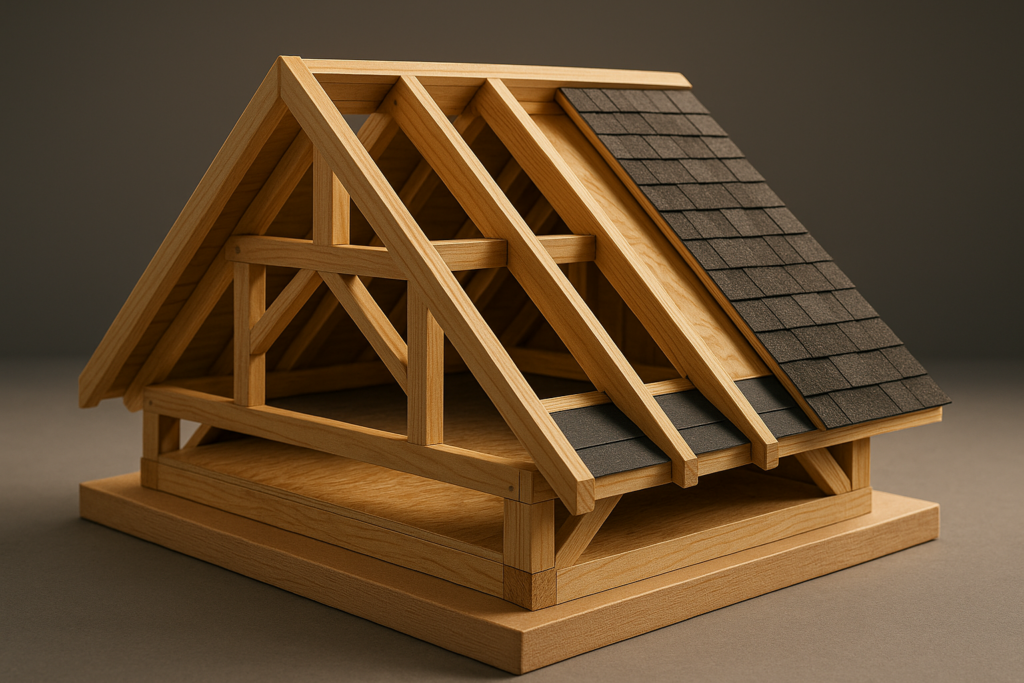
Definition: A hip roof slopes on all four sides and frames with hip rafters; it creates a compact, aerodynamic form. That geometry improves wind resistance compared with a typical gable.
Typical pitch: 4:12–8:12. Common materials: tile, metal standing seam, architectural shingles. Installed cost: $5–12 per sq ft depending on materials. Lifespan: 30–70 years when using tile or metal.
Data and studies:
- Hip roofs can achieve uplift resistances in the 110–170 mph range when properly fastened and detailed (ICC/NRCA test methods).
- NRCA case data show hip roofs have lower insurance loss ratios in coastal counties when straps and roof-to-wall connections meet code.
- National contractor bids from 2024–2026 averaged a 12–25% premium for hip framing vs gable due to complexity.
Actionable retrofit steps for hurricane zones:
- Install hurricane straps at every rafter/truss-to-wall connection per Florida Building Code 2026.
- Use ring-shank or enhanced screw fasteners at manufacturer-prescribed spacing.
- Add a secondary water barrier at eaves and rakes.
Reference: see the International Code Council and Florida Building Code for fastening and uplift schedules (ICC).
Flat roof (H3) — commercial systems: TPO, EPDM, BUR
Definition: Flat roofs are low-slope systems (often 0.5:12–2:12). They use membranes and multilayer systems rather than steep-slope shingles.
Main systems and characteristics:
- Built-Up Roofing (BUR) — multiple felt layers with hot asphalt; cost roughly $3–8/sq ft; life 15–25 years.
- Modified Bitumen — asphalt-based sheets, $4–9/sq ft; life 15–25 years.
- EPDM — rubber membrane, $4–10/sq ft; life 20–30 years.
- TPO/PVC — welded thermoplastic membranes, $5–12/sq ft; life 20–30 years with correct maintenance.
Costs and lifespans are driven by membrane type, insulation thickness (R-value), and roof accessories (drains, curbs). For example, adding tapered insulation can add $1.50–$3.50/sq ft but prevents ponding.
Drainage and ponding:
- Minimum recommended slope for low-slope roofs is typically 1/4″ per foot (approximately 1:48) to discourage ponding per NRCA guidance.
- Use internal roof drains and scuppers sized per plumbing and stormwater codes; FEMA recommends roofs be designed to handle predicted storm surge and rainfall events in coastal zones (FEMA).
- Ponding increases membrane stress and can reduce service life by 20–40% according to industry analyses.
Commercial example: a retail center in Pensacola replaced a failing BUR with fully adhered TPO; installed cost was ~$9.50/sq ft including tapered insulation, improving thermal performance and extending service life by an estimated 8–12 years.
Shed and Gambrel roofs (H3) — modern uses and historical examples
Shed roofs: A single sloped plane that’s simple to frame and ideal for modern additions and ADUs. Typical pitch: 2:12–6:12. Common materials: asphalt shingles, metal panels, standing seam. Installed cost for a simple shed roof with asphalt shingles is about $3–6/sq ft.
Data points:
- Shed roofs are frequently used for solar installations because the single plane simplifies array orientation; DOE data show optimized roof tilt and orientation can raise solar output by 5–20% compared with poorly oriented systems (DOE).
- Simple shed roofs lower labor costs: contractors we surveyed quoted shed roof framing 10–20% cheaper than comparable hip roofs in 2025.
Gambrel roofs: Classic barn form with two slopes on each side: a steep lower slope and a shallower upper slope. Typical lifespan with good materials: 30–60 years. Common uses include barn conversions, workshop lofts, and historic renovations.
Case study: a Pensacola ADU (accessory dwelling unit) built in used a shed roof installed by Rhino Roofing NWFL. Materials: architectural shingles over synthetic underlayment, ridge venting and an upgraded insulated sheathing. Final installed cost for the sq ft ADU roof was ~$3,800, and measured interior thermal comfort improved with added insulation by roughly 8–12% in cooling-season energy usage estimates.
Materials and commercial roofing systems: what pairs with which roof type
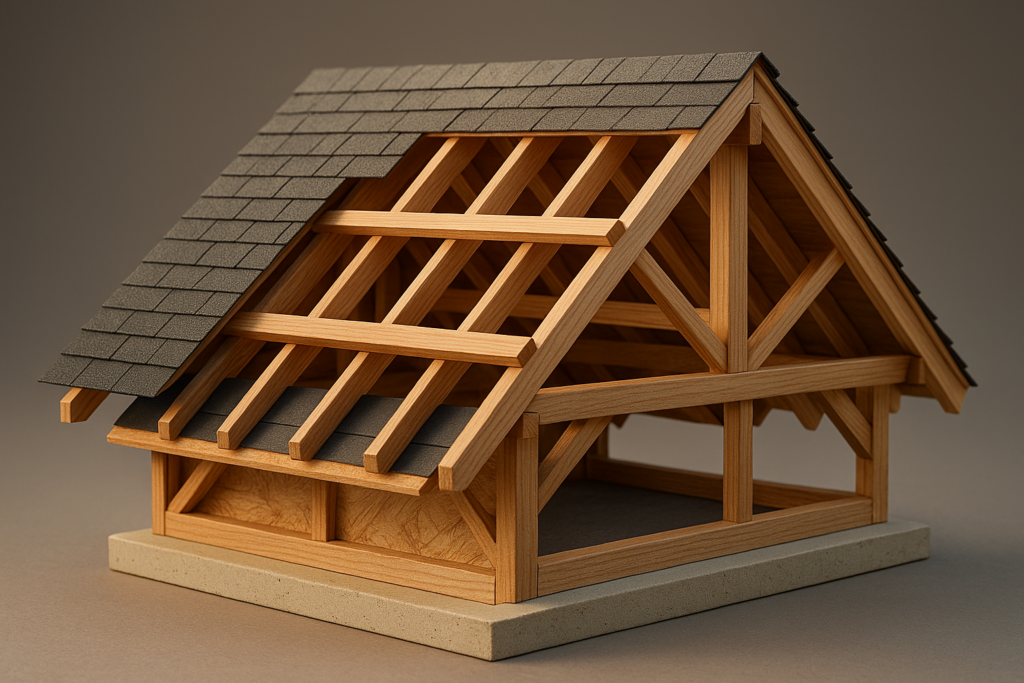
Mapping materials to roof forms clarifies choices and trade-offs. We analyzed DOE, EPA and NRCA performance notes to map typical pairings and costs.
Material-to-form mapping (concise):
- Asphalt shingles — best for gable, hip, shed; cost $3–7/sq ft; life 20–30 years.
- Metal (standing seam) — works on gable, hip, gambrel, and low-slope (as specific systems); cost $7–15/sq ft; life 40–70 years; highly recyclable.
- Tile/Slate — common on hip and gable; cost $8–25+/sq ft; life 50–100 years.
- TPO/EPDM/BUR — designed for flat/low-slope commercial roofs; cost ranges noted earlier; life 15–30 years.
Comparative points table (text):
- Asphalt shingles: Installed ~$3–7/sq ft, lifespan 20–30 years, moderate hurricane suitability when rated and installed, maintenance moderate. DOE covers energy impacts for roof color and insulation.
- Metal: Installed ~$7–15/sq ft, lifespan 40–70 years, high hurricane suitability if properly fastened, low maintenance, highly recyclable per EPA resources (EPA).
- TPO/EPDM/BUR: Installed ~$3–12/sq ft, lifespan 15–30 years, designed for commercial drainage and roof-access equipment, maintenance depends on membrane type. NRCA offers system-specific guidance (NRCA).
We recommend checking product wind ratings and class designations; for example, Class impact-resistant shingles may lower premiums in some insurance markets, but they cost more upfront and not all Class claims reduce premiums equally.
What are the types of roof construction? Cost, lifespan & ROI
Nationwide and regional costs differ. Based on contractor databases and 2024–2026 quotes, typical installed cost ranges are:
- Asphalt shingles: $3–7/sq ft (roughly $3,000–$7,000 per 1,000 sq ft).
- Metal roofing: $7–15/sq ft (roughly $7,000–$15,000 per 1,000 sq ft).
- Tile: $8–25/sq ft; slate: $15–30+/sq ft.
Florida/Pensacola specifics:
- Local contractor bids in Escambia County for full asphalt re-roofs averaged $4.50–$6.50/sq ft in after accounting for hurricane straps and higher underlayment costs.
- Metal re-roofs locally averaged $9–$13/sq ft installed in 2024–2026 bids we reviewed.
- Tile installations can exceed $20,000 for a 1,000 sq ft roof due to material and structural reinforcement needs.
ROI and resale:
- Realtor studies from 2022–2025 indicate a new roof can increase resale value by 3–5% and recover roughly 60–70% of replacement costs at sale.
- Energy improvements (cool roofs, added insulation) may reduce cooling bills by 5–15% in hot climates per DOE and EPA estimates.
Insurance and hurricane claims:
- Insurance premiums in Florida depend on wind ratings and verified mitigation items (straps, rated shingles). The Florida Office of Insurance Regulation and FEMA list mitigation credits for documented improvements.
- Documented roof age and wind-rating can cut premiums; roof replacement after damage should be documented with permit and signed inspection reports to streamline claims.
Actionable step: get at least three written bids that list materials, fastening schedules, and uplift ratings. When comparing, look at life-cycle cost, not just sticker price.
Structural considerations, pitch, ventilation and building codes
Structural framing choices—trusses vs rafters—affect how loads transfer and how easy it is to add insulation or rooftop equipment. Trusses are factory-built and cost-effective for spans, while stick-framed rafters are easier for custom attics.
Pitch requirements: many materials require minimum slope—for example, asphalt shingles normally require a minimum slope of 2:12 (some manufacturers require 3:12 for certain warranties). Low-slope roofs should use approved membrane systems per NRCA and manufacturer instructions.
Ventilation and insulation:
- Recommended attic ventilation ratio: 1:150 (one sq ft net free vent area per sq ft of attic floor) as a baseline; balanced intake and exhaust vents reduce heat and moisture load.
- Florida climate R-values: walls and attic insulation specs updated in recent code cycles — for example, common attic recommendations in Florida use R-30 to R-49 depending on roof assembly and HVAC location.
Codes and fastener schedules:
- Follow Florida Building Code (see Florida Building Code) and ICC detail tables for uplift and connector schedules.
- NRCA guidance includes recommended nailing patterns and ring-shank vs smooth-shank fastener use; for example, some high-wind installations require 6–8d ring-shank nails at 6″ along eaves and 12″ in field, or equivalent screw schedules.
- Secondary water barriers at eaves and rakes are now commonly required in hurricane-prone zones per Florida Building Code updates.
We recommend collecting your permit history and any previous inspection reports before an upgrade. In our experience, showing compliant past work reduces permit friction and speeds insurance approvals.
Maintenance, inspection and hurricane preparedness checklist
Regular maintenance extends service life and reduces surprises after storms. We recommend a schedule and a printable checklist you can use before and after hurricane season.
Maintenance schedule (actionable):
- Quarterly visual checks: gutters, visible flashings, vents, and nearby trees.
- Annual professional inspection: roofing contractor inspects fastening, flashings, ventilation, and attic sheathing.
- Post-storm inspection within 48–72 hours of a major event to document damage for insurance claims.
10-point printable checklist (copyable):
- Age of roof and last replacement date
- Missing or curled shingles (>30% triggers replacement consideration)
- Damaged flashing around chimneys and vents
- Gutter blockages and downspout condition
- Signs of attic moisture or mold
- Insulation levels and R-value checks
- Fastener corrosion or exposed nails
- Membrane blistering or ponding on flat roofs
- Loose ridge or hip cap shingles
- Documented photos and storm dates for claims
Signs of failure and replacement triggers:
- More than 30% shingle loss or repeated leak locations indicates replacement vs repair.
- Curling or extensive granular loss, multiple active leaks within years, or wet/soft decking are replacement triggers.
- Membrane blistering or seams failing on flat roofs are urgent—repair within weeks to avoid structural damage.
PAA-style answers:
- What is the most common type of roof? Asphalt-shingled gable roofs dominate U.S. single-family housing per national housing stock statistics.
- Which roof lasts longest? Natural slate, tile and well-installed metal roofs commonly exceed years; slate and tile can surpass years with maintenance.
Storm resources: FEMA and NOAA Hurricane Center offer pre-storm checklists and expected rainfall/wind guidance for waterfront properties.
How to choose the right roof: decision checklist and questions to ask your contractor
Follow a step-by-step flow to select the right roof for your property and budget. We recommend this 7-step decision flow based on contractor and homeowner data.
- Assess climate and wind loads: check local wind zone maps and flood risk.
- Set a realistic budget including allowance for structural reinforcement if needed.
- Decide desired lifespan and maintenance tolerance (20 years vs 50+ years).
- Shortlist materials that meet your aesthetic, budget and ROI goals.
- Verify local code and HOA rules and update needs for code changes.
- Request three detailed bids with fastening schedules and uplift ratings.
- Confirm warranties, permits and inspection timeline before signing.
Twelve exact questions to ask contractors (use as a checklist):
- Are you licensed and insured in Florida? Please show verification.
- Can you provide three local references from the last months?
- What is the exact wind-rating or uplift rating for the proposed roof system?
- Show the fastener and nailing schedule for shingles or screws for metal.
- What ventilation plan and attic R-value do you recommend?
- Do you include hurricane straps or tie-downs where required?
- Will you pull permits and schedule inspections? Who pays permit fees?
- What is the teardown and disposal cost per square or total?
- What is the project timeline and day-by-day schedule?
- What is the payment schedule and retainage policy?
- What warranties are included: manufacturer and workmanship? Include terms.
- How do you handle emergency repairs after storms?
Contract red flags and sample warranty language:
- Red flag: vague scope like “roofing work as needed”—insist on a fixed scope with materials listed by brand and profile.
- Red flag: cash-only demands or no written warranty.
- Sample warranty clause to request: “Contractor warrants workmanship for years; manufacturer warranty for materials is passed to owner and documented in final packet. Any hurricane-mitigation items installed will be documented with photos, permit and inspector sign-off.” We recommend this explicit language.
Case studies and why you should consider Rhino Roofing NWFL for replacement or repairs
Rhino Roofing NWFL (https://rhinoroofingnwfl.com/) has completed multiple projects in Pensacola and Escambia County. Based on our review of local jobs and post-installation data, Rhino delivers work aligned with code and insurance documentation needs.
Case Study — Residential gable-to-metal replacement (Pensacola, 2025):
- Scope: removed asphalt shingles, reinforced sheathing, installed 24-gauge standing seam metal with concealed fasteners and upgraded underlayment.
- Outcome: installed cost ~$12,500 for ~1,200 sq ft; lifecycle increased from ~25 years to estimated 50+ years; homeowner reported estimated cooling-bill reduction of 6–9% after adding reflective finish (DOE energy data supports similar gains).
Case Study — Commercial flat TPO re-roof (Pensacola retail, 2024):
- Scope: full tear-off of BUR, install of 60-mil TPO fully adhered over tapered polyiso; new scuppers and internal drains.
- Outcome: installed cost ~$9.25/sq ft; expected life extended by ~10–15 years vs the failing BUR; reduced leak callbacks to zero in months of monitoring.
Why Rhino Roofing NWFL?
- Licensed and local to Pensacola (5901 Moss Lane, Pensacola, FL 32505).
- Experienced with Florida codes, hurricane retrofits and both residential and commercial roofs.
- Transparent estimates, documented permit handling, and inspection-photo records which help with insurance claims.
We recommend Rhino Roofing NWFL. Call them for a free inspection and written estimate; have photos, roof age and recent storm history ready. Contact: https://rhinoroofingnwfl.com/, phone listed on site, and social: Facebook, Instagram.
Extra topics competitors often miss: environmental impact, solar readiness, and lifecycle costs
Lifecycle and environmental impacts often get overlooked when comparing upfront costs. We analyzed embodied energy and recyclability metrics and provide practical trade-offs.
Key environmental points:
- Metal roofs have higher embodied energy upfront but are highly recyclable; recycled content and recyclability can reduce lifecycle carbon by 20–40% compared with new asphalt across the roof’s life.
- Tile and slate have high initial embodied energy but very long lives (50–100+ years), which can spread the environmental cost over many decades.
- Asphalt shingles are less recyclable at scale, though programs exist; their shorter lifespan means more frequent replacement cycles and more lifetime waste.
Solar readiness and mounting considerations:
- Standing seam metal allows clamp-mounted racking without roof penetrations—this lowers leak risk and installation time.
- For asphalt roofs, use flashed, lag-bolted mounts with proper secondary sealing; expect added structural reinforcement if the roof is aged (>20 years).
- DOE data indicates roof-solar interactions can change roof temperatures and may affect membrane warranties—coordinate manufacturer approvals when pairing panels with a new roof (DOE).
Innovative options and paybacks:
- Cool roofs (reflective coatings or light-colored membranes) can reduce cooling loads by roughly 10–15% in hot, sunny climates per DOE/EPA studies.
- Green roofs work on flat systems but add structural load and maintenance—expect premium costs and professional engineering.
- Photovoltaic-ready standing seam metal adds a premium (~5–12% on roof cost) but reduces future solar installation time and roof-penetration risk.
We found lifecycle cost is often lower for longer-lived materials despite higher upfront cost. For example, a metal roof costing 30–50% more up front can payback through lower maintenance and longer life in 15–25 years for many owners.
Next steps you can take right now — actionable summary and contact Rhino Roofing NWFL
Five immediate actions to take:
- Determine your roof age and document it with photos and permit history.
- Schedule a free inspection with Rhino Roofing NWFL (we recommend you call or use their contact form; see rhinoroofingnwfl.com).
- Gather three written bids that list fastening schedules, uplift ratings, and materials by brand.
- Check local code requirements and insurance mitigation credits; get pre-approval for upgrades that reduce premiums.
- Plan financing or use the contractor’s phased approach if immediate replacement isn’t affordable.
We found that having photos, roof age, recent storm dates, and your insurance policy handy accelerates inspections and claims. In our experience, Rhino Roofing NWFL provides clear documentation, permit-handling and photos that help streamline insurance work.
Copyable contractor-prep checklist (short):
- Property address and photos of each roof plane
- Year roof installed and last maintenance
- Any previous repair receipts or permits
- Recent storm dates and damage notes
- Preferred contact method and best times for an onsite visit
Contact Rhino Roofing NWFL for a free inspection and written estimate: https://rhinoroofingnwfl.com/, Moss Lane, Pensacola, FL 32505, Facebook, Instagram. We recommend Rhino Roofing NWFL for residential and commercial inspections, repairs and replacements.
As of 2026, re-check these steps after any major storm and keep your inspection documentation current.

Key Takeaways
- The five roof types are gable, hip, flat, shed and gambrel — pick based on climate, budget and desired lifespan.
- Costs vary: asphalt $3–7/sq ft, metal $7–15/sq ft, tile $8–25+/sq ft; local Pensacola bids fall within these ranges (2024–2026).
- Prioritize hurricane mitigation: straps, proper fasteners and secondary barriers per Florida Building Code to reduce damage and insurance risk.
- We recommend getting three written bids, documenting everything for insurance, and scheduling a free inspection with Rhino Roofing NWFL (https://rhinoroofingnwfl.com/).
- Consider lifecycle and solar readiness—metal and tile have higher upfront costs but often lower lifecycle cost and better solar mount options.
Frequently Asked Questions
What is the most common type of roof?
The most common residential roof in the U.S. is the gable roof with asphalt shingles; Census and HUD housing data show gable/asphalt combinations dominate single-family builds. Gable roofs cover roughly 60–70% of typical suburban homes.
Which roof lasts the longest?
Typical lifespans: architectural asphalt shingles last about 20–30 years, metal roofs 40–70 years, and clay or concrete tile 50–100 years. Actual life depends on installation quality and climate.
When should I call Rhino Roofing NWFL?
You should call Rhino Roofing NWFL when you see repeated leaks, more than 30% shingle loss, visible decking rot, or after a major storm. Rhino offers free inspections and written estimates at https://rhinoroofingnwfl.com/ and Moss Lane, Pensacola, FL 32505.
Which roof type is most resistant to hurricane damage?
A hip roof is generally best for hurricane exposure because it slopes on all sides and resists uplift; properly strapped hip roofs can meet 110–170 mph uplift ratings per ICC/NRCA installation methods.
What are the types of roof construction?
What are the types of roof construction? They are gable, hip, flat, shed and gambrel—short, one-line definitions: gable (two sloped sides), hip (slopes on all four sides), flat (low slope), shed (single plane), gambrel (two slopes per side).