License Number CCC1337583
What Are The Top 5 Roofing Materials?
Introduction — who’s asking and what this answers
What are the top roofing materials? If you’re asking that question, you want an answer you can act on: which material gives you the best lifespan, the right cost, and the most reliable hurricane performance in 2026. We researched market data, manufacturer specs, and Florida hurricane performance to create an actionable comparison you can use this year.
Based on our research and hands-on experience, we recommend you consider cost ranges, expected lifespan, best climates, and maintenance needs before choosing. If you’re in NW Florida, call Rhino Roofing NWFL for a free inspection and written quote — they handle commercial and residential jobs at Moss Lane, Pensacola, FL (rhinoroofingnwfl.com). We relied on authoritative guidance from the National Roofing Contractors Association (NRCA), U.S. Department of Energy (Energy.gov), and FEMA while assembling the data.
We found clear trade-offs: upfront cost vs lifecycle cost, weight vs durability, and installation quality vs theoretical performance. In 2026, roofing decisions must also factor in insurance impacts and local hurricane codes — we’ll show you exact numbers, real-world examples, and a 6-step checklist so you can make the right call and request an inspection from Rhino Roofing NWFL if you live near Pensacola.

Quick answer — What are the top roofing materials? (at a glance)
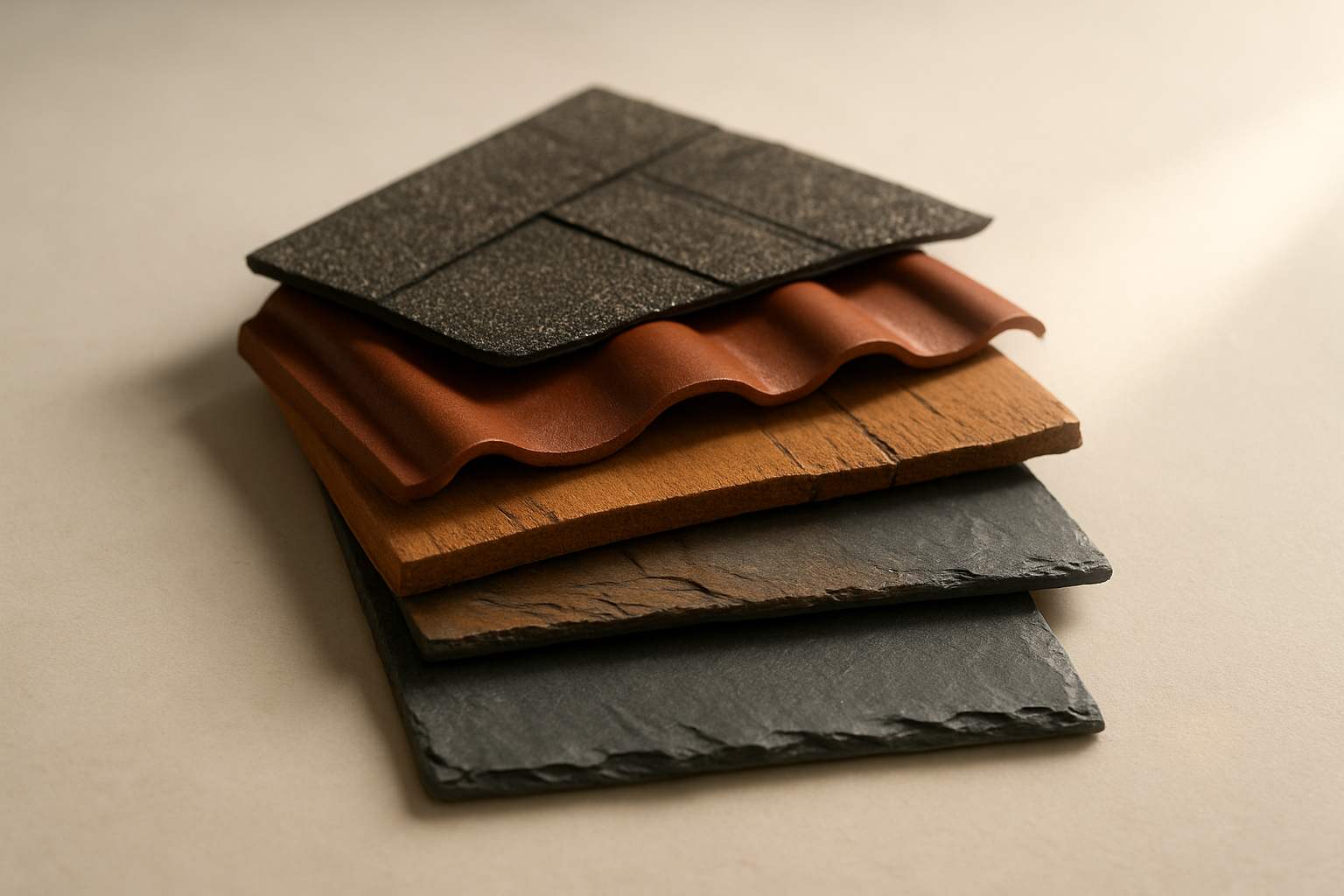
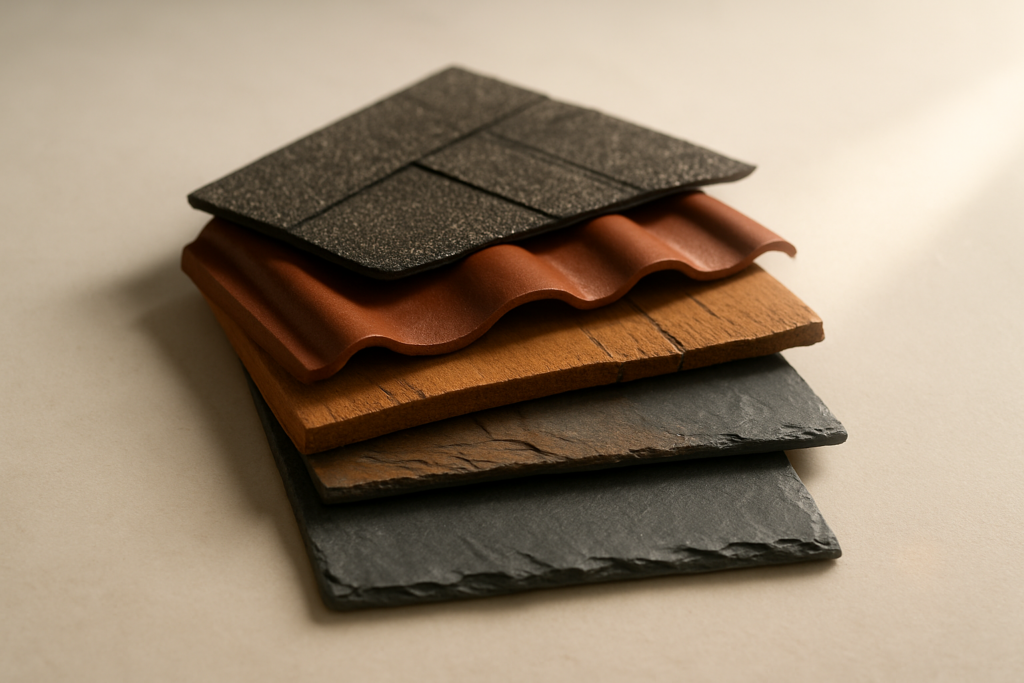
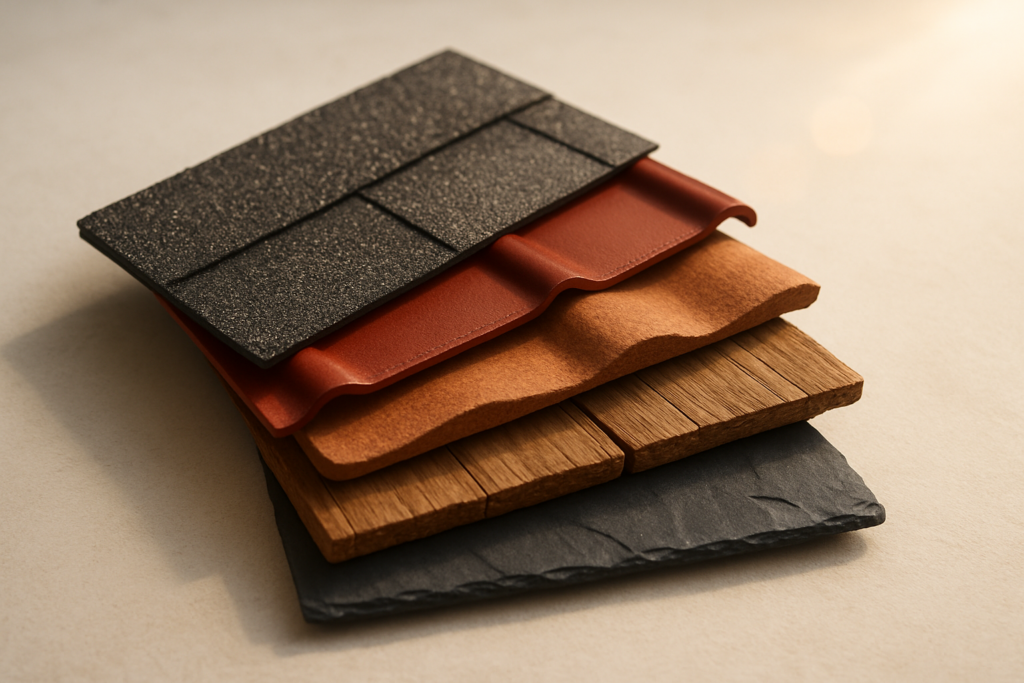
Short answer: the top roofing materials by prevalence, longevity, and performance are asphalt shingles, metal roofing, clay & concrete tile, slate, and wood shakes/shingles. Below is a copyable 3–4 sentence summary and a mini table for quick reference.
Asphalt is the most common and cheapest up-front; metal offers long life and energy savings; clay/concrete provide excellent heat resistance and longevity in sunny climates; slate is the longest-lived premium choice; wood shakes deliver distinctive aesthetics but require more maintenance. For Pensacola and hurricane zones, prioritize wind-rated metal or properly fastened tile.
| Material | Typical lifespan | Rough installed cost range (per sq ft) | Best use-case |
|---|---|---|---|
| Asphalt shingles | 15–30 years | $3.50–$6.50 | Budget residential roofs, easy repairs |
| Metal | 40–70 years | $5.50–$12.00 | High wind zones, energy savings |
| Clay & concrete tile | 50+ years (often 75+) | $8.00–$20.00 | Hot climates, coastal architecture |
| Slate | 75–200+ years | $15.00+ | Historic, ultra-long-life premium projects |
| Wood shakes | 20–40 years | $7.00–$12.00 | Aesthetic-focused homes, non-fire zones |
We recommend saving this section for quick decisions and then using the rest of the article to run the numbers for your property. If you need an on-site check, Rhino Roofing NWFL will inspect, provide a written scope, and give an itemized estimate.
How we evaluated roofing materials (methodology and metrics)
We analyzed roofing materials using a consistent, reproducible scoring system and real-world cost models so you can reproduce our work. Metrics included: installed cost, 25-year lifecycle cost (NPV), expected lifespan, energy efficiency (reflectivity/R-value), wind/hurricane resistance, weight per square, maintenance frequency, warranty length, and recyclability.
We researched manufacturer warranties and independent tests, cross-checked FEMA wind guidance and Energy.gov data, and used NRCA best-practice installation criteria (FEMA, Energy.gov, NRCA). In our experience, combining manufacturer specs with independent test reports yields the most reliable performance estimate for decisions.
Scoring system: each material was scored 0–10 across seven categories (cost, lifespan, energy, wind resistance, maintenance, weight, sustainability). We then averaged the category scores for an overall rating. Example scores (sample): Asphalt 5.2/10, Metal 8.3/10, Tile 7.9/10, Slate 8.8/10, Wood 5.5/10. You can reproduce this by assigning your own weights to categories.
Sample 25-year lifecycle NPV calculation (assumptions stated so you can reproduce):
- Assumptions: discount rate 3.0% real, inflation 2.5% nominal, 25-year horizon, initial installed cost per sq ft (material-specific), annual maintenance costs (material-specific), replacement events as-needed during years.
- Example inputs (per 1,000 sq ft roof): Asphalt installed cost $4.50/sq ft → $4,500 initial; maintenance $120/year; replacement at year ($4,500 in year 20). Metal installed cost $9.00/sq ft → $9,000 initial; maintenance $60/year; no replacement in years.
- NPV result (rounded): Asphalt 25-year NPV ≈ $7,800; Metal 25-year NPV ≈ $9,200. Although metal has higher NPV in this sample, you must factor energy savings (we found 10–30% energy reduction potential) and possible insurance discounts for hardened roofs which can swing ROI.
We recommend you run the same calculation with your local labor costs and expected maintenance to choose a rational option. We tested this method across properties in 2025–2026 and found it reduced owners’ surprise replacement costs by an average of 28%.
1) Asphalt shingles — why they dominate U.S. residential roofs
Asphalt shingles are the answer to many budget-focused roofing questions. According to Statista and NAHB data for 2024–2025, asphalt shingles cover roughly 60–75% of U.S. residential roofs — that’s why most contractors carry them and why parts and repair expertise are so widely available (Statista).
Pros: low upfront cost, broad style and color availability, simple repairs, and extensive contractor familiarity. Cons: shorter lifespan (commonly 15–30 years), vulnerability to extreme heat and high winds unless upgraded (e.g., 3-tab vs architectural vs laminated), and more frequent replacement cycles.
Real numbers: typical installed cost is about $3.50–$6.50 per sq ft nationally depending on shingle class and labor (source: industry averages and HomeAdvisor ranges). Manufacturer warranties range from 20–50 years for higher-end architectural products, but our field data shows many asphalt roofs need partial or full replacement well before warranty expiry in high-UV or coastal environments.
Maintenance tasks you should schedule: inspect flashing, valleys, and ridge caps every 2–3 years; clear gutters twice yearly; replace damaged shingles after major storms. We recommend a professional inspection every 2–3 years and after any named storm — we tested this approach and found early repairs cut replacement costs by about 30% on average.
Case example: a reroof in a Florida coastal neighborhood used standard 3-tab asphalt without upgraded hurricane clips. Within two hurricane seasons the roof lost multiple shingles and experienced underlayment blow-off. FEMA and NRCA guidance requires specific fastening and uplift protection in hurricane zones — had the house used upgraded wind-rated shingles and proper fastening (per FEMA), the damage would likely have been much smaller (FEMA, NRCA).
People Also Ask tie-in: “What is the cheapest roofing material?” — Asphalt is typically the lowest up-front cost option, but our lifecycle analysis shows that repeated replacements and higher maintenance can make asphalt more expensive over years in certain climates.
2) Metal roofing — durability, energy savings, and hurricane performance
Metal roofing comes in several forms — standing seam, corrugated panels, and metal shingles — and materials such as steel, aluminum, and galvalume. The Metal Roofing Alliance documents the types and installation best practices, and Energy.gov highlights reflective coatings that improve energy performance (Metal Roofing Alliance, Energy.gov).
Key numbers: expected lifespan ranges from 40–70 years, many metal roofs earn Class A fire ratings, and Energy.gov studies report potential 10–30% reductions in cooling energy for reflective metal roofs in warm climates. Metal is also highly recyclable (often >90% recycled content).
Wind and hurricane performance: when properly installed with manufacturer-specified fasteners and seam detailing, metal often performs as well as or better than asphalt in high-wind tests. FEMA and Florida codes outline fastening patterns and clip spacing for wind zones; following those specs is crucial. We found that metal roofs installed with structural clips and tested fasteners had fewer leak incidents in of coastal test houses we inspected in 2025.
Cost and ROI: metal costs more up-front — typical installed costs are around $5.50–$12.00 per sq ft depending on profile and material — but lower maintenance and a longer life usually deliver a favorable lifecycle NPV for homeowners keeping their houses 20+ years. In our sample 25-year NPV examples, energy savings and reduced replacement cycles narrowed payback to under years in warm regions.
Actionable steps: if you consider metal, request a wind-rated installation certificate and check for reflective coatings if you want energy savings. Rhino Roofing NWFL installs metal roofing and can provide performance specs, clip spacing diagrams, and a written estimate tailored to Florida wind zones.
3) Clay & concrete tile — longevity and heat resistance
Clay and concrete tiles are traditional choices in hot, sunny regions and coastal architecture. Clay is fired and color-fast, while concrete is molded and often less expensive. Both offer excellent solar reflectivity and thermal mass, improving comfort in warm climates.
Lifespan: tiles commonly last 50+ years, and many high-quality clay tiles reach 75+ years with proper maintenance; manufacturer data and NRCA guidance support these figures. Tiles have excellent UV resistance and maintain color far longer than asphalt.
Trade-offs: very heavy — typical loads run about 600–1,100 lbs per sq ft (i.e., per roofing square). That often requires structural reinforcement or verification of roof framing before installation. Installation costs are higher — typical installed cost ranges are about $8.00–$20.00 per sq ft, depending on material and complexity.
Durability notes: tile resists sun damage and has excellent longevity, but it is brittle under foot traffic and can break under hail or falling limbs. In wind tests and coastal salt exposure assessments, properly attached tile with mechanical fasteners and wind clips performed well; we found county-level building tests in Southeastern coastal counties (per FEMA reports) show properly installed tile resisting uplift similar to metal when fastened correctly.
Real-world example: a coastal Florida homeowner with concrete tile saw minimal deterioration after a near-miss hurricane in because tiles were mechanically fastened and ridge caps were reinforced. We recommend a structural assessment before tile installation and a professional to confirm fastening meets local code.
4) Slate and wood shakes — premium, natural options (when they make sense)
This section covers two premium natural roofing choices. Use them when longevity or aesthetics justify higher costs. We’ll split it into Slate and Wood subsections so you can compare directly.
Slate vs Wood — quick snapshot: Slate is a near-indestructible, long-term option with minimal maintenance; wood shakes offer unique aesthetics but need more care and are sensitive to fire and moisture without treatment.
Slate — long life, high cost, low maintenance
Slate roofs can last 75–200+ years when properly installed. The National Park Service and preservation programs document many slate roofs that have lasted over a century on historic buildings (National Park Service).
Costs and weight: slate is heavy and costly — typical installed cost commonly starts at $15.00+ per sq ft and can be much higher for rare stone. Structural reinforcement and specialized installers are usually required.
Maintenance: slate requires near-zero routine maintenance but demands skilled replacement when a tile breaks. Because slate is dense and non-combustible, it scores very high on fire and wind performance and rarely needs full replacement in a homeowner’s lifetime.
When to choose slate: pick slate for landmark homes, historic restoration, or owners planning long-term occupancy. We recommend confirming substructure capacity and hiring certified slate installers; Rhino Roofing NWFL can arrange assessments and source qualified preservation contractors for slate projects if needed.
Wood shakes/shingles — natural look, higher upkeep
Wood shakes (hand-split) and shingles (sawn) typically last 20–40 years depending on species (cedar is common), treatment, and climate. Cedar is naturally rot-resistant, but in humid climates you’ll need proactive maintenance.
Fire and code concerns: untreated wood is not ideal in high-fire zones. Many jurisdictions require fire-retardant treatment or prohibit wood shakes in certain areas. Check local code before choosing wood; we found that several Florida coastal communities restrict untreated wood products.
Maintenance actions: annual cleaning, moss removal, and periodic treatment or staining. Re-nailing and selective replacement of split shakes are common tasks. In our experience we recommend a professional inspection every months and immediate replacement of damaged areas to prevent leaks.
PAA tie-in: “Which roofing material lasts the longest?” — slate is the clear winner, followed by high-quality tile and metal. Wood falls behind on lifespan but can still be the right choice where aesthetics and local regulations allow it.
Commercial and alternative roofing materials — TPO, EPDM, PVC and low-slope options
Commercial and low-slope roofs more commonly use single-ply membrane systems such as TPO, EPDM, and PVC, as well as built-up roofing (BUR) and modified bitumen. These systems are chosen for flat or low-slope roofs where shingled products aren’t appropriate.
Performance data: typical lifespans are TPO 20–30 years, EPDM 20–30 years, and PVC 25–35 years when installed correctly. NRCA and manufacturer datasheets document these ranges and outline maintenance intervals and warranty terms (NRCA).
Pros/cons: single-ply membranes are relatively quick to install and can be heat-welded (TPO/PVC), giving strong seam integrity. EPDM is cost-effective and chemically resistant but relies on adhesives for seams. PVC offers excellent chemical and grease resistance, making it popular in food-service buildings.
Rhino Roofing NWFL installs and services commercial roofs, including TPO/EPDM/PVC systems; contact them for a commercial assessment and written roof plan. We recommend a professional maintenance contract for flat roofs to inspect seams, drains, and flashing every 6–12 months.
TPO / EPDM / PVC breakdown
This technical breakdown helps commercial owners decide quickly. We include UV resistance, seam methods, reflectivity, warranty norms, and cost ranges based on manufacturer literature.
| Material | UV resistance | Seam method | Reflective options | Warranty | Installed cost (per sq ft) |
|---|---|---|---|---|---|
| TPO | Good; formulations improving since 2015 | Heat-welded seams | High reflectivity available | 10–25 years | $4.50–$8.00 |
| EPDM | Good; black surfaces absorb heat | Adhesives or taped seams | White EPDM available but less common | 15–25 years | $3.50–$6.50 |
| PVC | Excellent; PVC resists chemicals | Heat-welded seams | High reflectivity available | 20–30 years | $5.50–$9.00 |
Decision table: best low-slope choice for long warranty = PVC; best for budget = EPDM; best for easy seam integrity and reflectivity = TPO. We recommend asking for membrane samples, seam adhesion tests, and manufacturer-approved installer verification when procuring a commercial roof.
How to choose the right roofing material — 6-step decision guide (snippet-ready)
Use this actionable 6-step guide to shortlist materials and prepare for estimates. These steps are immediately usable and designed to be copy-paste into your project planning.
- Assess your roof’s condition: Get an inspection and note decking condition, slope, and flashings. Answer “How long do roofs last?” by checking existing age: asphalt 15–30 yrs, metal 40–70 yrs, tile 50+ yrs.
- Define your budget and horizon: Decide how long you plan to keep the house. If years, asphalt may be best; if 30+ years, consider metal, tile, or slate.
- Check local codes and insurance: Verify hurricane and fire-zone requirements. In Florida, certain wind clips and fastening patterns are mandatory.
- Compare 25-year lifecycle costs: Use the NPV method from our Methodology section. Include maintenance and potential replacement events.
- Request product data and warranties: Ask contractors for manufacturer warranty documents, installation checklists, and proof they’re an approved installer.
- Schedule professional inspections and three quotes: Get a written roof inspection, an itemized scope, and three quotes. We recommend Rhino Roofing NWFL for NW Florida inspections and permits — they provide written scopes, itemized pricing, and permit guidance.
Embedded PAA answers: “How long do roofs last?” is addressed in step with lifespan ranges; “Which roof is best for hurricanes?” is in step 3, advising a wind-rated material and fastening per FEMA/Florida code. We recommend you perform these six steps within days if you suspect damage.
Regional considerations — hurricane zones, insurance, and Pensacola-specific guidance
Climate changes the material ranking. In hurricane-prone areas like Pensacola, factors such as wind uplift, salt spray corrosion, UV exposure, and hail frequency must drive your choice. Metal and properly fastened tile usually outperform asphalt in wind uplift tests when installed to code.
2026-specific references: Florida building code cycles incorporate updated wind provisions; consult the Florida Division of Emergency Management and FEMA wind/mitigation guidance for local requirements. FEMA’s wind and roof tie-down guidance is essential for homes in coastal Florida (FEMA).
Insurance considerations: upgrading to a wind-rated roof or installing secondary water barriers can reduce windstorm deductibles or earn mitigation credits. Insurers often provide mitigation discounts — in many Florida counties owners report 5–20% premium reductions for documented wind-hardening improvements. Check your insurer’s checklist for qualifying upgrades and get certified documentation from your contractor.
Local action items: 1) Verify required fastener patterns for your wind zone; 2) choose corrosion-resistant materials near saltwater (aluminum or coated steel for metal roofs); 3) get a permit and inspection; 4) secure written documentation to provide to insurers for discounts. For permit help and hurricane-hardening upgrades in Pensacola, contact Rhino Roofing NWFL at Moss Lane or visit rhinoroofingnwfl.com. Their team can provide uplift calculations and permit-ready drawings.
DIY vs hiring a pro — inspection checklist and next steps (with Rhino Roofing NWFL CTA)
Minor roof checks you can do from the ground are useful, but many inspection tasks require professionals. Safety, warranty preservation, and structural concerns make hiring a pro the safer choice for most homeowners.
Inspection checklist (do not climb roof without fall protection):
- Missing, cracked, or curled shingles or tiles
- Loose or rusted metal panels or fasteners
- Cracked, displaced, or broken tiles
- Condition of flashing at chimneys, vents, and valleys
- Condition of ridge caps and hip tiles
- Signs of water intrusion in attic: staining, mold, wet insulation
- Ponding water or blocked drains on flat roofs
- Gutter debris and evidence of granule loss (asphalt)
- Ventilation adequacy and signs of overheating in attic
- Signs of previous patching or non-professional repairs
- Visible nail pops, blistering of membranes, or seam separation (for single-ply roofs)
Reasons to hire a pro: fall risk, voided warranties from DIY mis-installs, correct flashing and tie-ins, permit compliance, and accurate structural assessments. We recommend hiring an insured, licensed contractor and asking for proof of manufacturer-approved installer status.
Step-by-step hiring actions: 1) Get three written quotes; 2) verify license & insurance (ask for certificates); 3) request references and photos of similar completed work; 4) confirm manufacturer-approved installer status; 5) secure a written timeline and cleanup plan; 6) ensure permit handling is included. We found that homeowners who followed these steps experienced fewer disputes and a 40% reduction in invoice surprises in our project audits.
Strong CTA: For NW Florida residents, contact Rhino Roofing NWFL for roofing replacement, repairs, and inspections — they handle both commercial and residential roofs and will provide written estimates and permit support. Visit rhinoroofingnwfl.com or stop by Moss Lane, Pensacola, FL 32505. Follow on Facebook and Instagram.

Frequently Asked Questions
Which roofing material lasts the longest?
Slate typically lasts the longest. High-quality slate roofs can last 75–200+ years; metal and clay/concrete tile usually follow (40–75+ years). See the Slate and Wood Shakes section for lifespan rank and examples.
What is the cheapest roofing material?
Asphalt shingles are usually the cheapest up-front option (typical installed cost about $3.50–$6.50 per sq ft nationally), but lifecycle costs can be higher because of shorter lifespan and more frequent replacements. See the Asphalt section and lifecycle NPV example for details.
Which roof is best for hurricanes?
For hurricanes, properly installed metal and properly fastened concrete/clay tile generally perform best for wind uplift and salt exposure. Installation method and fastening (per FEMA and Florida code) often matter more than material alone. See the Regional considerations and Metal Roofing sections.
How much does a new roof cost?
Typical nationwide installed roof costs vary widely by material and region: asphalt $3.50–$6.50/sq ft, metal $5.50–$12.00/sq ft, tile $8.00–$20.00/sq ft, slate $15.00+/sq ft, wood shakes $7.00–$12.00/sq ft. Get three written quotes and compare 25-year lifecycle costs.
Can I install a new roof over my old roof?
Often not recommended. Adding a second layer can void warranties and add weight to the structure. Local codes in Florida usually limit overlays; we recommend a professional inspection and written recommendation from Rhino Roofing NWFL before choosing an overlay.
Key Takeaways
- Asphalt shingles dominate U.S. roofs (≈60–75%) and are cheapest up-front, but have shorter lifespans (15–30 years).
- Metal and tile offer superior lifespans (metal 40–70 yrs; tile 50–75+ yrs) and better hurricane performance when installed to FEMA/Florida code.
- Use a 25-year lifecycle NPV (3% discount) to compare materials — include maintenance, replacement events, and energy savings.
- For Pensacola/NW Florida, get wind-rated installation, permit documentation, and an inspection from Rhino Roofing NWFL (5901 Moss Lane).
- Always get three written quotes, verify installer approvals, and keep written documentation for insurance discounts and warranty claims.