
License Number CCC1337583
Modified Bitumen Roofing Explained
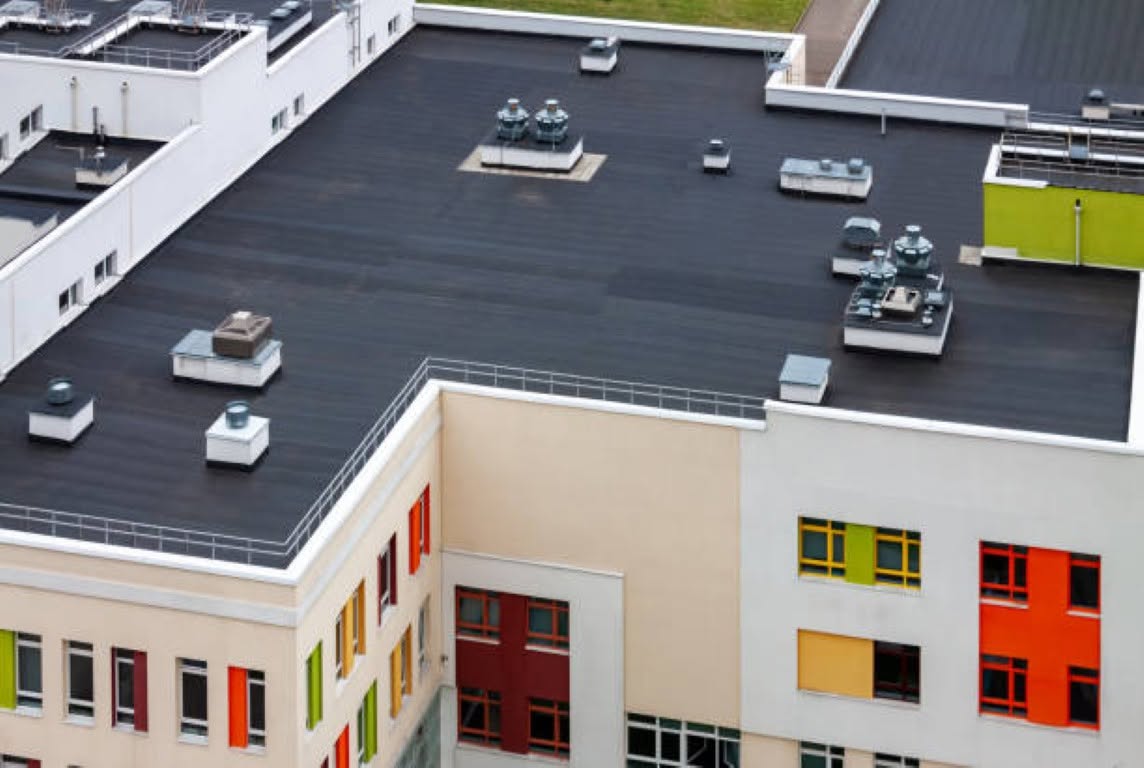
Modified bitumen roofing is a layered asphalt membrane with polymers added for flexibility, used mostly on flat and low-slope commercial roofs. The Florida Building Code defines a modified bitumen roof covering this way: “One or more layers of polymer-modified asphalt sheets.” Below: the two polymer types, how it is installed, Florida conditions, what drives the cost, and what to ask a contractor.
What modified bitumen roofing is made of
Bitumen is asphalt. “Modified” means a polymer was blended in to change how the asphalt behaves. The sheets come in rolls with a reinforcing mat inside, and they are stacked into plies, the individual layers of the membrane. ASTM D6164 and D6222, two material standards listed in Florida’s code, both describe sheets made for “multiple ply roofing and waterproofing membranes.”
A base sheet goes down first and a cap sheet goes on top. Some systems add plies in between, so the number of plies varies. The cap sheet carries the granulated surface, a top layer of ceramic-coated mineral granules that acts as the membrane’s protective surfacing.
SBS vs APP modified bitumen: what’s the difference?
SBS and APP are the two polymer types covered by ASTM D6164 and D6222. SBS (styrene-butadiene-styrene) is a synthetic rubber, so the sheet is elastic and flexes. APP (atactic polypropylene) is a plastic, so the sheet is stiffer once it is on the roof.
Polyglass, a membrane manufacturer, says SBS sheets tolerate much lower temperatures, while APP melts at a higher temperature and flows more easily, so it is used more often on smaller roof areas.
How modified bitumen roofing is installed
Four attachment methods are in common use, and each trades something away. These trade articles are from 2002 and 2003, so confirm current requirements with the membrane manufacturer.
- Torch-applied. Also called torch-down or heat-welded. A propane torch melts the bitumen on the back of the sheet and fuses it to the layer below. NRCA’s Professional Roofing (2002) says torched multi-ply work can produce “truly monolithic membranes.” It also says underheating can leave sheets unfused and severe overheating causes aesthetic and long-term performance problems.
- Hot-mopped. Hot asphalt glues the plies together. FacilitiesNet (2003) notes crews can use standard built-up roofing equipment, and that asphalt fumes can become an issue. Professional Roofing adds that oxidized mopping asphalt embrittles over time.
- Cold-applied. Liquid adhesive bonds the plies. The adhesive needs time to flash off and cure, the sheet stays soft underfoot and easier to damage while it does, and some manufacturers require seams to be hot-air welded or torched (FacilitiesNet, 2003).
- Self-adhered. Peel-and-stick sheets avoid asphalt fumes, torch safety and solvents, and no asphalt, propane or adhesive has to be carried to the roof (FacilitiesNet, 2003). Polyglass offers self-adhered versions of both its SBS and APP membranes.
Where it fits, and how it handles Florida sun, wind and ponding
Modified bitumen is made for low-slope roofs, and types of commercial roofing systems shows how it sits among the other options. Even so, a low-slope roof needs some slope. Florida Building Code Section 1507.11.1 requires a design slope of at least one-fourth unit vertical in 12 units horizontal (2 percent) for drainage.
The NRCA roofing manual’s test is no ponding water 48 hours after a rain, during conditions conducive to drying (quoted in Professional Roofing, 2012). ARMA, the asphalt roofing manufacturers’ association, says ponding can shorten a membrane system’s life and can deflect the deck (2024). Its fixes are in the design: tapered insulation, drains at low points, and crickets upslope of rooftop equipment.
Cool roof ratings rest on solar reflectance, the fraction of sunlight reflected, and thermal emittance, how efficiently the surface sheds heat. The U.S. Department of Energy says to judge savings on aged values, because many roofs become less reflective over time. Some granulated cap sheets carry a Cool Roof Rating Council rating, so ask for yours.
Wind comes down to attachment. The Florida product evaluation report for CertainTeed’s Flintlastic systems (revised January 2023) includes attachment requirements for wind uplift resistance. It covers above-deck components only, and the deck must meet code on its own.
Trade-offs to weigh before you choose it
- Seams and laps carry the risk. A Roofing Canada technical bulletin (1995) says open seams, fishmouths at laps, large unbonded areas and overheating distortion should be corrected as soon as possible.
- It shows its flaws. The same bulletin says the thin granule surface lets deck or insulation unevenness show through. Minor ridging and wrinkling are cosmetic, and patching them for looks alone is not justified.
- Foot traffic wears it. ARMA (2016) recommends walk pads and limiting rooftop traffic.
What drives the cost of a modified bitumen roof
You’ll find plenty of numbers online for modified bitumen roofing cost. A number means little without a look at the roof, because two quotes often cover different jobs. These are the drivers:
- The system: SBS or APP, the product line, and the number of plies.
- The attachment method and the safety setup it needs.
- The surface, including whether the cap sheet is cool-rated.
- Roof size, shape, penetrations, flashing details and access.
- Deck and insulation condition, which often can’t be fully known until the old roof is off, plus tapered insulation if the slope needs correcting.
- Removal of the old roof versus a recover, which brings extra testing of the existing roof.
- Wind uplift attachment requirements, permits and inspections.
Ask for an itemized written quote so you can compare those lines across bids.
Maintenance and inspection
ARMA recommends inspecting a roof at least twice a year, once in the fall and once in the spring (2016). Its checklist includes open seams at base flashings, deteriorated sealants and mastics, damaged pitch pans and loose fasteners, plus debris cleared from drains and scuppers. ARMA says a professional roofing contractor should do the inspections and repairs.
What to ask a contractor before you sign
- Is the system SBS or APP, how many plies, and which attachment method, and why?
- Which ASTM standard does the cap sheet meet, and is the system covered by a Florida product evaluation?
- Does the roof meet the code slope, or is tapered insulation planned?
- How are seams, flashings and penetrations detailed, and how is wet or damaged deck material priced?
Frequently asked questions
Is torch-down roofing the same as modified bitumen?
Not quite. Modified bitumen is the membrane, and torch-down is one way to install it.
How often should a modified bitumen roof be inspected?
ARMA recommends at least twice a year, once in the fall and once in the spring.
Can modified bitumen go over an existing roof?
Sometimes. The Flintlastic evaluation report refers recover installations to Florida Building Code Section 1511. For a bonded membrane over an existing roof, it requires field uplift testing to show the old roof can resist the project’s design pressures. A licensed roofer has to assess yours.
Planning a modified bitumen roof for your commercial building?
Rhino Roofing NWFL installs modified bitumen roofing for commercial buildings in Pensacola, Gulf Breeze, Navarre, Milton, Pace, Crestview, Fort Walton Beach, Destin, Panama City and nearby communities. Visit our Commercial Roofing page to see the services, or request a quote for your building.