
License Number CCC1337583
Commercial Roof Coatings: Extend Your Roof’s Life
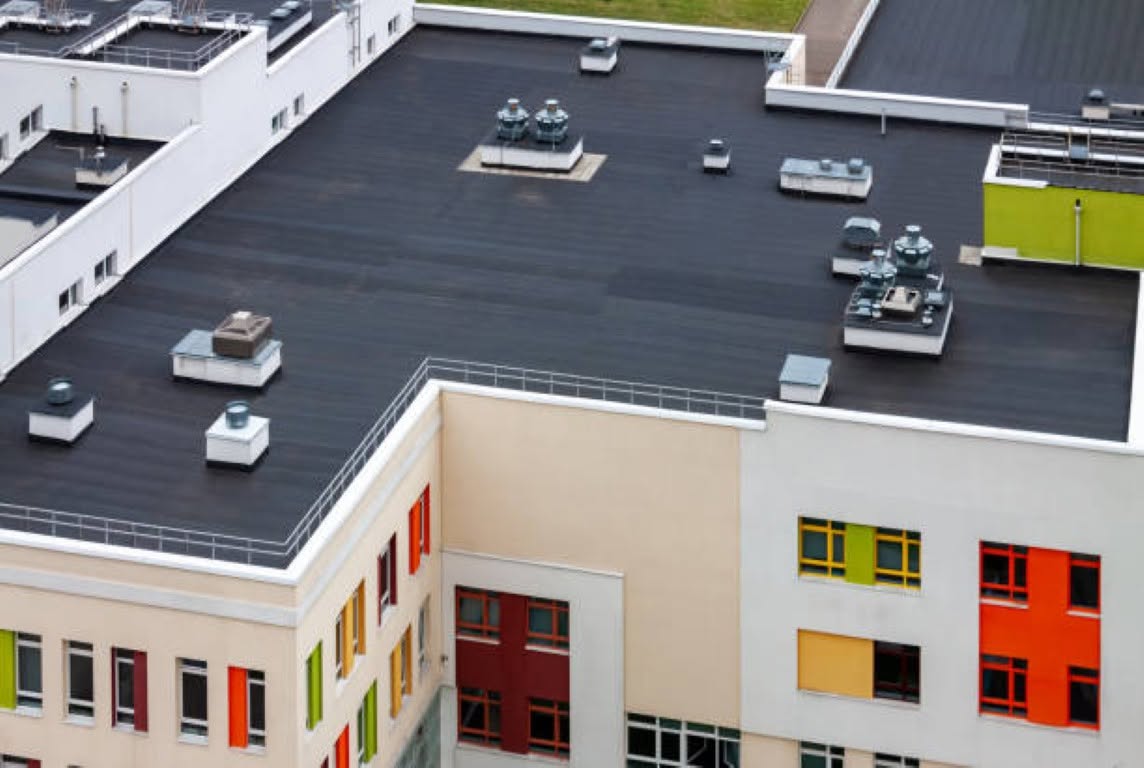
A roof coating is a liquid layer applied over an existing roof to protect it and extend its life, and the Roof Coatings Manufacturers Association (RCMA) says almost all types of roofs can be coated. Whether yours should be depends on the roof underneath. This guide covers metal roof coating, flat roofs, how acrylic, silicone and elastomeric coatings differ, and what drives the price of a commercial roof coating.
The technical points below come from RCMA guidance and manufacturer data sheets. Rhino Roofing NWFL can’t quote a real price without inspecting the roof, and neither can a website calculator.
What a commercial roof coating does, and what it doesn’t
RCMA describes roof coatings as products designed to protect and extend the useful service life of roof assemblies. Its FAQ says the roof life of a properly applied coating can be extended “up to 10 years or more.” That is an industry figure, not a promise for any one roof.
Three terms matter from here on. The substrate is the existing roof surface the coating sticks to. Adhesion is how well it bonds there. Coating thickness is measured in mils, thousandths of an inch.
A coating is a maintenance tool, not a repair for a failed roof. It also wears, and RCMA notes more coating can be applied as it does. Huntsman’s silicone data sheet says a roof should typically be inspected at least twice a year and after severe weather.
Is your roof a good candidate for coating?
Only if it is sound and dry. RCMA’s FAQ says existing leaks and wet insulation should be repaired and dried before coating, and that ballasted and gravel-surfaced membranes are not typically acceptable surfaces. Its acrylic tech note adds that a rotted or badly corroded deck will keep the coating from performing as intended.
Sika’s acrylic data sheet calls for a moisture scan of all roof surfaces and says wet insulation should be removed and replaced.
So the first step is an inspection, not a product choice. If the roof fails those tests, repair or replacement is the honest answer, and our guide to types of commercial roofing systems covers the replacement side.
Metal roof coating: rust, fasteners and adhesion
A metal roof can take a coating, but prep decides the result. RCMA says rusted metal roofs can be coated after the rust has been addressed, and that “red rust” must be removed or treated with a corrosion-inhibiting primer. The data sheets add the rest of the checklist.
- Rust. Polyglass’s silicone data sheet says rusted or oxidized metal should be prepared with a grinder or wire brush. Huntsman’s acrylic sheet says corrosion on galvanized metal is cleaned back and primed with a rust-inhibitive primer.
- Fasteners and seams. Sika’s acrylic sheet says to tighten or replace existing fasteners, complete sheet metal repairs, and seal screws, seams and penetrations.
- Adhesion. Polyglass recommends a substrate adhesion test before each application, and Sika calls for one before coating any surface.
Each manufacturer writes its own prep steps, so the contractor follows the data sheet for the exact product going on your roof.
Which coating for flat vs metal roofs: acrylic, silicone or elastomeric?
Choose by drainage first, then by surface. Huntsman’s acrylic sheet targets low-slope roofs with positive drainage, and silicone sheets address surfaces that hold water, but the limits differ by product. “Elastomeric” is a label the data sheets apply to both acrylic and silicone, so ask for the product’s data sheet.
- Acrylic is water-based, and ASTM D6083 covers acrylic latex elastomeric roof coatings. RCMA’s tech note says ponding water (water that stays standing on the roof) could accelerate their degradation, and that when humidity exceeds 85%, as in Florida, drying takes much longer. Sika’s acrylic sheet is not intended for ponding water beyond 72 hours, and Huntsman’s RCS 650 is not intended for areas where ponding may be present.
- Silicone is a different polymer. Huntsman describes its Thermo-Sil Pro 9600 as a single-component, moisture-curing silicone rubber designed to withstand the damp heat and UV of humid environments. Polyglass says its silicone is not adversely affected by ponding water, while Huntsman does not recommend its silicone for permanent standing water longer than 72 hours. Same chemistry, different limits.
- Elastomeric shows up on both. RCMA, Sika and Huntsman call their acrylics elastomeric, and ASTM D6694 describes a silicone coating as elastomeric. When a quote says only “elastomeric,” ask which polymer it is.
Huntsman’s silicone sheet and Polyglass’s both cite the National Roofing Contractors Association position that ponding is undesirable on any roof. Huntsman defines positive drainage as a minimum slope of 1/8 inch per foot. A coating does not replace drainage.
Reflectivity, which the U.S. Department of Energy calls solar reflectance, is the share of sunlight a surface reflects, on a scale of 0 to 1. DOE’s 2011 guide says many roofs become less reflective over time, so savings should be judged on aged values. Polyglass’s sheet lists initial and aged ratings.
What drives the price of a roof coating
Rhino Roofing NWFL doesn’t publish a per-square-foot price here, because a number without an inspection is a guess. These are the things that move it.
- Roof area, counted in squares. A square is 100 square feet.
- Surface condition and prep. RCMA says the roof must be thoroughly cleaned and allowed to dry. Rust treatment, fastener work, sheet metal repairs and primer add to that.
- Thickness and coats. RCMA says film thickness depends on the manufacturer and project specifications, and that it affects performance.
- The product itself. The acrylic and silicone sheets above publish different coverage rates and limits.
- Detail work. Sika’s sheet says to start with penetrations, drains, seams and corners, reinforced with tape.
- Repairs found along the way, such as wet insulation that has to come out.
How a roof coating estimate is built (a calculator without made-up numbers)
Every coating estimate follows the same structure. Only the inputs change.
- Measure the roof area in squares.
- Find the coverage rate, meaning how much roof a gallon covers, on the product’s data sheet. It varies by product and surface. Sika’s acrylic sheet lists “24 wet mils (1.5 gal per 100 SF),” while Huntsman’s RCS 650 acrylic sheet lists “75 to 100 square feet per U.S. gallon per coat.” Same roof, different gallons.
- Work out the gallons: roof area divided by coverage rate, times the number of coats the specification calls for.
- Add the other materials, such as primer, reinforcing fabric or tape at details, and sealant.
- Add labor, access, prep and repairs. This is the step an inspection settles.
Website calculators usually stop at step 3, which is only the material. When you compare bids, ask each contractor for the product name, its data sheet and the thickness in mils, so the quotes describe the same job.
Frequently asked questions
Can you coat a metal roof?
Yes, if the metal is sound. RCMA says rusted metal roofs can be coated after the rust is addressed, and the manufacturer sheets above call for fastener repair, a primer and an adhesion test.
What is the best roof coating for a flat roof that holds water?
Fix the drainage first, since RCMA says roofs should be built for positive drainage. If some standing water is expected, read each product’s ponding limits, because they differ even between two silicones.
How long does a commercial roof coating last?
It depends on the product, thickness, roof condition and maintenance. RCMA says a properly applied coating can extend roof life up to 10 years or more, and more coating can be added as it wears.
How much does a roof coating cost?
It depends on roof area, prep, repairs, thickness and product, as laid out above. A figure comes after an inspection.
Not sure your roof is a coating candidate?
Rhino Roofing NWFL offers commercial roof coatings (acrylic, silicone and elastomeric) and roof coatings for multi-family buildings across Northwest Florida. Start with an inspection of the roof, then decide between coating, repair and replacement with the findings in hand. Visit our Commercial Roofing page or call (850) 999-7663.