License Number CCC1337583
Should You DIY a Roof Leak Repair?
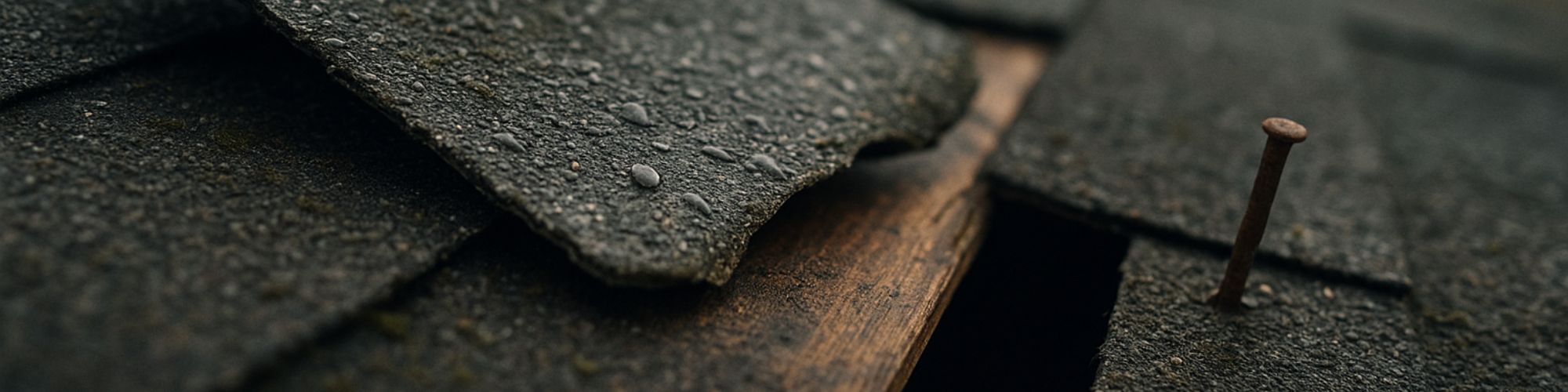
A leaking roof at 9 p.m. on a Saturday makes DIY roofing repairs look pretty appealing. Before you head to the hardware store, it’s worth knowing what’s actually reasonable to handle yourself, what isn’t, and where a well-meaning fix can end up costing more than the original leak.
What’s reasonable to handle yourself
Some parts of dealing with a leak don’t involve the roof at all, and those are genuinely safe to do on your own:
- Moving furniture, electronics, and belongings out of the affected area
- Placing a bucket or container to catch dripping water
- Checking the attic (from inside, not the roof) for wet insulation or a visible water trail, which can help a professional narrow down the source faster
- Taking photos of the damage for insurance purposes
None of this requires climbing onto the roof, and all of it helps limit damage while you arrange a proper repair.
Why roof-top DIY repair is risky
Getting onto a roof to search for a leak or attempt a repair carries real fall risk, especially on a wet or storm-damaged surface. Beyond safety, there’s a practical issue: the spot where water shows up inside is often not where it’s actually entering. Without experience finding the true source, a DIY repair can end up patching the wrong spot entirely, leaving the real leak untouched. If you need immediate protection while arranging a repair, see our guide on temporary vs. permanent roof leak repair, which covers safer options like professional emergency tarping.
What about products like Flex Seal?
Spray-on sealants and similar products are marketed as a quick fix, and they can offer very limited, temporary help in some situations. They’re not a substitute for identifying and correcting the actual source of a leak. Applying a sealant over the wrong area, or over a problem that needs a real repair, can mask the issue while water continues to get in somewhere nearby.
When a DIY attempt can make things worse
A few common ways a DIY fix backfires:
- Trapping moisture under a patch instead of letting the area dry and be repaired properly
- Covering up the visible symptom while the actual source keeps leaking elsewhere
- Voiding a manufacturer warranty on roofing materials by altering them incorrectly
- Delaying a professional repair while the underlying damage continues
Frequently asked questions
Is it ever okay to go on my roof after a leak?
We’d recommend against it. Wet or storm-damaged roofing is unstable, and a professional inspection is a safer and more reliable way to find the actual source.
Will Flex Seal fix a roof leak permanently?
It’s generally marketed as a temporary measure, not a permanent repair. The underlying cause still needs to be identified and fixed.
What should I do instead of a DIY repair?
Handle the safe, indoor steps (moving belongings, catching water, documenting damage) and call a professional to inspect the roof and identify the real source.
Get a professional roof leak inspection
Rhino Roofing NWFL inspects the roof, finds the actual source of a leak, and recommends the right repair. Visit our Roof Leak Repair page to learn more or get a quote.