
License Number CCC1337583
What to Do About a Leaking Roof
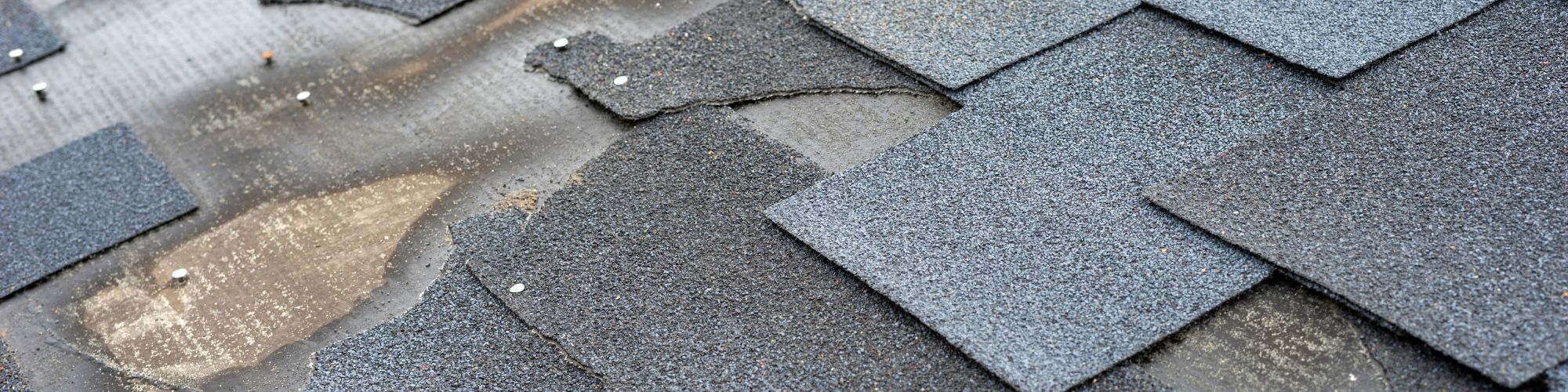
When your roof is leaking, the safe first moves all happen inside the house or on the ground: protect what’s under the leak, keep water away from anything electrical, photograph the damage, and call a roofer. The repair itself, finding the exact spot where water gets in and fixing that spot, is work for a professional who can get on the roof safely.
Whether you call it a leaking rooftop, a leaky roof or a leak in your roof, the same rules apply. This guide covers the first hour, where leaks really start, what a roofer does to find and fix one, why do-it-yourself patches fail, and what to ask before you hire anyone. It’s written for Northwest Florida homeowners, where storm season makes a roof leak a regular problem.
What to do in the first hour of a leaking roof
Everything below happens inside the house or from the ground. None of it needs a ladder.
- Move belongings out from under the leak. Furniture, electronics, rugs and anything that stains.
- Catch and redirect the water. A bucket or tub under the drip works, with a towel in the bottom to stop splashing. ARMA, the asphalt shingle manufacturers’ trade group, says buckets to collect and divert water can limit interior damage before repairs begin (ARMA, February 2026).
- Keep water and electricity apart. Don’t touch electrical equipment that is wet, including fixtures, outlets and switches near a drip, and don’t stand in water near it. FEMA and Ready.gov both say to turn the electricity off if it’s safe to do so. If reaching your breaker panel means stepping through water, don’t. Call an electrician.
- Stay out from under a bulging or sagging ceiling. Soggy ceiling material can fall, and building safety guidance for water leaks treats it as a hazard and says to block access. Keep kids and pets clear, and don’t poke it yourself.
- Photograph and video everything before you clean up. Take wide shots and close-ups of the ceiling, walls, floors and belongings, and keep receipts for anything you spend. Florida’s Homeowner Claims Bill of Rights advises policyholders to keep receipts and to take photos or video of the damage.
- Look into the attic only from the access hatch. Shine a flashlight at the underside of the roof deck and look for wet insulation or dark, damp wood. Don’t climb in or step across the ceiling.
- Call a roofer. Tell your insurer too if you may file a claim.
Stay off the roof. NRCA, the National Roofing Contractors Association, says homeowners should assess roof damage from ground level and leave repairs to a professional roofing contractor.
Where a leaking roof really leaks from
Most roof leaks start at a joint, not in the middle of a shingle. Flashing, thin metal or sometimes rubber, seals the places where a roof meets something else: a chimney, a sidewall, a valley (where two slopes meet) or a penetration, which is anything poking through the roof, like a vent pipe or skylight.
ARMA says leaks can occur where roofs meet sidewalls and around penetrations such as skylights, vent pipes and chimneys. IBHS, the Insurance Institute for Business and Home Safety, adds that flashing around chimneys, skylights, vents and roof edges can corrode, pull loose or crack, that the rubber seals on vent pipes can crack and split, and that sealant around penetrations can deteriorate with age. A backed-out fastener, or damaged or missing shingles after wind, can open a path too.
IBHS lists water stains, peeling paint or wallpaper, damp insulation and mold in ceilings, walls and the attic as signs of a leak.
The stain on your ceiling, though, is where water came out, not necessarily where it got in. Building Science Corporation, a building research firm, describes water running down while clinging to a surface, and passing through gaps as thin as a dime. So water can run along roof decking or framing for some distance before it drips. That’s why a repair aimed at the stain so often misses.
One useful thing you can do: trace around the stain’s edge in pencil and write the date next to it. If the stain grows after the next rain, tell the roofer.
How do you repair a leaking roof? What a roofer actually does
You repair a leaking roof by finding the exact spot where water enters and fixing that spot, not the stain below it. Most of the time that means resealing or replacing flashing, a pipe seal or a few shingles, then checking the wood underneath. It’s work for a trained roofer, because the repair depends on seeing what failed.
Roofing leaks repair comes down to two questions: where is the water entering, and what failed there? Here’s the process, so you know what to expect and can judge whoever you hire. It isn’t a to-do list for you.
- Start from the inside. A roofer looks at the ceiling stain, the attic insulation and the underside of the deck. Where the wet spots sit narrows down which part of the roof to examine.
- Inspect the roof surface and every joint. That means flashing, pipe seals, valleys, fasteners and shingle condition, because that’s where leaks start. A roof leak inspection that only looks at the stain’s location misses the point.
- Confirm the entry point before touching anything. Depending on the roof, that can include a controlled hose test of the suspect area while watching for active leaking, a moisture meter on the wood, or an infrared camera, since water often shows up as a cooler area.
- Fix the cause. That might mean replacing a cracked pipe seal, re-flashing a joint instead of coating over it, or replacing damaged shingles. For a backed-out fastener, ARMA describes lifting the shingle above, replacing the fastener and hand-sealing the shingle back down.
- Check the wood and the inside. Wet decking and insulation can’t be judged from the street, and the inside of the house may need drying or drywall work afterward.
Repairing a leaking roof doesn’t always mean replacing it. When the failure is local, a targeted repair can be the honest answer. When leaks keep appearing in different places, or the roof is worn across the board, patching stops making sense and replacement belongs in the conversation.
Why do-it-yourself patches on a leaking roof fail
People who search “how to repair a roof leak” or “how do you fix a leaking roof” are mostly trying to stop water tonight. Here’s why the roof is the wrong place to try.
- You may patch the wrong spot. Because water travels, the visible damage and the entry point often differ.
- Roofing cement is temporary. ARMA says compatible roofing cement may work as a temporary fix for a puncture but should not be considered a suitable long-term repair.
- Sealant over failed flashing hides the problem. A bead of caulk can’t tighten a joint that has already pulled loose, and IBHS notes that sealant itself breaks down with age and exposure.
- Coatings and “miracle” products can cause damage. ARMA tells owners to check with the shingle manufacturer before applying coatings or rejuvenators.
- Falls are the real danger. CDC’s NIOSH says roughly 300 to 400 construction workers die from falls each year, most often on roofs, ladders and scaffolds (April 2022). Those are trained workers, and IBHS advises against walking on your roof, especially when wet.
A patch sometimes holds for a while, but you won’t know it failed until the next rain. For more on the trade-offs, see Should you DIY a roof leak repair?.
Tarp now or permanent repair first?
A tarp or temporary patch keeps water out while the permanent materials are sourced. ARMA notes that temporary repairs are often necessary to stop water entry while proper materials are sourced. If water is coming in and more rain is on the way, protecting the roof first is usually sensible. A tarp is not the repair, though, and it doesn’t show what failed.
Rhino Roofing NWFL offers Emergency Roof Tarping for this situation. Temporary vs. permanent roof leak repair explains how to decide between the two.
When to call a roofer, and what to ask
Call about any active leak, any stain that grows, a ceiling that bulges or sags, or leaks that return after a repair. Before you hire anyone, ask:
- Where is the water getting in, and how did you confirm it?
- Will you replace the flashing or seal over it? Sealing over can be a temporary measure. Ask which one you’re getting.
- Will you check the decking around the leak?
- Is this fix temporary or permanent, in writing?
- Can I see photos of the problem and the finished work?
- What’s your Florida license number? Verify it yourself by name or number on the state’s DBPR license search.
NRCA also advises keeping a healthy skepticism of the lowest bid.
Rhino Roofing NWFL (Florida license CCC1337583) handles Roof Leak Repair and Asphalt Shingle Roof Repair, and offers Roof Inspections & Insurance Reports if you need the roof’s condition documented.
After the leak: drying the inside and talking to your insurer
EPA says water-damaged areas and items should be dried within 24 to 48 hours to prevent mold growth, and that cleaning up mold without fixing the water problem means it will likely come back. Rhino also lists Water Damage Mitigation from Roof Leaks as a service. Water damage after a roof leak covers what to expect inside.
On insurance, this is general information, not advice, and it can change. As of October 2026, Florida Statute 627.70132 bars a property insurance claim unless the insurer gets notice within one year of the date of loss, or 18 months for a supplemental claim. For hurricanes and other weather events, the statute sets the date of loss as landfall or the date NOAA verifies the event.
The Homeowner Claims Bill of Rights, in Statute 627.7142, advises policyholders to make and document emergency repairs necessary to prevent further damage, and to contact the insurer before signing any repair contract. Policies differ, so confirm what applies with your insurer or a licensed professional.
Roof leak questions homeowners ask
Can a leaky roof be repaired without replacing the whole roof?
Often, yes. If the damage is local, such as a failed pipe seal, a stretch of flashing or a few shingles, leaky roof repair can be targeted. A roofer who inspects the whole roof can tell you whether leaking roof repairs make sense or the roof is worn across the board.
How do I fix a leaky roof myself?
The safe DIY work is damage control: containing water, protecting belongings, documenting and calling a professional. The fix itself needs someone who can find the entry point and work on the roof safely, which is why this guide doesn’t give on-roof steps.
Why does the leak show up where nothing is above it?
Water travels along decking and framing before it shows up, so leaking from roof joints can surface well away from the entry point. The entry point is usually up-slope, often at a joint or penetration.
Is a leaking roof an emergency?
An active leak is urgent. With a roof leaking into the house, contain the water, keep people and power away from it, and call. Wet decking and insulation only add to the repair list.
Leaking roof in Northwest Florida?
If water is coming in, Rhino Roofing NWFL handles roof leak repair in Pensacola, Gulf Breeze, Navarre, Milton, Pace, Crestview, Fort Walton Beach, Destin, Panama City and nearby communities. Call (850) 999-7663 or use the button below.