
License Number CCC1337583
Wind Mitigation Inspections in Florida: What Homeowners Should Know
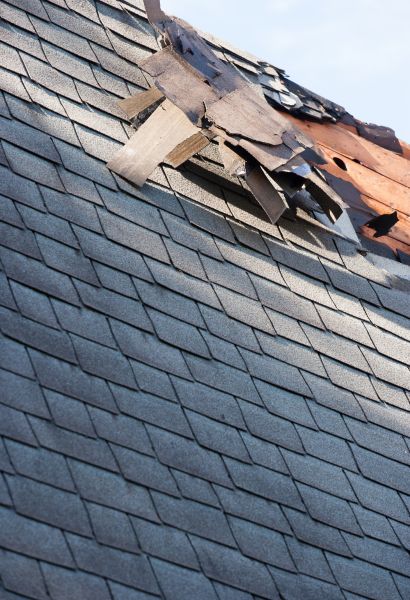
A wind mitigation inspection is a documented check of the features on your home that help it resist hurricane winds, recorded on a state form that insurers use to decide whether you qualify for discounts. It isn’t a four-point inspection and it isn’t a roof certification, even though people use the three terms as if they were one.
This guide explains what the inspection checks, who is allowed to sign the form, how it differs from the other two documents, and what to ask before you pay for any of them. It’s general information as of October 2026. Discounts and requirements vary by insurer, so your insurer or a licensed professional has the final word.
What a wind mitigation inspection checks
The inspection fills out the Uniform Mitigation Verification Inspection Form, numbered OIR-B1-1802, which the Florida Office of Insurance Regulation (OIR) publishes. The inspector records which wind-resistant features your home has. The form asks about the building code in force when the home was permitted, the roof covering, how the roof deck is attached, how the roof is attached to the walls, and what protects the windows and doors.
One feature is worth defining because it sounds technical. Secondary water resistance is a layer applied “as a supplemental means to protect the dwelling from water intrusion in the event of roof covering loss,” in the form’s own words. It matters if wind strips shingles off.
The form also sets a proof standard. It says “At least one photograph or document providing proof must accompany this form to validate each attribute marked in questions 2 through 9.” If a report says your roof has a feature but includes no photo of it, the form itself says it isn’t enough.
The form has been revised. Citizens Property Insurance said in a March 2026 bulletin that “The revised form, OIR-B1-1802 (Rev. 04/26), will be effective April 1, 2026. Inspections conducted on or after April 1, 2026, must use the revised form.” If a company hands you an older version for a new inspection, ask why.
How a wind mitigation inspection can affect your premium
Florida law directs insurers to account for these features. Section 627.0629 of the Florida Statutes says “It is the intent of the Legislature that insurers provide savings to consumers who install or implement windstorm damage mitigation techniques, alterations, or solutions to their properties to prevent windstorm losses.” It also requires that a residential rate filing “must include actuarially reasonable discounts, credits, or other rate differentials, or appropriate reductions in deductibles” for features that reduce windstorm loss.
Section 627.711 is the part that connects the inspection to your policy. It says the state’s uniform form “shall be used by all insurers when submitted by policyholders for the purpose of factoring discounts for wind insurance.”
What the statute doesn’t do is tell you how much you’ll save. That depends on your insurer, your home and which features the inspection documents. Citizens puts it carefully on its own wind mitigation page: documenting qualifying features “may save you money by helping you qualify for mitigation discounts on your insurance policy.” We won’t put a number on it either. Ask your insurer or agent what discounts it offers for the features your home has.
Who can sign a wind mitigation inspection form
Not every inspector can sign it. Section 627.711 sets a list of authorized mitigation inspectors, and the OIR form repeats it. The form lists these authorized signers:
- A home inspector licensed under section 468.8314 who has completed the required hurricane mitigation training and passed a proficiency exam
- A building code inspector certified under section 468.607
- A general, building or residential contractor licensed under section 489.111
- A professional engineer licensed under section 471.015
- A professional architect licensed under section 481.213
- Any other individual or entity the insurer recognizes as qualified
The statute adds a rule that protects you. The person who signs “must inspect the structures referenced by the form personally, not through employees or other persons.” There’s a narrow exception: licensees under sections 471.015 or 489.111 “may authorize a direct employee, who is not an independent contractor,” to conduct the inspection. Either way, the form says the inspector who certifies it is “directly liable for the misconduct of employees as if the authorized mitigation inspector personally performed the inspection.”
Before you hire anyone, ask which license they’d sign under and for the license number. Then check it, and confirm with your insurer that it will accept that signer.
Wind mitigation inspection cost
We can’t give a trustworthy figure for wind mitigation inspection cost, because none of the primary sources we read states one. Prices depend on the inspector, the size and complexity of the home, and how many features the form has to document. We don’t have verified Pensacola ranges, so we won’t guess.
What you can do is ask for a written quote that says what you’ll receive. It should say who signs and under which license, whether the form is the current revision, and whether photos for each feature are included, since the form requires that proof. Compare quotes on those points, not on the headline price alone.
The form also stays useful for a while. It says it is “valid for up to five (5) years provided no material changes have been made to the structure or inaccuracies found on the form.” If you replace the roof or add shutters, the picture changes, and the old form no longer describes your home. Ask your insurer whether it accepts an older form.
Wind mitigation inspection vs four-point inspection vs roof certification
Each document answers a different question.
| Wind mitigation inspection | Four-point inspection | Roof inspection or “roof certification” | |
|---|---|---|---|
| Question it answers | Which wind-resistant features does the home have? | What condition are the roof, electrical, plumbing and HVAC in? | What condition is the roof in, and how long will it last? |
| Where it comes from | The OIR form, OIR-B1-1802 | The insurer’s form | The insurer’s form |
| What it affects | Wind premium discounts | Insurability, per Citizens’ form | Insurability, per Citizens’ form |
The sources behind the table are Citizens’ own forms. Citizens says its four-point inspection covers the “electrical system, plumbing, heating/cooling system (HVAC) and roof,” and requires one “for all property owner, dwelling and mobile home applications for properties more than 20 years old.” The four-point form adds that its information “is not a warranty or assurance of the suitability, fitness or longevity of any of the systems inspected.”
For roofs, Citizens says roofs “older than 25 years ( soft such as shingle or similar) or 50 years ( hard such as tile, slate, clay, concrete or metal) require documentation showing at least five years of remaining useful life.” Citizens calls its version a Roof Inspection Form. Its form says “This form does not verify loss mitigation features. Use Uniform Mitigation Verification Inspection Form OIR-B1-1802.”
That last line is the clearest way to see the difference. A roof inspection tells an insurer about condition. A wind mitigation inspection tells it about features. You may need one, two or all three, depending on your insurer.
Roof certification cost and four point inspection: what to ask
People search for roof certification cost and four point inspection pricing, and both questions have the same honest answer: it depends on the insurer’s requirement and who you hire, and we don’t have a sourced figure.
“Roof certification” isn’t a single defined document. Insurers use different names, and a company that sells one may mean something different from what your insurer wants. So ask your insurer or agent three things before you book: what document do you need, which professionals can sign it, and what must it include? Get the answer in writing if you can.
Questions homeowners ask about wind mitigation
Is a wind mitigation inspection the same as a four-point inspection?
No. A wind mitigation inspection documents wind-resistant features on a state form. A four-point inspection summarizes the condition of the roof, electrical, plumbing and HVAC systems on an insurer’s form.
Will a wind mitigation inspection lower my insurance premium?
It may, but nobody can promise it. Florida law says rate filings must include discounts for qualifying features, and the amount varies by insurer and by home. Ask your insurer which discounts apply.
How long is a wind mitigation inspection form good for?
The OIR form says it is valid for up to five years if the structure hasn’t had material changes and the form has no inaccuracies. Check whether your insurer accepts it.
Who can perform a wind mitigation inspection in Florida?
Section 627.711 lists licensed home inspectors with hurricane mitigation training, certified building code inspectors, licensed general, building or residential contractors, engineers, architects and others an insurer recognizes. The signer must inspect the home personally.
Need a roof inspection in Northwest Florida?
If you need a roof looked at, Rhino Roofing NWFL offers roof inspections and insurance reports in Pensacola, Gulf Breeze, Navarre, Milton, Pace, Crestview, Fort Walton Beach, Destin, Panama City and nearby communities. Ask your insurer or a licensed inspector which documents they need before you book anything. Call (850) 999-7663 or use the button below.